
Aberothock Abbey — History & Facts
In the tranquil embrace of Aberothock Abbey, a serene stillness envelops the canvas, inviting quiet contemplation. Look to the left at the ancient stone archways, their weathered surfaces glistening under a soft, muted light. The color palette mingles earthy tones with accents of soft blue, casting an air of nostalgia over the scene. Notice how the delicate brushstrokes define the texture of the stones while the distant horizon suggests a hazy transition from day to night, emphasizing the passage of time within this architectural marvel. As you linger, a deeper resonance emerges—the contrast between the solidity of the abbey and the ethereal quality of the sky.
The crumbling structure stands as a testament to enduring faith, yet it whispers of decay and solitude, highlighting the ephemeral nature of existence. The scattered clouds seem to cradle the abbey, creating a tension between permanence and transience, inviting reflection on the journey of life itself. In 1848, David Roberts painted Aberothock Abbey amidst a period of artistic exploration and Romanticism's reach into landscapes imbued with emotion. Living in London, he had journeyed extensively through Europe, capturing the essence of historical places that stirred the imagination.
This piece reflects both a personal connection to the sublime and the era's growing fascination with ancient ruins, resonating with viewers seeking solace in the beauty of what once was.
More Artworks by David Roberts
Browse all →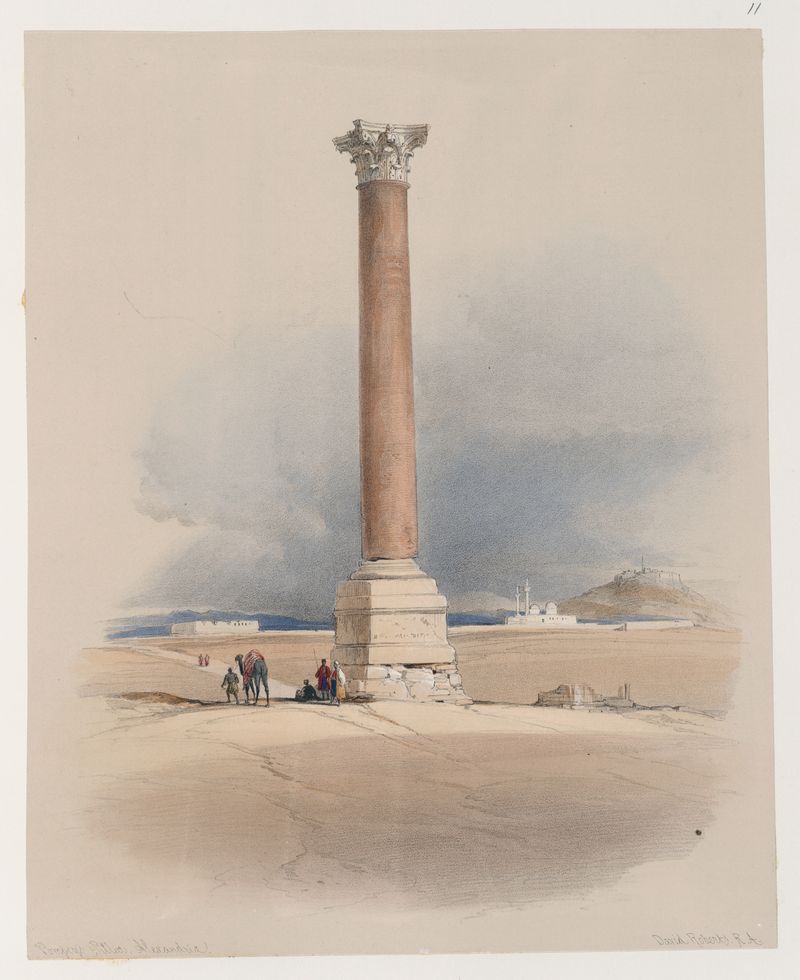
Pompey’s Pillar, Alexandria.
David Roberts

Approach to the Fortress of Ibrim.
David Roberts

Karnac [Karnak]. Nov. 29th, 1838.
David Roberts
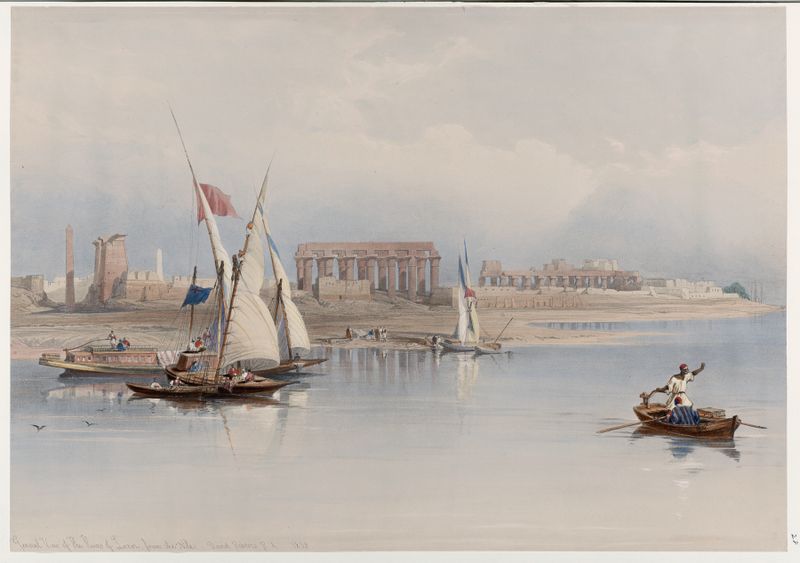
General view of the ruins of Luxor, from the Nile. 1838.
David Roberts

Statues of Memnon at Thebes, during the inundation.
David Roberts

Entrance to the tombs of the kings of Thebes. Bab-el-Malouk [Bîbân al-Mulûk].
David Roberts

The Fortress of the Alhambra, Granada
David Roberts
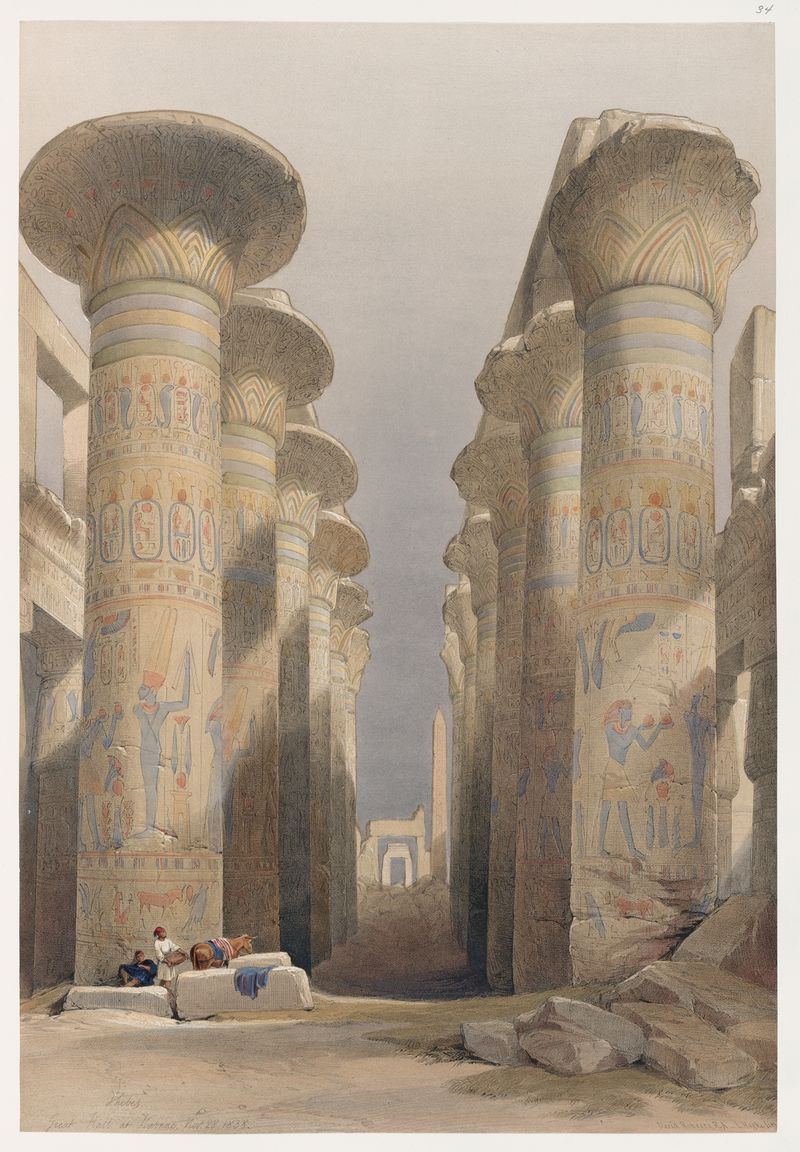
Thebes. Great Hall at Karnak. Nov. 28, 1838.
David Roberts
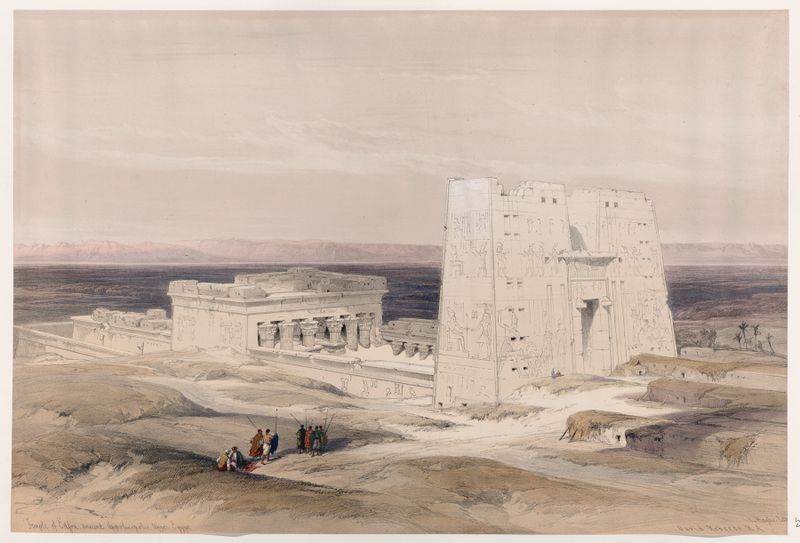
Temple of Edfou [Idfû], ancient Appolinopolis, Upper Egypt.
David Roberts

Temple of Kalabshee [Kalabsha, Kalâbishah], Nubia. Nov. 1838.
David Roberts
More Architecture Art
Browse all →
The statue of Liberty
Frédéric Auguste Bartholdi

View of Houses in Delft, Known as ‘The Little Street’
Johannes Vermeer

View of Houses in Delft, Known as ‘The Little Street’
Johannes Vermeer

The Cathedral in Rouen. The portal, Grey Weather
Claude Monet

The yellow house
Vincent van Gogh

The Church in Auvers-sur-Oise, View from the Chevet
Vincent van Gogh