After the Bath — History & Facts
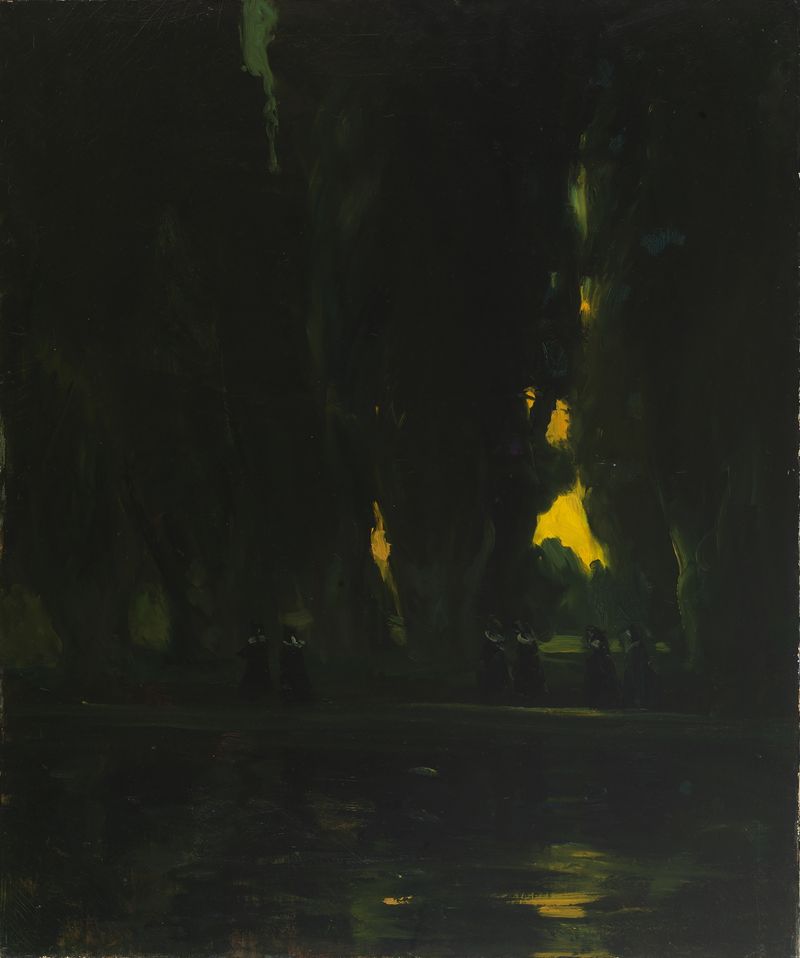
What if silence could speak through light? In After the Bath, the stillness of a moment reverberates, inviting us into a quiet sanctuary of serenity. Look to the left, where the soft rays of sunlight stream through the window, illuminating the figure of a woman, freshly emerged from her bath. The delicate brushwork lends a sense of fluidity to her form, as the light dances over the contours of her body and the surrounding objects. Notice how the muted palette, dominated by gentle pastels, creates an atmosphere of tranquility, harmonizing with the woman's contemplative pose and the ethereal quality of the space. Digging deeper, one can sense the emotional tension between vulnerability and strength.
The interplay of light and shadow not only highlights the figure’s bare skin but also suggests an intimacy that transcends the physical. The surrounding domestic elements—a towel, a small mirror—evoke themes of self-reflection and renewal, while the woman's serene expression speaks to a moment of quiet solitude, capturing the essence of feminine grace and contemplation. Charles Walter Stetson painted this work in 1910 while living in a transitional era for American art, marked by the rise of Modernism. During this time, he sought to explore the subtleties of light and form, reflecting the broader shift towards more intimate and personal themes in painting.
The tranquility of After the Bath stands as a testament to both his artistic vision and the era’s evolving sensibilities.