After Them — History & Facts
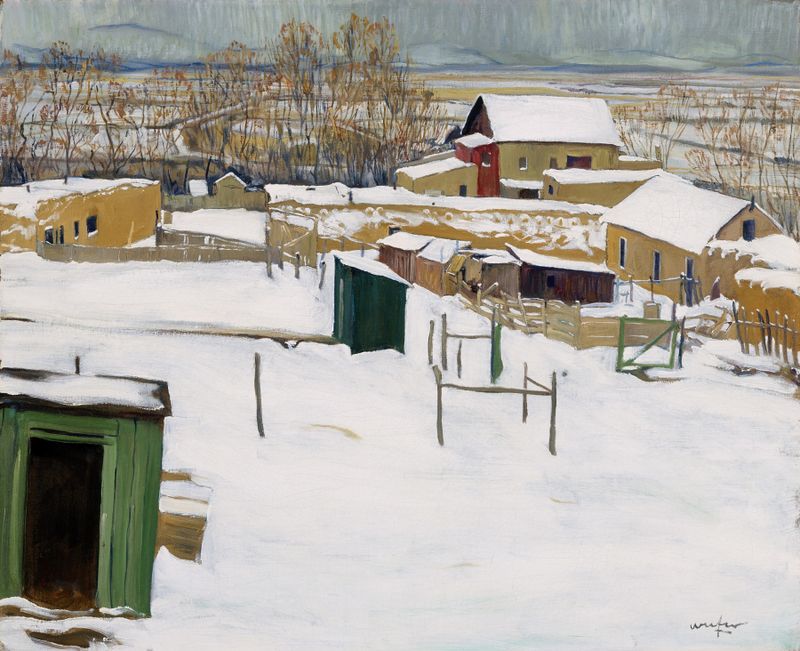
Is this a mirror — or a memory? In After Them, a moment of ecstasy unfolds, encapsulating the essence of triumph and fleeting beauty. Look to the center of the canvas, where vibrant figures burst forth, their bodies swirling with motion. The bold strokes of warm oranges and deep reds create a dynamic sense of movement, drawing the eye into the heart of the scene. Notice how the colors blend and clash, illustrating the intensity of their expressions, where joy and liberation intertwine.
The background fades into softer hues, allowing the figures to emerge, almost as if they are both part of the landscape and breaking free from it. The interplay of light and shadow emphasizes the emotional tension. Each figure’s posture conveys a different aspect of ecstasy — one exudes a sense of joy, while another hints at the struggle that often accompanies liberation. The chaos of the swirling forms contrasts sharply with a hint of stillness at the periphery, suggesting that ecstasy is not merely a celebration but also a response to deeper, unacknowledged truths.
The viewer can't help but feel the pulse of life within the chaos, beckoning them to join this fleeting moment. Walter Ufer painted After Them in 1928 during a period marked by cultural shifts in America, where the art world was embracing modernism and new expressions of identity. Living in Taos, New Mexico, he was influenced by the region's vibrant community and the evolving narratives of indigenous and contemporary life. This painting reflects not only his personal journey with the subject of human experience but also the broader artistic movement that sought to capture the spirit of the American landscape and its people.