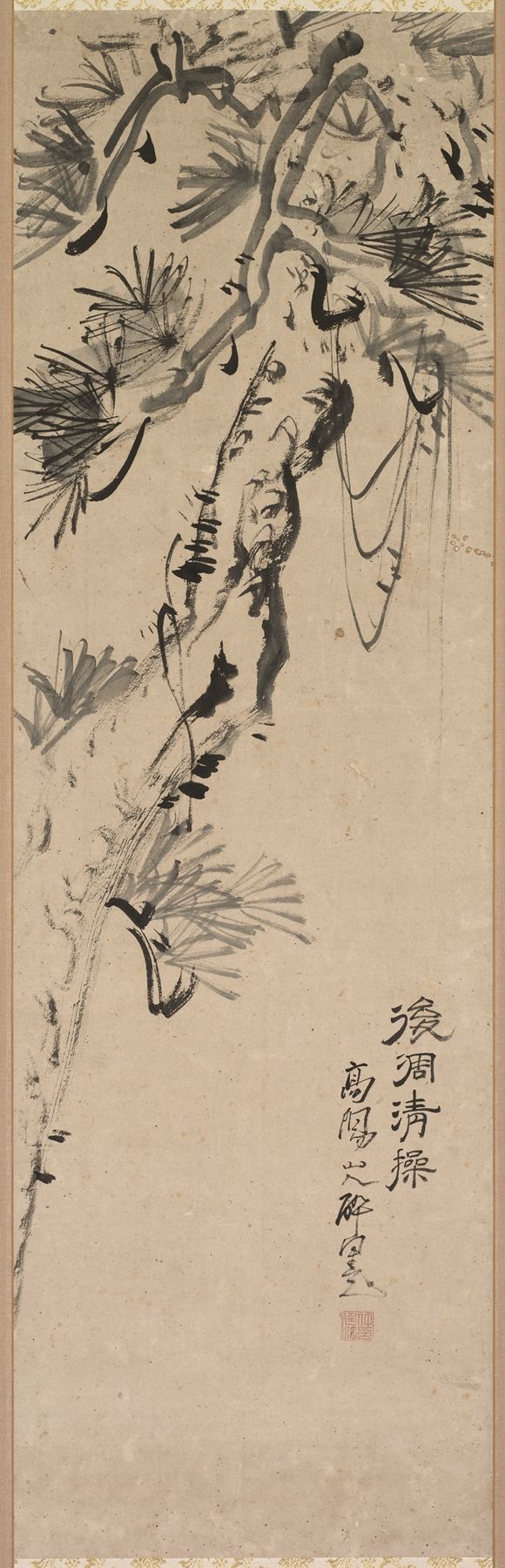
Aged Pine — History & Facts
What secret hides in the quiet of the canvas? In Aged Pine, the stillness of the scene whispers tales of time's passage, inviting viewers to reflect on the essence of decay. Look to the left, where the gnarled trunk of the pine stands resolute against the muted backdrop. The intricate brushwork captures every rough ridge and timeworn contour, pulling your gaze deeper into the tree’s towering presence. The subdued palette of browns and greens evokes a sense of nostalgia, while the delicate layering of ink and color creates a textured surface that breathes life into the aged bark. Yet, it is in the subtleties where deeper meanings emerge.
The juxtaposition of strength and vulnerability resonates in the tree’s twisted branches, hinting at resilience amidst inevitable decline. Shadows dance across the ground, signifying the passage of time and mourning the beauty of what once thrived. Each stroke invites contemplation of impermanence and the quiet wisdom that comes with aging. Nakayama Kōyō painted Aged Pine during a period of significant introspection in Japan, spanning the years between 1717 and 1780.
As the Edo period unfolded, the world of art was rich with exploration of nature and the spiritual connections within it. Kōyō, deeply influenced by the philosophies of Zen and the natural world, captured this moment as he navigated his own artistic journey, contributing to the evolving narrative of Japanese ink painting.