Al Festa del Redentore — History & Facts
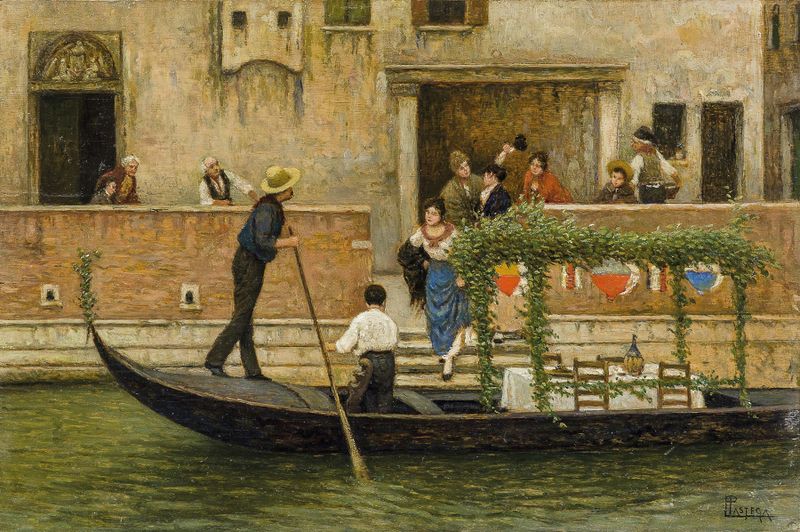
When did color learn to lie? In the interplay of light and shadow, a deeper truth often emerges, revealing the void that lies beneath the surface of our perceptions. Begin your exploration by focusing on the vibrant hues that leap from the canvas. Notice how the luminous yellows and deep blues coalesce, creating a dazzling effect that bounces off the water. The figures, cloaked in colorful garments, seem to blur together, emphasizing a collective celebration rather than individual identities.
Each brushstroke pulses with energy, drawing your gaze across the scene, inviting you to join the festivity. Yet beneath this vivid merriment lies an unsettling tension. The flickering reflections in the water play tricks on the eye, suggesting a world not quite real but instead a dream or a memory. The joyous faces of the participants contrast sharply with the stillness of the surrounding architecture, hinting at the fragility of happiness amidst the permanence of the urban landscape.
It evokes a realization that while color may beckon with warmth, it can also conceal a profound emptiness. In 1904, Pastega painted this scene during a time of burgeoning nationalism in Italy, where festivities often celebrated local culture amidst a rapidly changing society. Living in Venice, he drew inspiration from the city's vibrant life and the blending of traditional and modern influences in art. This work reflects not only a moment in time but also the artist's contemplations on the joy and complexity of human experience, serving as a bridge between the personal and the collective.