An extensive Italianate landscape with a drover — History & Facts
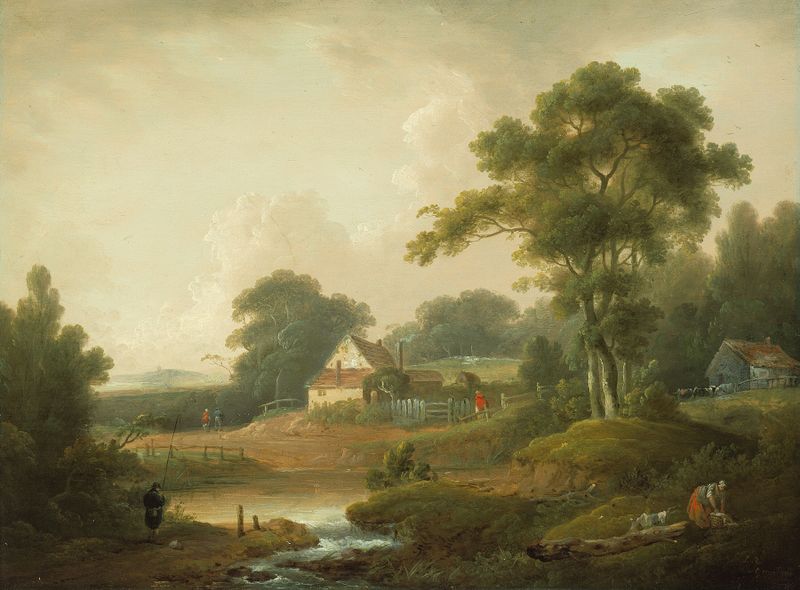
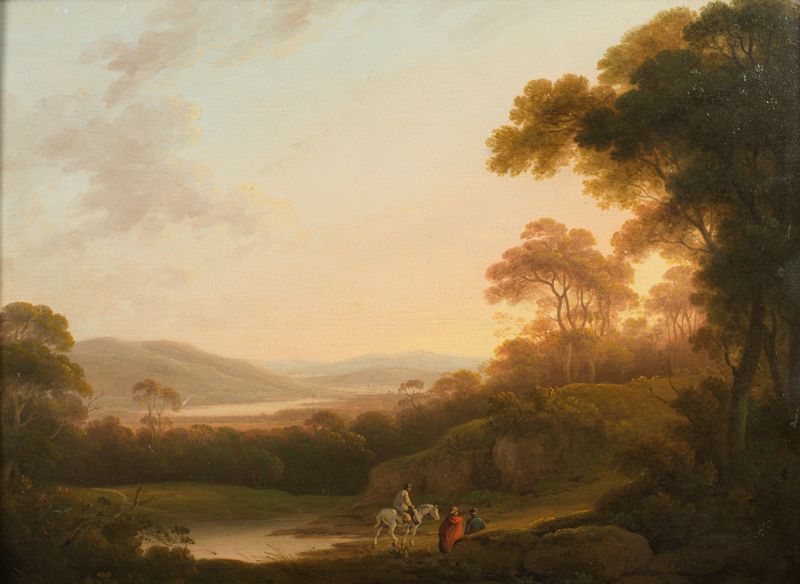
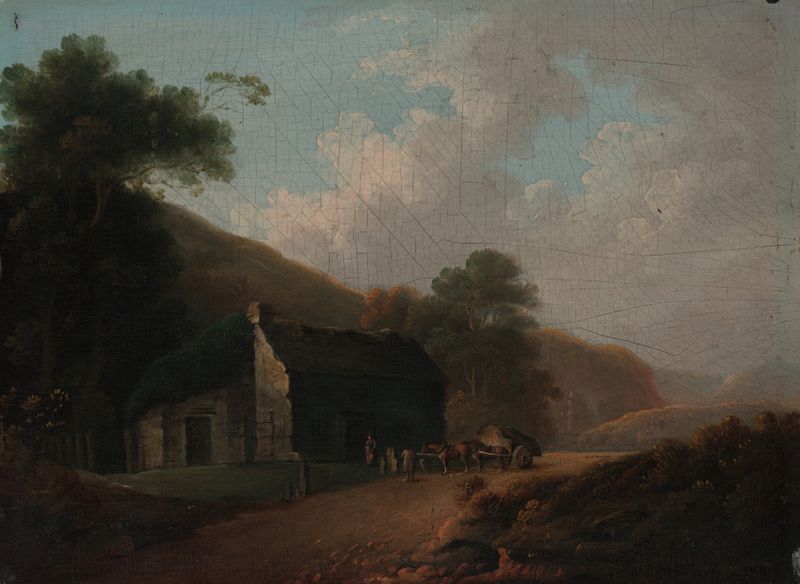
Did the painter know this moment would outlive them? The shimmering expanse of valleys and distant hills whispers secrets of time, capturing an idyllic slice of life that transcends the canvas. Look to the foreground, where a lone drover guides a small herd beneath an expansive sky. The earthy tones of the land contrast beautifully with the vivid blues and whites of the clouds, which seem to dance across the horizon. Notice how the gentle brushstrokes create a sense of movement, inviting the viewer’s eye to wander through the undulating hills and into the soft embrace of the distance.
Each layer of color feels deliberate, as if Rathbone sought to evoke the warmth of the Italian landscape itself. Embedded within this tranquil scene are emotional undercurrents of solitude and resilience. The drover, while surrounded by nature's beauty, alone carries the weight of his journey, embodying both the serenity and the hardships of life in the countryside. The interplay between light and shadow hints at a fleeting moment of peace amidst the toil, suggesting that beauty can exist even in labor.
Such contrasts reveal the complexity of human experience, where the mundane is intertwined with the sublime. John Rathbone created this landscape painting during a period when Romanticism was giving way to more modern interpretations of nature. Though the date is uncertain, it likely stemmed from the early 19th century, a time when artists were increasingly captivated by the allure of the Italian countryside. This work reflects not just a personal vision, but also a broader artistic movement that sought to celebrate the natural world and its timeless rhythms.