An old waterway — History & Facts
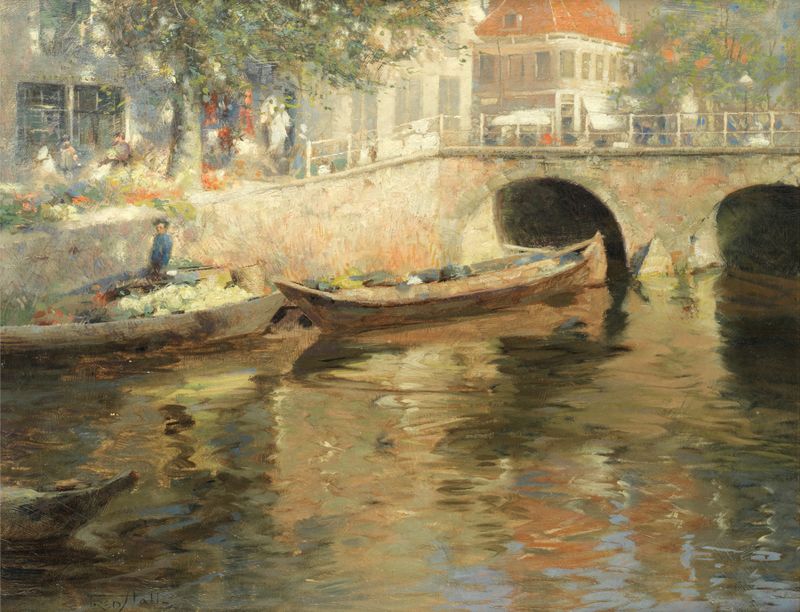
In the quiet reflections of a forgotten waterway lies the essence of hope, beckoning the viewer to explore the serenity that emerges from nature’s depths. Look to the left at the gentle curves of the water as it meanders through the lush undergrowth, where vibrant greens meet soft blues. Notice how the light dances on the surface, creating a symphony of shimmering highlights that invite contemplation. The composition draws the eye along the winding path, leading the viewer deeper into a world where nature's simplicity offers profound solace. Hidden within this pastoral scene are contrasts that tell a deeper story.
The interplay between shadow and light evokes a sense of tranquility, yet hints at the passage of time and the potential for renewal. The delicate brushwork captures the tension between chaos and calm, a reminder that even in the stillness of nature, life continues to flow and transform. Each stroke serves as a note in a larger melody of existence, resonating with feelings of hope and resilience. Frederick Hall painted this work during a period when he sought to capture the essence of the landscapes around him, likely creating it in the late 19th or early 20th century.
Art was evolving, as Impressionism began to influence the portrayal of light and color. Hall’s focus on the delicate beauty of waterways spoke to the broader movement toward a more intimate connection with nature, reflecting both personal and societal shifts in perception and appreciation for the environment.