
Angle de la rue Gassendi et de l’Avenue du Maine (XIVº Paris). — History & Facts
Where does light end, and longing begin? In this still moment of 1918, the interplay of shadow and brightness invites the viewer to explore the depths of a bustling Parisian street. Look to the left, where the sunlight spills across the cobblestones, illuminating the figures that traverse this avenue. Their elongated shadows stretch behind them, suggesting a past that is both personal and collective. The artist skillfully balances warm ochres with cool grays, creating a vibrant contrast that breathes life into the scene while hinting at the complexities of the era.
Notice how the buildings stand tall against the horizon, their facades reflecting a mixture of hope and uncertainty. The painting captures more than just a slice of urban life; it encapsulates a moment of transition. The juxtaposition of light and shadow not only conveys the physicality of the setting but also embodies the emotional weight of a city recovering from war. Each passerby seems to carry their own story, their expressions obscured yet palpable.
The subtle details in the crumbling brickwork and the delicate sways of the trees whisper of resilience and change in a world longing for peace. In 1918, Félix Brard was deeply engaged with the avant-garde movements in Paris. This period was marked by a restless search for new forms of expression, as the city emerged from the shadows of the First World War. Art was evolving, and this work reflects both the vibrancy of life in a metropolis and the artist's own reflections on hope amidst the remnants of conflict.
Brard's exploration of light in this urban landscape speaks volumes to the transformation that was taking place within the art world and society itself.
More Artworks by Félix Brard
Browse all →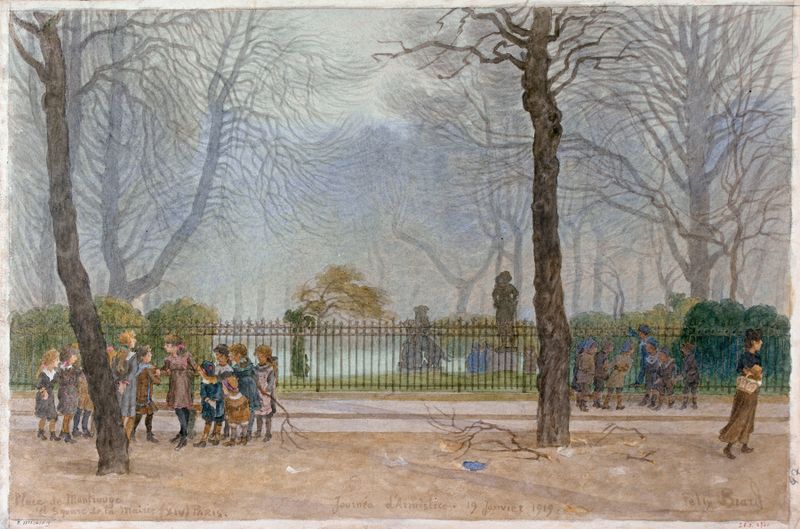
Place de Montrouge et Square de la Mairie (XIV) Paris.
Félix Brard
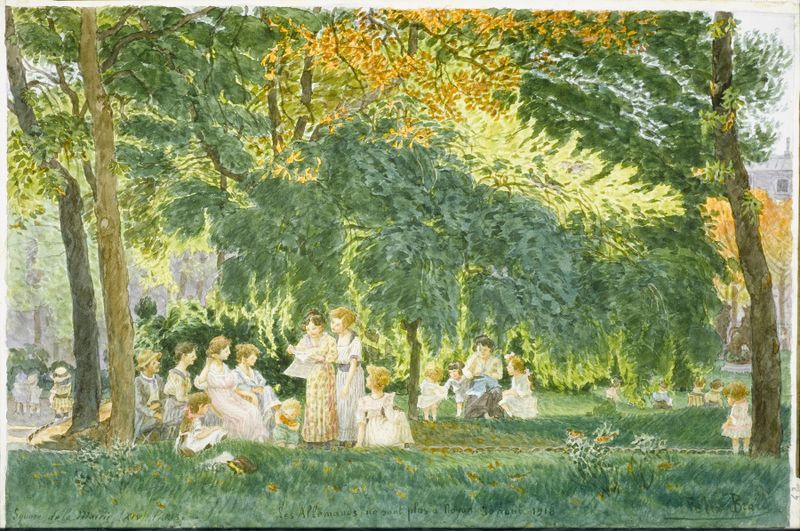
Square de la Mairie (XIV) Paris
Félix Brard
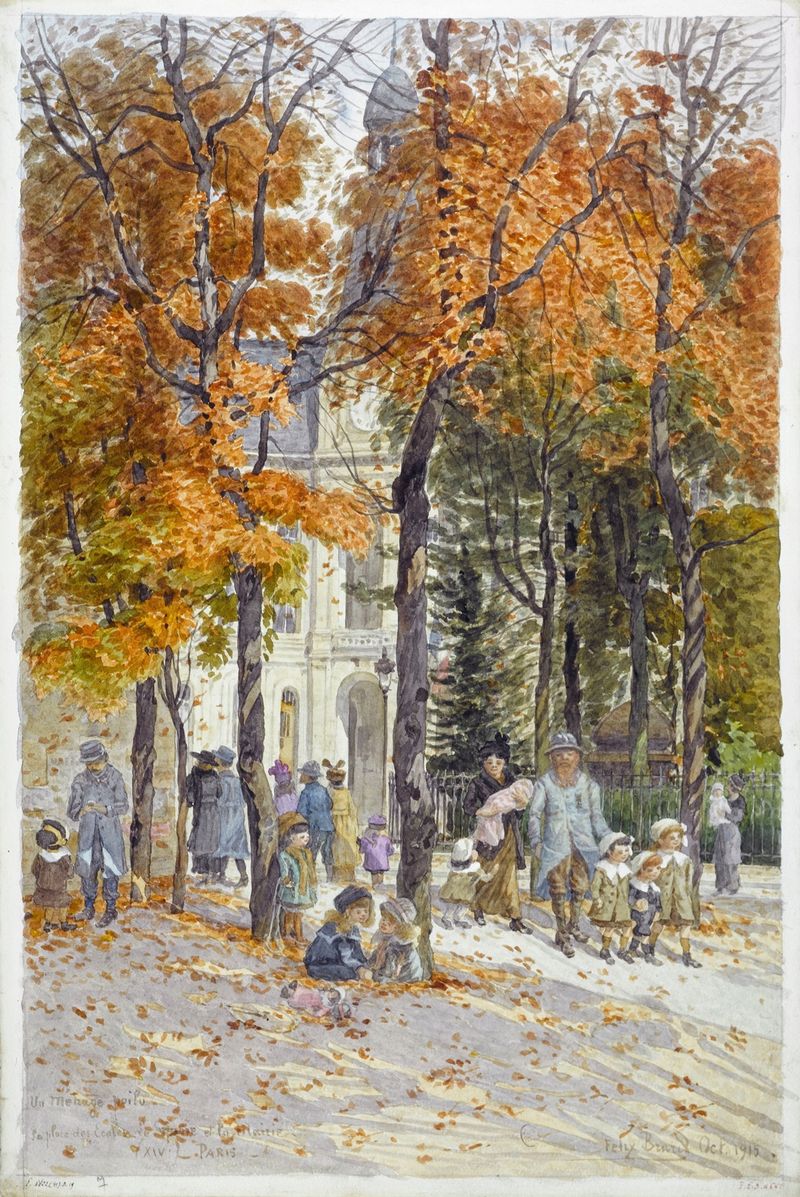
La place des Ecoles et le square de la Mairie du XIVème arrondissement
Félix Brard
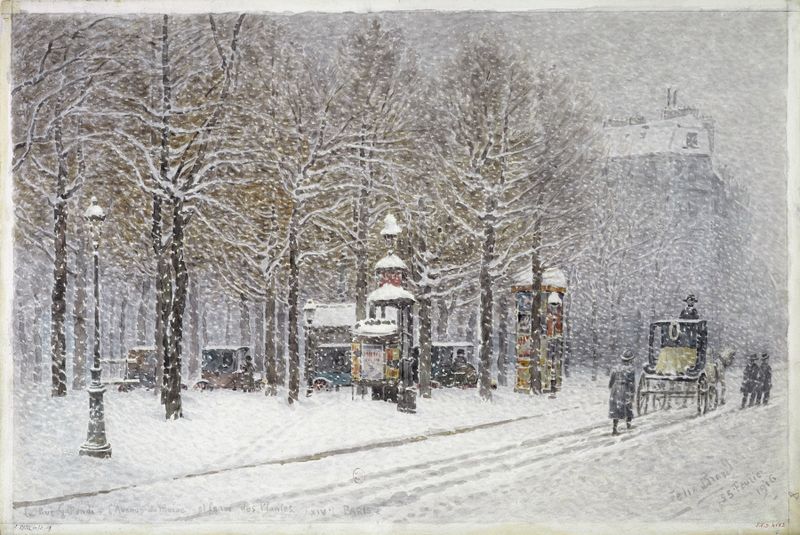
La rue Gassendi, l’avenue du Maine et la rue des Palntes sous la neige en Février 1916
Félix Brard
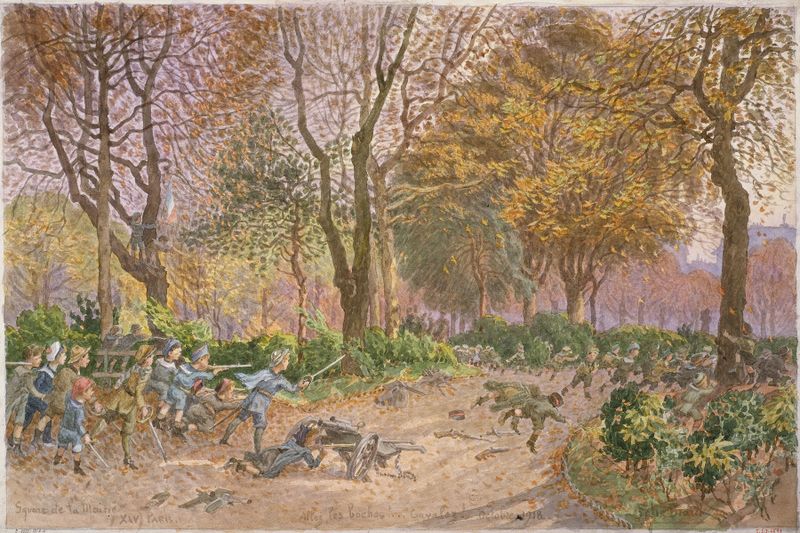
Enfants jouant à la guerre dans le square de la mairie du 14ème arrondissement
Félix Brard
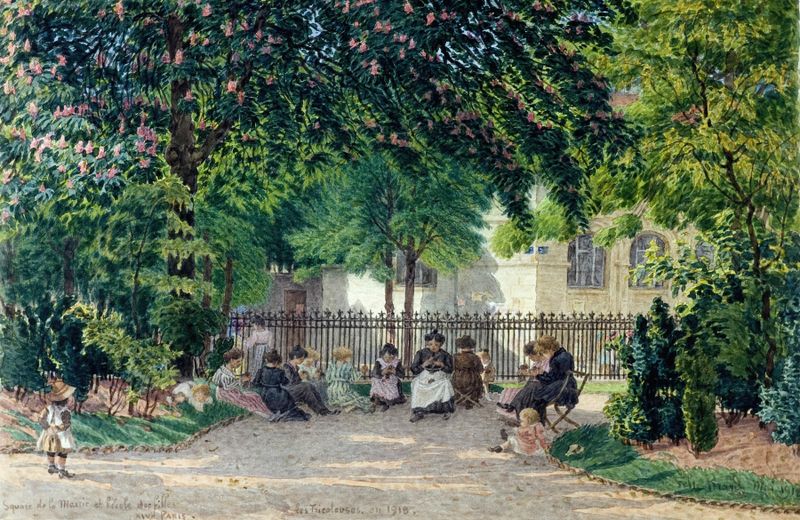
Tricoteuses au square de la mairie 14ème arrondissement en mai 1918
Félix Brard
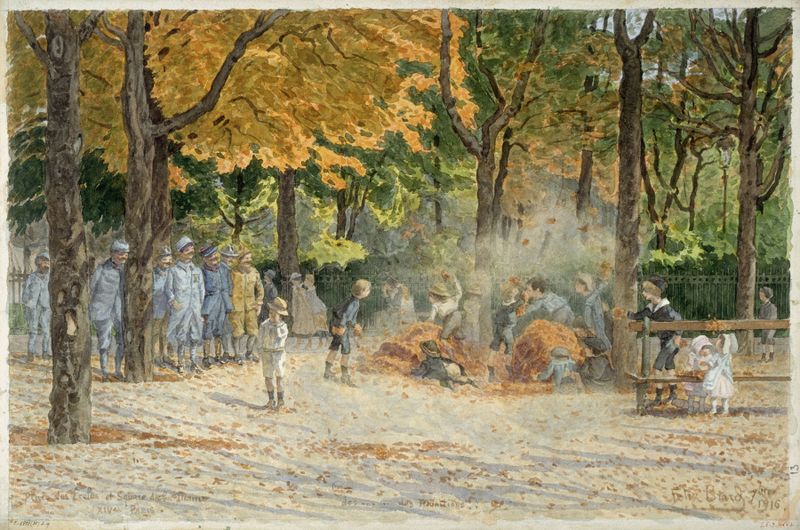
Place des Ecoles de la Mairie du XIVème arrondissement
Félix Brard

Square de la mairie du 14ème arrondissement, rue Mouton Duvernet le 4 juillet 1917
Félix Brard
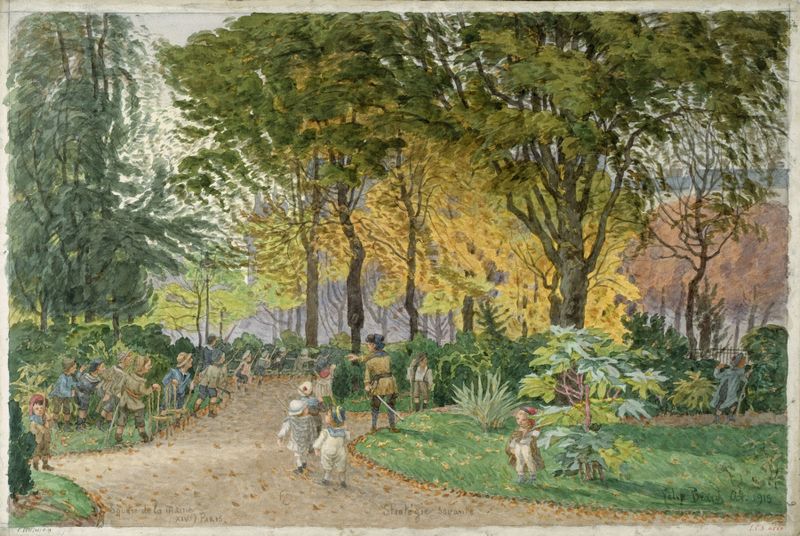
Square de la mairie du XIVème arrondissement
Félix Brard

Place de Montrouge, 14ème arrondissement de Paris, 25-29 Janvier 1918
Félix Brard





