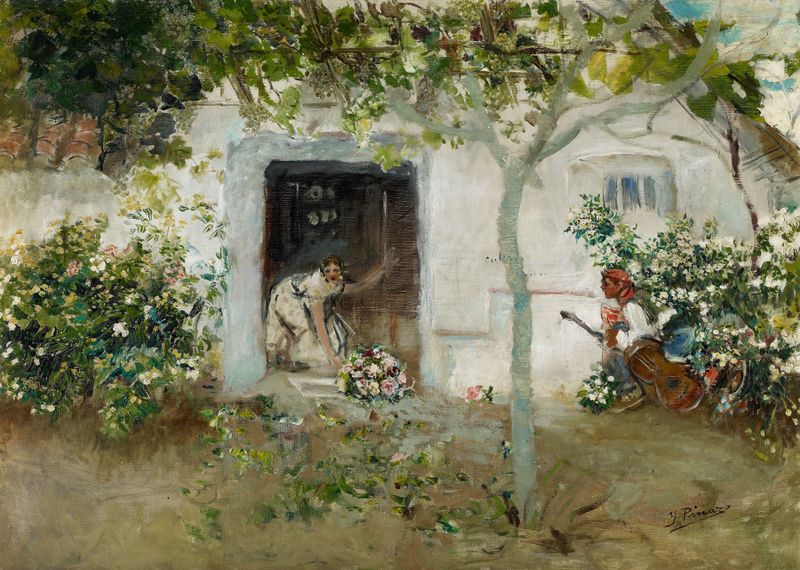
Anochecer en la escollera III — History & Facts
Can paint confess what words never could? In Anochecer en la escollera III, the canvas whispers secrets of twilight and solitude, inviting viewers to explore the legacy of light and shadow intertwined in the fabric of life. Look to the left at the gentle wash of violet and deep blue that flood the horizon, where the sky meets the tranquil water. The brushstrokes are soft yet deliberate, drawing your eyes to the fading light that dances on the waves, each ripple capturing the day's last breath. The horizon is a delicate line, a promise of tomorrow, while the foreground, rendered with earthy tones, anchors the scene, introducing a sense of stillness amidst the encroaching night. The contrasts within this work speak volumes: the warm glow of the setting sun juxtaposed against the cold embrace of night evokes a poignant sense of transition.
There’s a palpable tension between the vibrant colors of day and the encroaching darkness, suggesting not only the end of a day but also the passage of time itself. Each element whispers of nature's cycles, embodying the fleeting nature of existence and the weight of memory that lingers long after the light fades. In the late 19th century, during the period between 1898 and 1900, Ignacio Pinazo Camarlench painted this piece while grappling with the changing currents of Spanish art. Emerging from the shadow of realism, he found inspiration in impressionism, aiming to capture the ephemeral beauty of the natural world.
This was a time of artistic transition, where the legacy of past techniques met the burgeoning exploration of light and color, reflecting the vibrancy of life—and of art itself.