Ansicht von Schloss Reichenstein bei Inzlingen — History & Facts
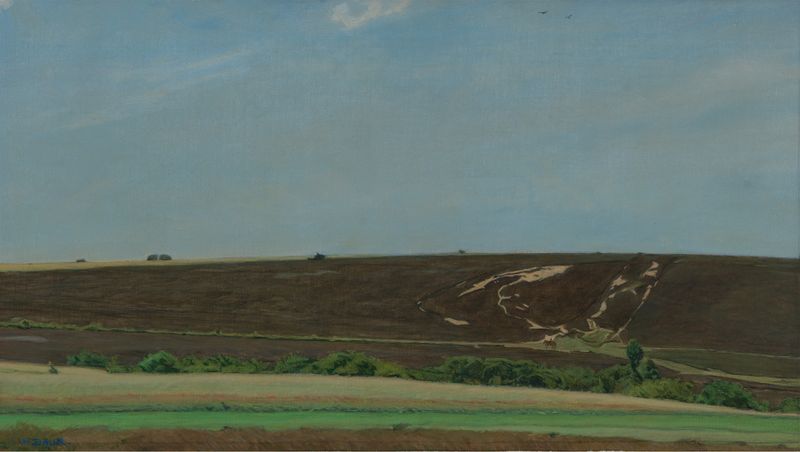
When did color learn to lie? In Ansicht von Schloss Reichenstein bei Inzlingen, the question of transformation hangs heavily in the air, whispering secrets of the past and present intertwined. Look to the foreground, where the verdant hills meet the river's edge, a vibrant tapestry of greens and blues. The castle, crowned with sunlight, rises majestically against the backdrop of a sweeping sky. Notice how the soft brushstrokes create a gentle harmony, blending the castle's stony façade with the rich hues of nature surrounding it.
The use of light is deliberate, casting shadows that add depth and dimension, while the palette captures an ephemeral quality — an idyllic moment suspended in time. Beneath its tranquil surface, the painting reveals a more complex narrative. The juxtaposition of the castle's solid structure against the fluidity of the water suggests a tension between permanence and change, evoking questions about the passage of time. The reflections in the water, slightly distorted, hint at a reality that is not what it seems, inviting the viewer to ponder the transformation of memory and identity.
Here, nature and architecture exist in dialogue, each influencing the other, suggesting that history is as much about the past as it is about our perceptions. In 1904, Daur painted this piece during a period marked by artistic exploration and shifting perspectives in Europe. Nestled in the heart of Germany, he was influenced by the burgeoning movements that sought to redefine reality through color and form. The world around him was transforming, mirroring the emotional and aesthetic evolution in his work, as artists increasingly sought to capture the essence of their environments in new and dynamic ways.