
Ansicht von Venedig Dogenpalast — History & Facts
Is this a mirror — or a memory? In Ansicht von Venedig Dogenpalast, the viewer is invited to explore the delicate interplay between reality and reflection, where faith intertwines with fleeting moments of beauty. Look to the left at the intricate details of the Doge’s Palace, its ornate façade bathed in soft, golden light, illuminating the rich textures of the stone. The artist employs a muted palette, dominated by gentle earth tones punctuated by the delicate blues of the canal below. The composition invites the eye to glide effortlessly across the surface, where the architecture harmonizes with its watery counterpart, creating a serene symmetry that speaks of stability amidst change. Beneath this tranquil surface lies a tension between permanence and transience.
The still water captures the palace like a reverent embrace, suggesting a faith in beauty that transcends time. Yet, the wavering reflections hint at the impermanence of these moments, evoking a sense of nostalgia for what once was. The interplay of light and shadow further amplifies this emotional dichotomy, drawing attention to the fragile nature of existence in a city that has danced on the edge of decline. Created during a period of relative obscurity in Kaufmann’s career, Ansicht von Venedig Dogenpalast reflects his exploration of architectural forms infused with a poetic sensibility.
Little is known about the exact date of this work, but it emerges from a time when artists grappled with the weight of tradition and the push for modernity. This painting stands as a testament to Kaufmann's ability to capture not just a scene, but a lingering essence of faith in art itself.
More Artworks by Karl Kaufmann
Browse all →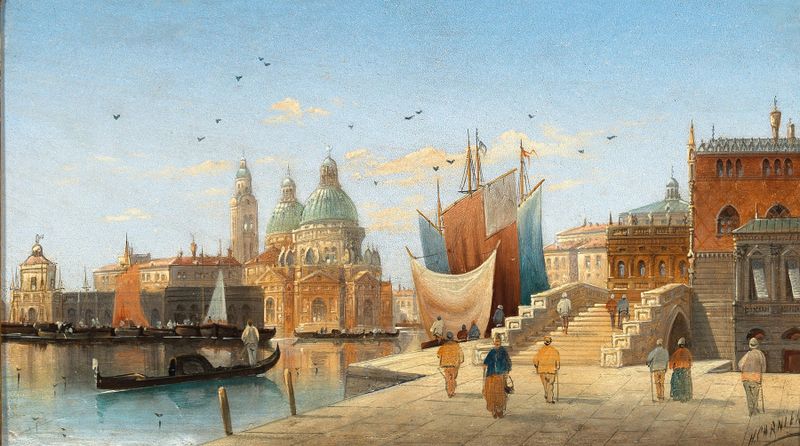
Venice, a View of Santa Maria della Salute
Karl Kaufmann
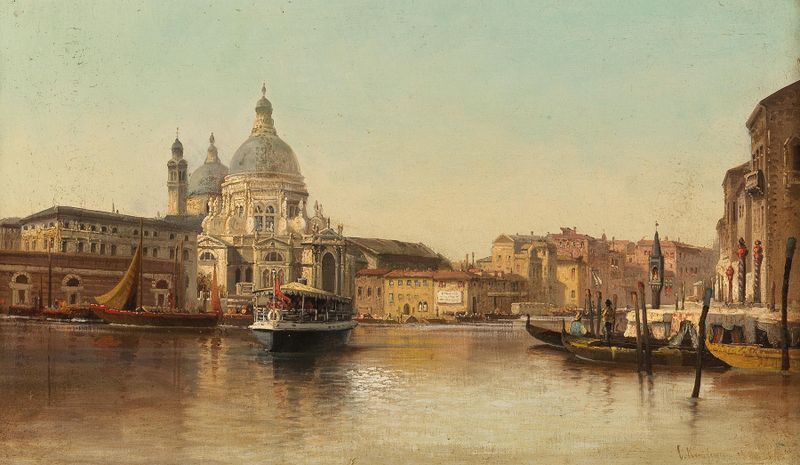
Venedig, Kanal Grande mit Blick auf Santa Maria della Salute
Karl Kaufmann
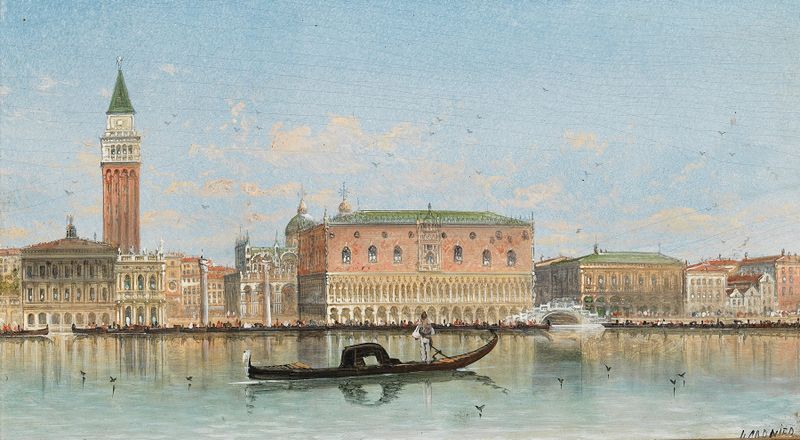
Venice, a View of St Mark’s Colum
Karl Kaufmann

Venedig Mit Santa Maria Della Salute
Karl Kaufmann
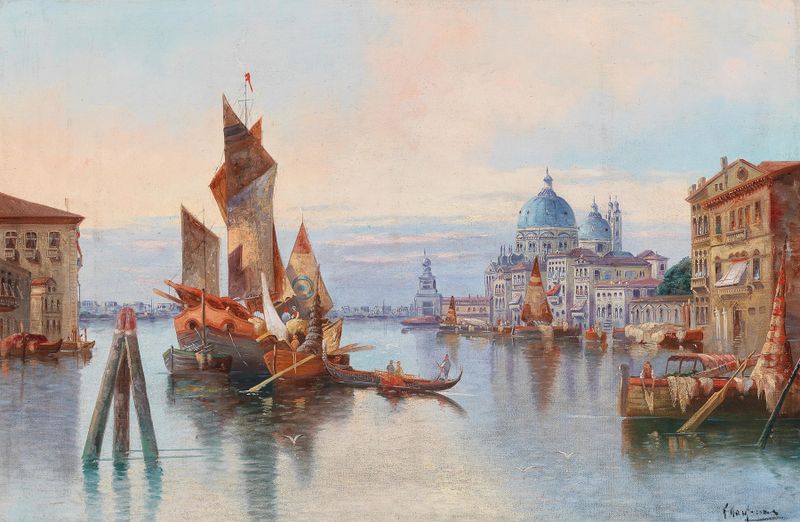
Venice, A View of Santa Maria della Salute
Karl Kaufmann
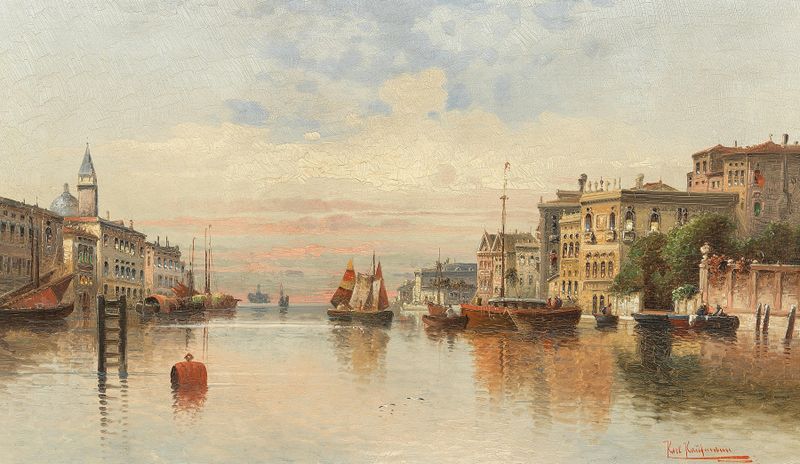
Venice, a View of a Canal
Karl Kaufmann

Fishermen By The Coast
Karl Kaufmann

Venice, Canal Scene
Karl Kaufmann
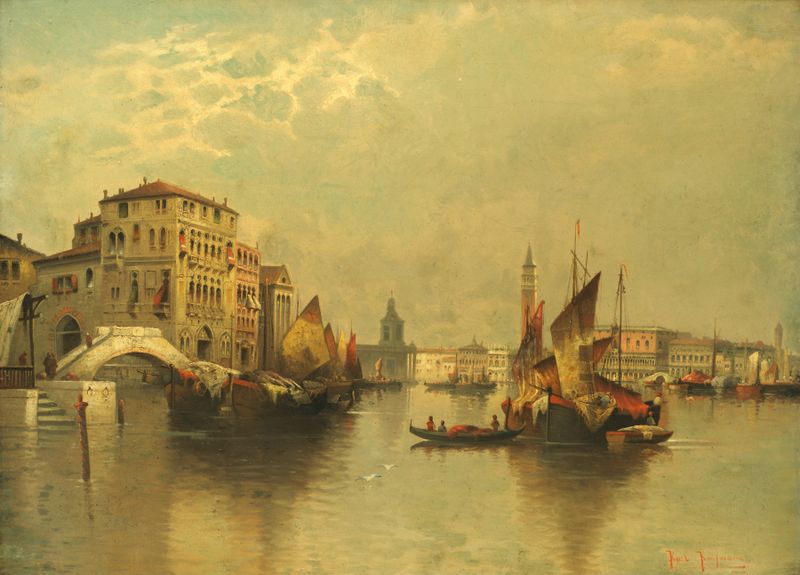
View of Venice
Karl Kaufmann
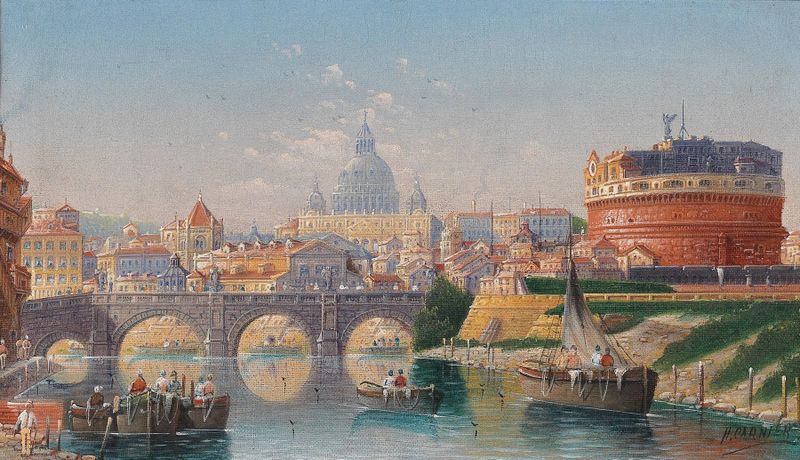
Rome, View Of The Castel Sant’angelo
Karl Kaufmann
More Architecture Art
Browse all →
The statue of Liberty
Frédéric Auguste Bartholdi

View of Houses in Delft, Known as ‘The Little Street’
Johannes Vermeer

View of Houses in Delft, Known as ‘The Little Street’
Johannes Vermeer

The Cathedral in Rouen. The portal, Grey Weather
Claude Monet

The yellow house
Vincent van Gogh

The Church in Auvers-sur-Oise, View from the Chevet
Vincent van Gogh