Antwerpen — History & Facts
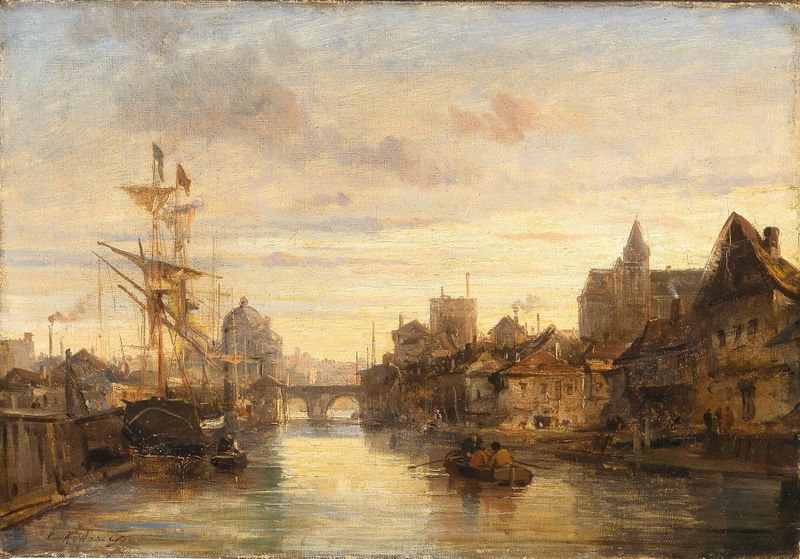
In a world brimming with noise, the essence of solitude finds its reflection in art. Loneliness is not merely the absence of company; it is a poignant space where one's innermost thoughts and emotions can quietly flourish. Look closely at the canvas and notice the muted palette that envelops the scene; shades of blue and gray swirl together, crafting a hauntingly beautiful atmosphere. The composition invites your gaze to linger on the horizon, where fragmented light breaks through dense clouds, suggesting hope amidst despair.
Each brushstroke seems deliberate, echoing a rhythm of isolation that resonates deeply within the viewer. Beneath the surface, the juxtaposition of light against shadow speaks volumes about the emotional dichotomy present in the work. Here, the gentle luminescence represents fleeting moments of connection, while the surrounding darkness embodies the weight of solitude. The subtle textures of the canvas evoke a sense of longing, compelling the observer to reflect on their own experiences of loneliness, and how it can lead to a deeper understanding of oneself. The artist created this work during a time of personal exploration, likely in the mid-19th century, as he navigated the complexities of his own life while residing in Europe.
This period was marked by significant artistic transitions, with many artists seeking to express new emotional depths in their work. It was a time when the exploration of color and atmosphere gained prominence, and Kuwasseg’s exploration of solitude aligns with this artistic evolution.
More Artworks by Charles Euphrasie Kuwasseg
Browse all →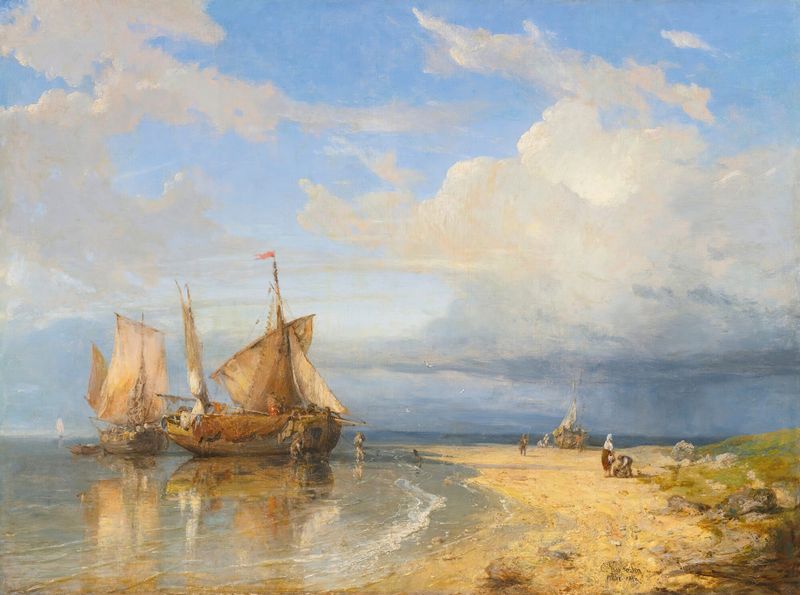
UNLOADING THE CATCH
Charles Euphrasie Kuwasseg
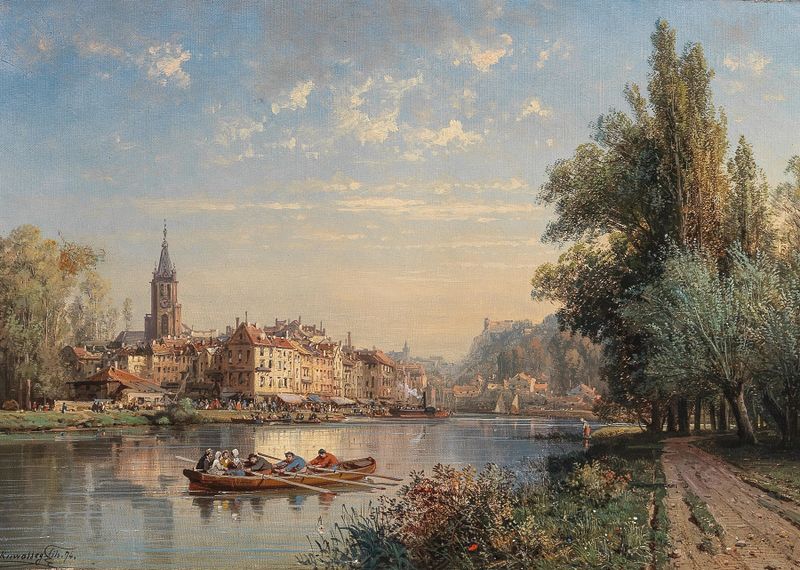
A Village by the River
Charles Euphrasie Kuwasseg
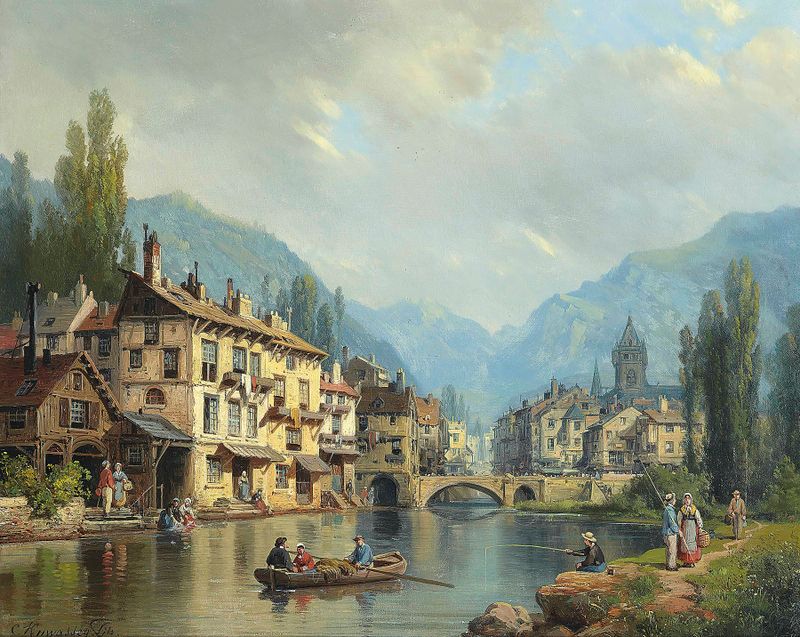
An Alpine Town In Spring
Charles Euphrasie Kuwasseg
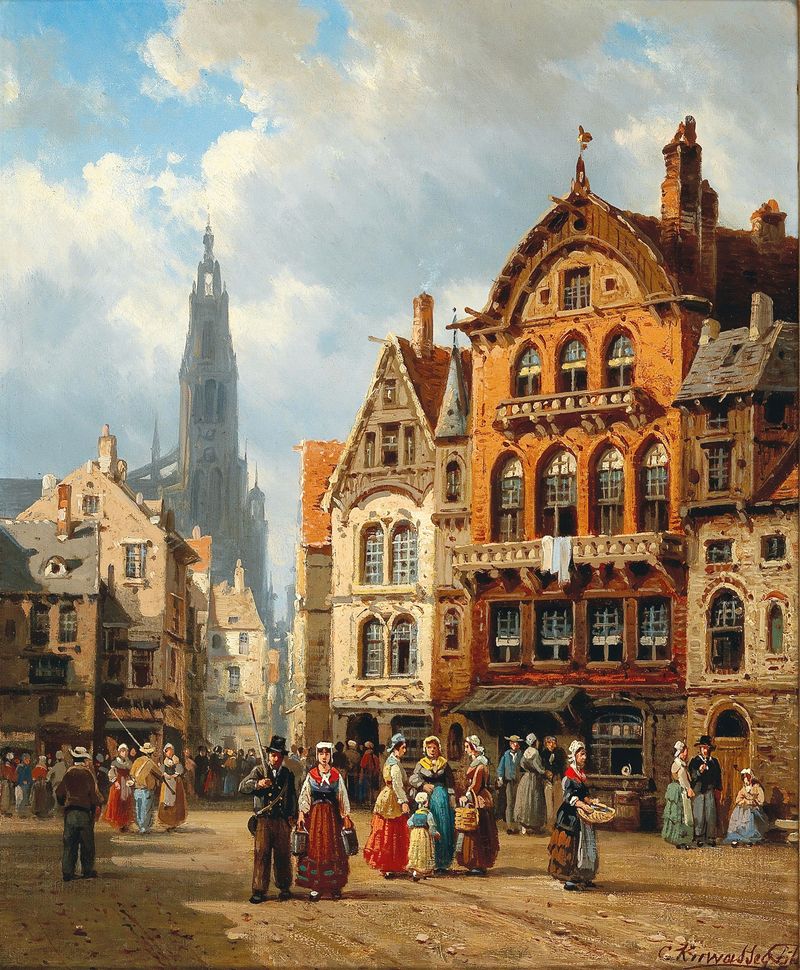
Antwerp
Charles Euphrasie Kuwasseg

La rue Royale à Saint-Cloud après l’incendie
Charles Euphrasie Kuwasseg

Fishermen by the Coast
Charles Euphrasie Kuwasseg

Fischer am Strand
Charles Euphrasie Kuwasseg

Gezicht op Gent
Charles Euphrasie Kuwasseg
Partie in Amsterdam
Charles Euphrasie Kuwasseg

Fisherfolk on the Coast
Charles Euphrasie Kuwasseg