Arkadische Landschaft — History & Facts
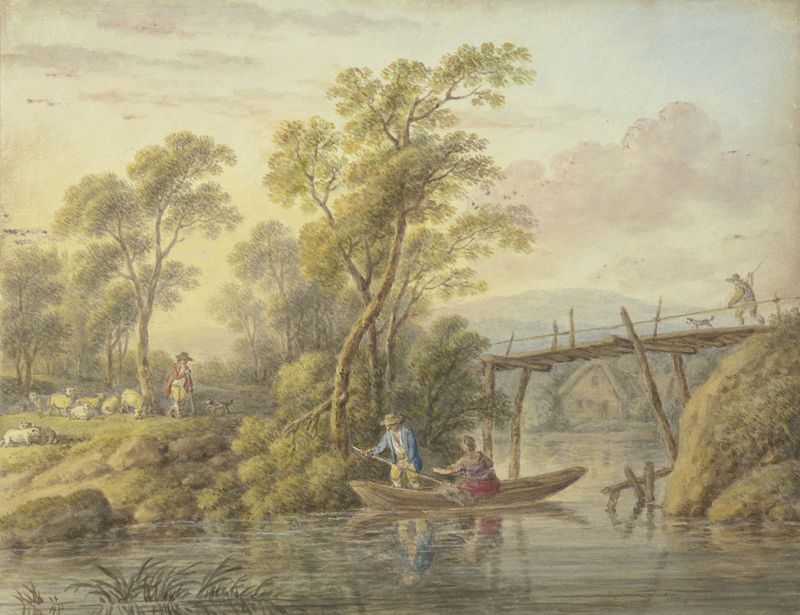
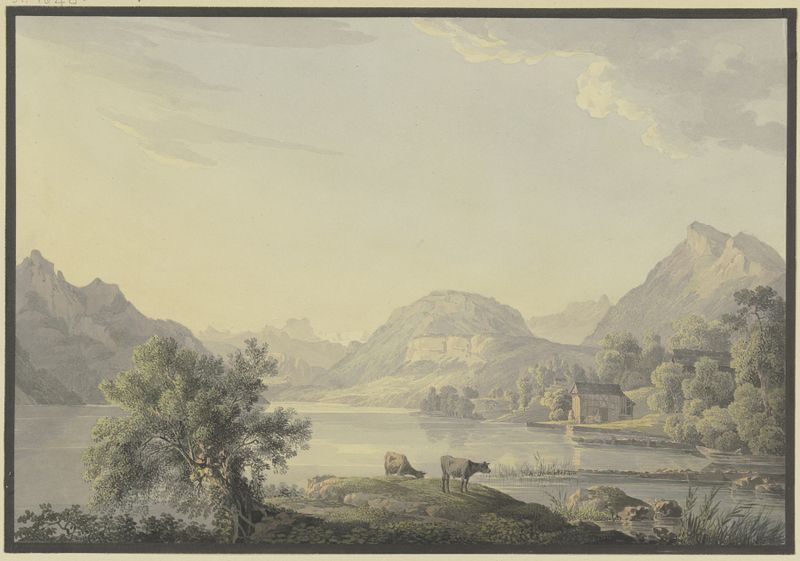
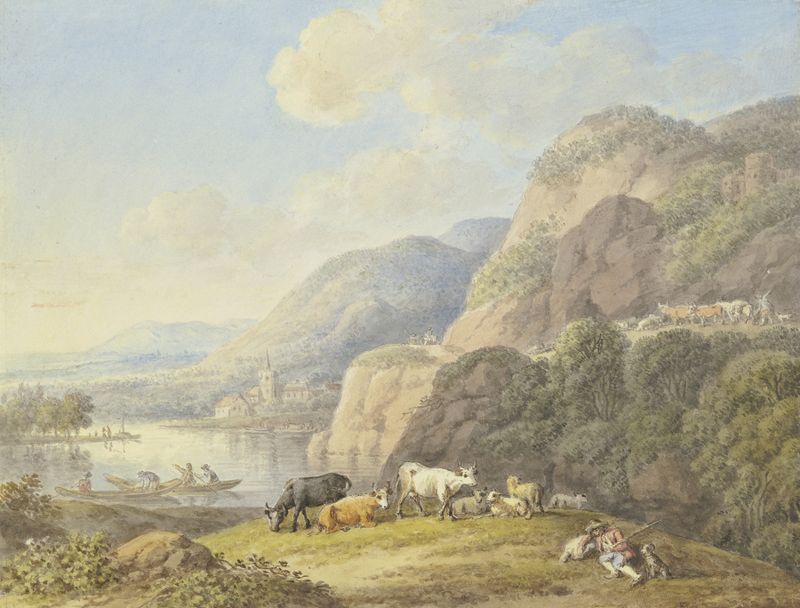
Can beauty exist without sorrow? In Arkadische Landschaft, the answer lingers in the air, evoking a sense of longing that transcends its idyllic surfaces. Focus on the horizon, where softly rolling hills meet a sky painted in ethereal blues and yellows. The gentle curve of the landscape is framed by lush, verdant trees, their leaves catching the light like scattered jewels. Notice how the figures, small and serene, gather near a tranquil stream, seemingly lost in a moment of quiet reflection.
The careful layering of greens and earthy tones draws the eye deeper into the composition, inviting contemplation of a world untouched yet teeming with unexpressed emotions. At first glance, the scene appears harmonious, yet beneath the surface lies a palpable tension. The idyllic beauty of the landscape juxtaposes the solitary figures who seem almost dwarfed by nature's grandeur, suggesting a yearning for connection that remains just out of reach. The interplay of light and shadow not only highlights the landscape's beauty but also hints at the complexities of human emotion—joy intertwined with an undercurrent of sadness, evoking nostalgia for a simpler, yet unattainable, existence. Painted in 1796, Arkadische Landschaft emerged during a period of great artistic exploration in Europe, where the ideals of Romanticism began to take hold.
Schallhas, working in Germany, was influenced by the burgeoning desire to escape industrialization's harsh realities and reconnect with nature. This painting reflects both a personal longing and a collective yearning for a lost paradise, capturing the essence of a transitional moment in art history.