
At Finchingfield — History & Facts
In this stillness, it invites us into a world marked by solitude and reflection, echoing the silent struggles of the human spirit. Look to the left at the figure standing alone under the expansive sky, the soft hues of blue and grey blending into one another. Notice the gentle strokes that define the clouds, which seem to cradle the landscape, while the golden light washes over the fields, suggesting a late afternoon. The simplicity of the composition draws us in, yet the isolation of the lone figure communicates a profound emotional weight. The contrast between the warm, inviting colors of the fields and the cool, shadowed areas surrounding the solitary figure speaks to the duality of existence.
Is the warmth of the landscape a comfort, or does it intensify the feeling of loneliness? The figure’s body language, slightly hunched and gaze averted, evokes a sense of yearning — perhaps for connection or understanding. In the distance, the quaint village lies untouched, creating a bittersweet reminder of community that feels just out of reach. Created during an uncertain time for the artist, At Finchingfield emerged in the early 20th century, a period marked by personal and social upheaval. Clausen, based in England, was deeply engaged with themes of rural life and solitude amidst the changing landscapes of modernity.
This work captures not only his technical prowess but also reflects a moment in art history where the tension between isolation and community became increasingly pronounced.
More Artworks by Sir George Clausen
Browse all →
Country garden
Sir George Clausen
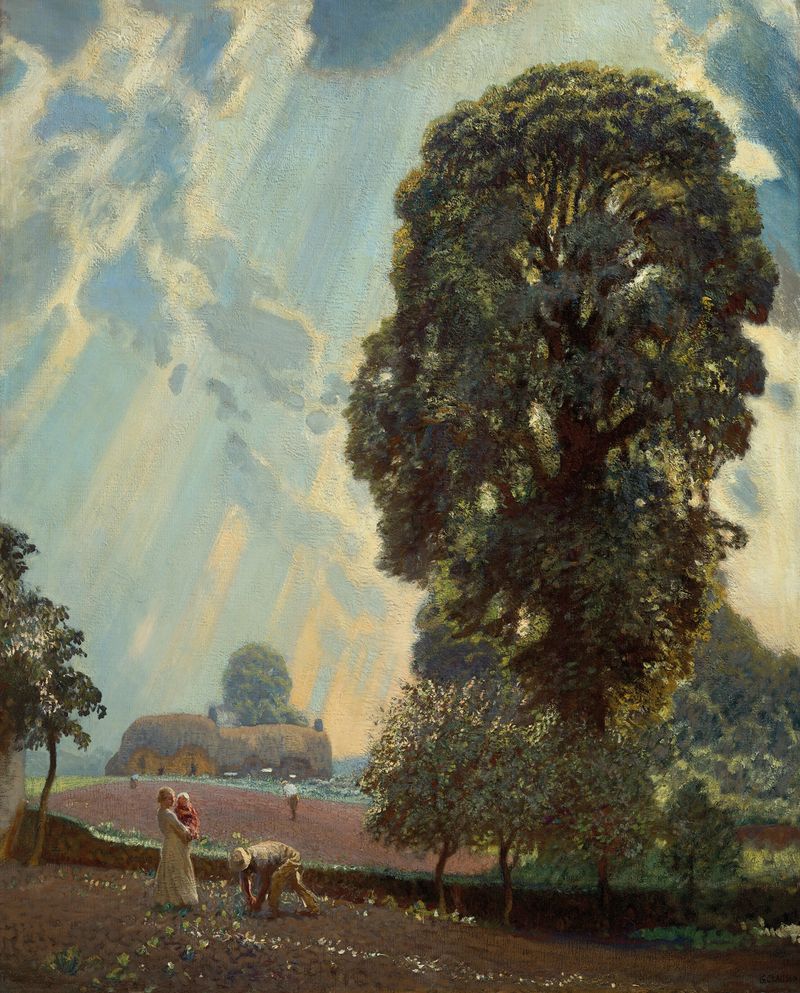
Rejoicing after the rain; Early Summer
Sir George Clausen
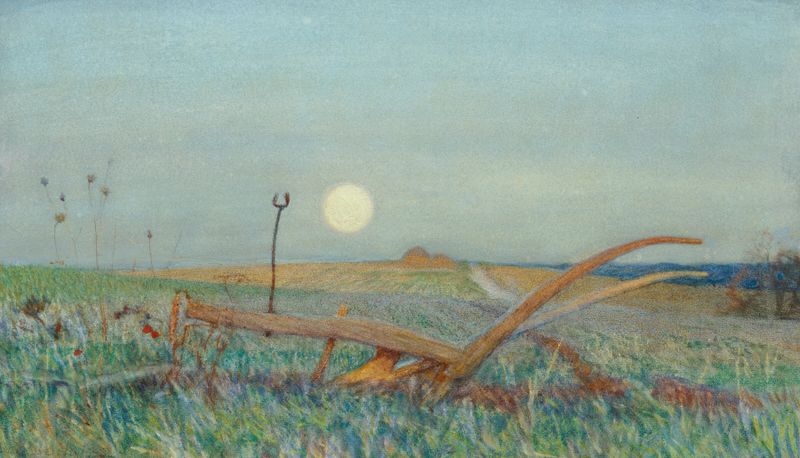
The Plough
Sir George Clausen

Haymakers by the stream
Sir George Clausen

The farmyard
Sir George Clausen

Landscape With Trees
Sir George Clausen

Winter evening
Sir George Clausen

Autumn landscape; Trees
Sir George Clausen

Landscape with lock gate
Sir George Clausen





