At the Lake Lucerne — History & Facts
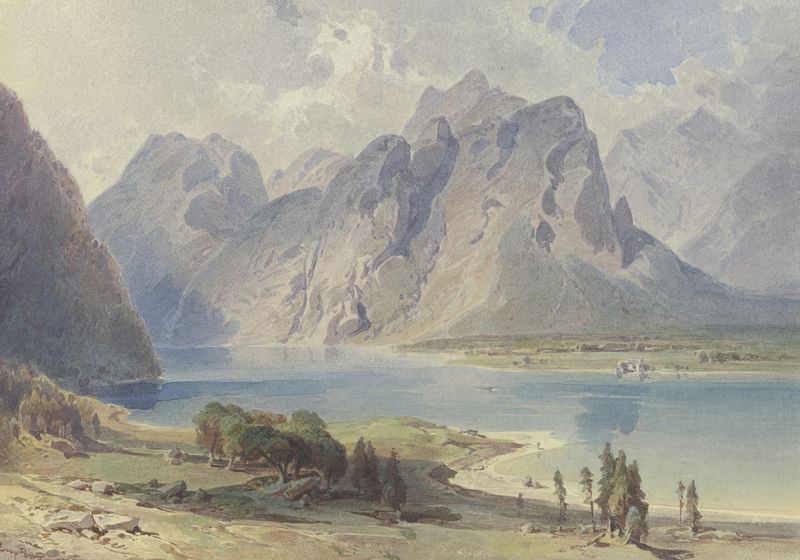
Can paint confess what words never could? In At the Lake Lucerne, the ethereal quality of the landscape draws us into a realm where dreams and reality intertwine. Look to the left and immerse yourself in the tranquil waters of the lake, its surface a perfect mirror reflecting the soft, pastel hues of a dawning sky. Notice how the delicate brushstrokes create a gentle ripple effect, capturing the serene movement of water. The distant mountains loom majestically in the background, their rugged silhouettes softened by a haze of early morning light.
Rottmann’s use of a harmonious color palette—blues, greens, and warm violets—imbues the scene with a sense of peace, inviting the viewer to linger in this idyllic moment. Delve deeper to uncover the emotional tensions nestled within this landscape. The calm lake represents introspection and stillness, contrasting with the towering Alps, which symbolize the challenges and aspirations that lie ahead. The interplay of light and shadow enhances this dichotomy, suggesting that beneath the surface of tranquility lies an undercurrent of profound emotion.
This artwork is not merely a depiction of a place; it becomes an exploration of the human experience, where nature mirrors inner feelings of yearning and hope. During the period when this piece was created, Rottmann was immersed in the Romantic movement, painting in Germany in the mid-19th century. He was captivated by the beauty of the Swiss landscape, which reflected the era’s fascination with nature and the sublime. The world was undergoing significant change, and artists like him sought solace and inspiration in the untouched beauty of the environment, capturing moments that spoke to the soul.