At The Village Stream — History & Facts
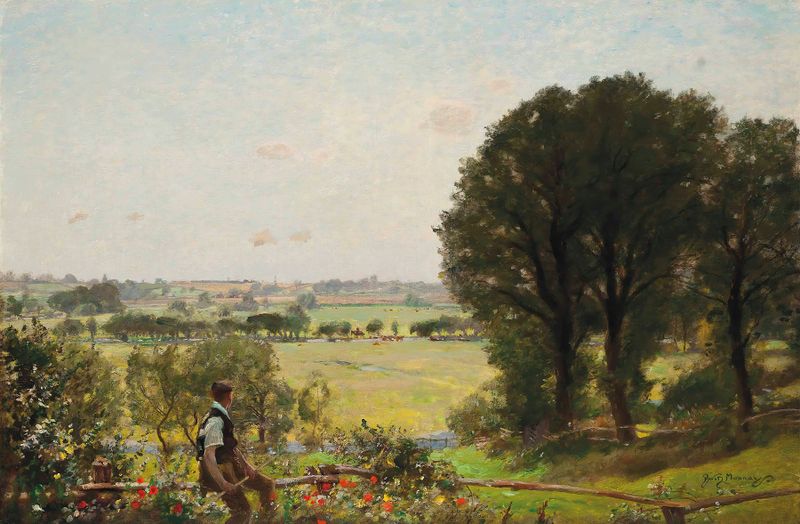
In the hushed embrace of nature’s serenity, silence becomes a canvas of its own, allowing our thoughts to flow like the water depicted within the frame. Look to the center of the composition, where gentle ripples awaken the mirror-like surface of the stream. Notice how the soft greens and blues harmonize, embodying tranquility as they reflect the leafy canopy above. The painter's delicate brushwork captures not just the essence of light but also the stillness that envelops the scene, drawing the viewer’s eye to the quiet interaction between water and land. Hidden undertones of emotion pulse beneath the surface.
The meandering stream can symbolize the passage of time, while the surrounding flora evokes the constant presence of life and growth. In this stillness, there’s a tension between the natural world and human memory—an invitation to reflect on moments that often go unnoticed amid the chaos of existence. The absence of figures emphasizes solitude, inviting a dialogue with our own experiences of quiet reflection. Created during a period when Impressionism was gaining traction, this work reflects the artist's exploration of landscapes and natural light in the late 19th century.
Living in Scotland, the artist sought to capture the fleeting beauty of his environment, a task that resonated with the broader artistic movement of the time. The simplicity of the scene belies the complexity of emotions it evokes, showcasing Murray’s dedication to portraying that which transcends the visual—a celebration of stillness in an ever-changing world.