
At the Watering Hole — History & Facts
This sentiment echoes through the rich layers of At the Watering Hole, where the stillness of nature belies the underlying tensions of human and animal existence. Look to the left, where a cluster of vivid, traditional figures stand in stark contrast to the tranquil, flowing water that occupies the foreground. Notice how the artist’s delicate brushwork captures the ripples, reflecting the surrounding landscape and the people poised to draw sustenance. The earthy palette of browns and greens envelops viewers, grounding them in a moment that feels both serene and charged with anticipation. Within this tranquil setting, deeper narratives unfold: the interplay of dependence and survival, the vulnerability of life at a common source, and the betrayal of trust inherent in nature's cycle.
The figures’ postures suggest a range of emotions — from focus to restlessness — as they navigate the delicate balance between harmony and conflict. Each element within the painting serves as a reminder that even in moments of peace, danger lurks just beyond sight. Karl Bodmer created this work during his travels through North America in the early 1830s, capturing the culture of Indigenous peoples and the mesmerizing landscapes he encountered. Amidst a period of burgeoning exploration and cultural exchange, he sought to document lives on the brink of transformation, reflecting both admiration and the complexities of colonial encounters.
More Artworks by Karl Bodmer
Browse all →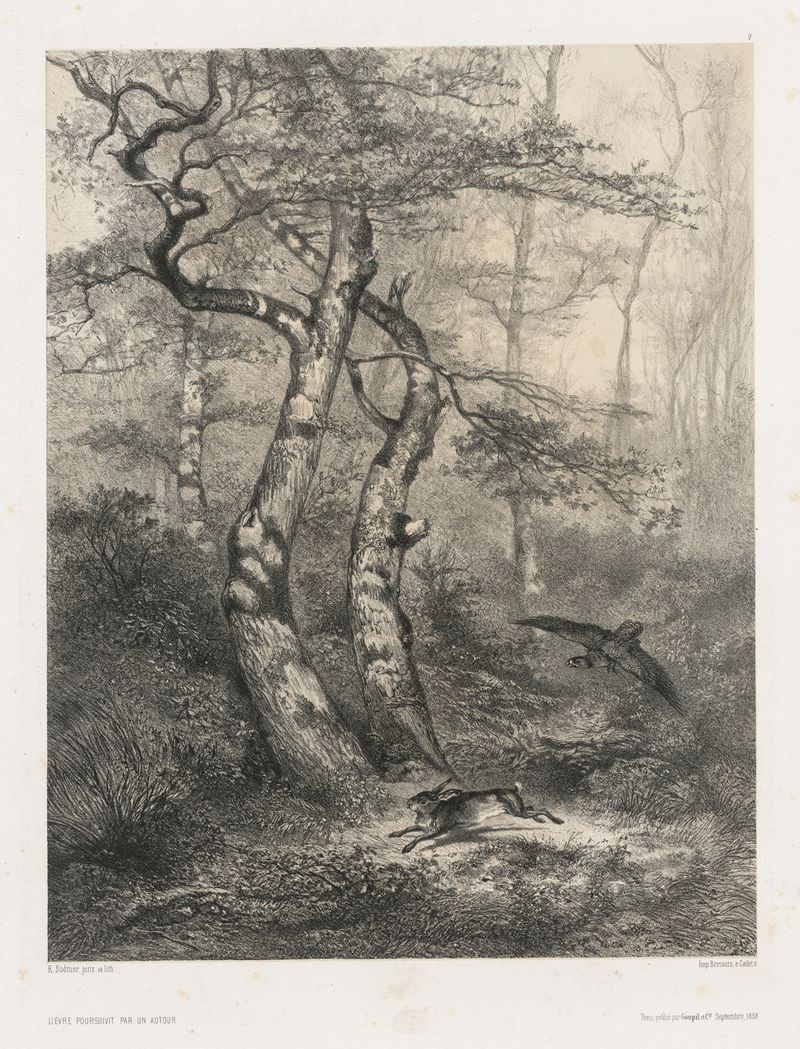
Hare Pursued by a Goshawk
Karl Bodmer
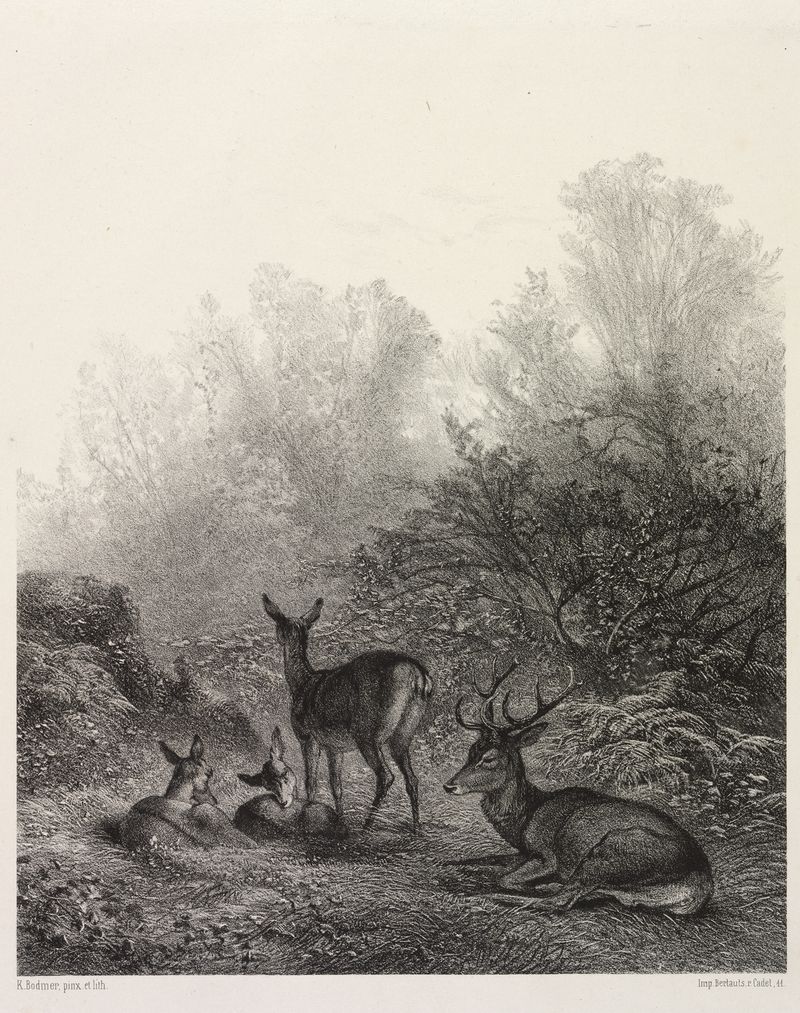
Deer at Rest c. 1860
Karl Bodmer
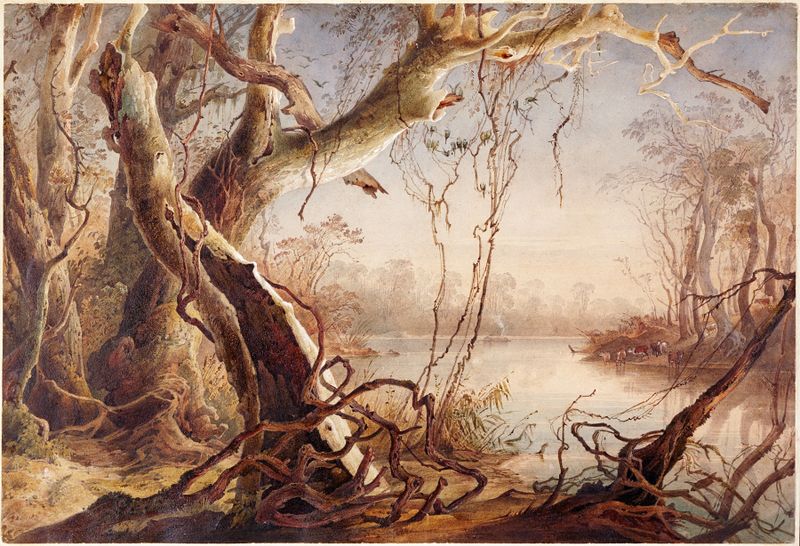
Mouth of the Fox River, Indiana
Karl Bodmer
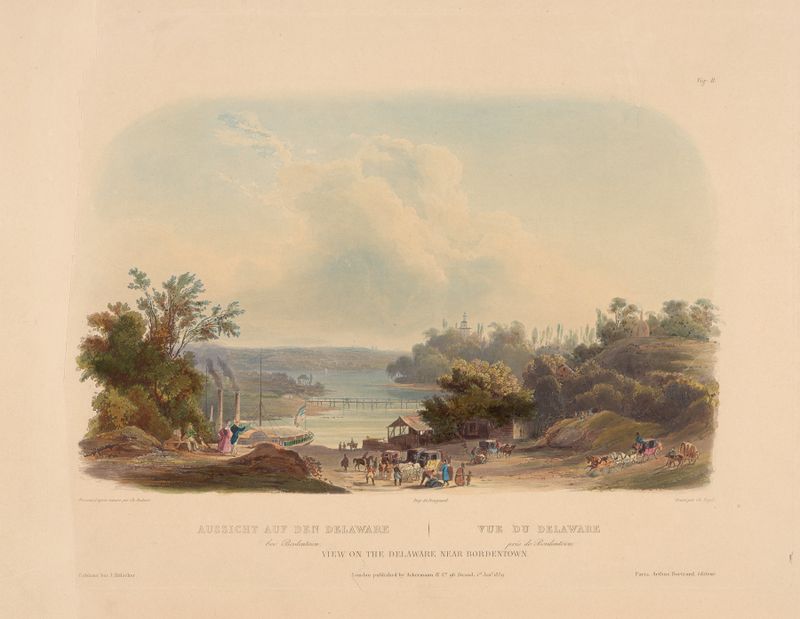
View on the Delaware near Bordentown
Karl Bodmer

Fort Pierre on the Missouri
Karl Bodmer
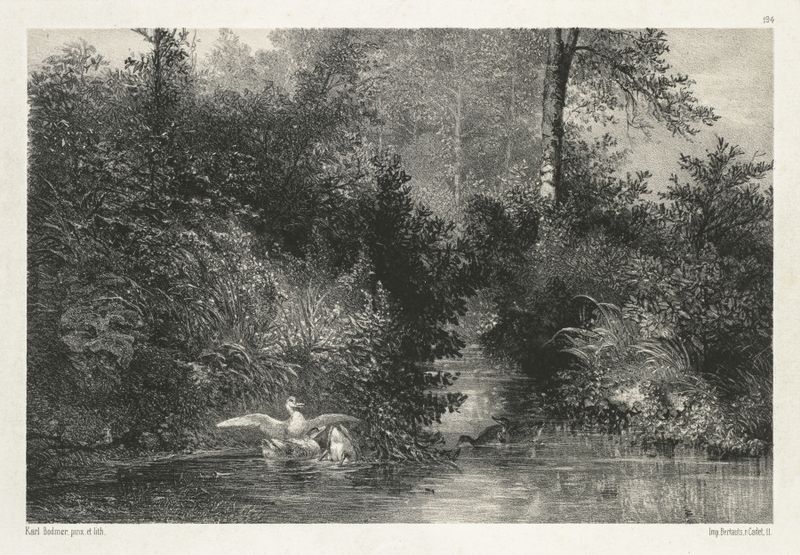
Canards (Ducks)
Karl Bodmer

Wild Boar in a Pond
Karl Bodmer

Le Soir; Cerf et Herons (Evening; Stag and Herons)
Karl Bodmer
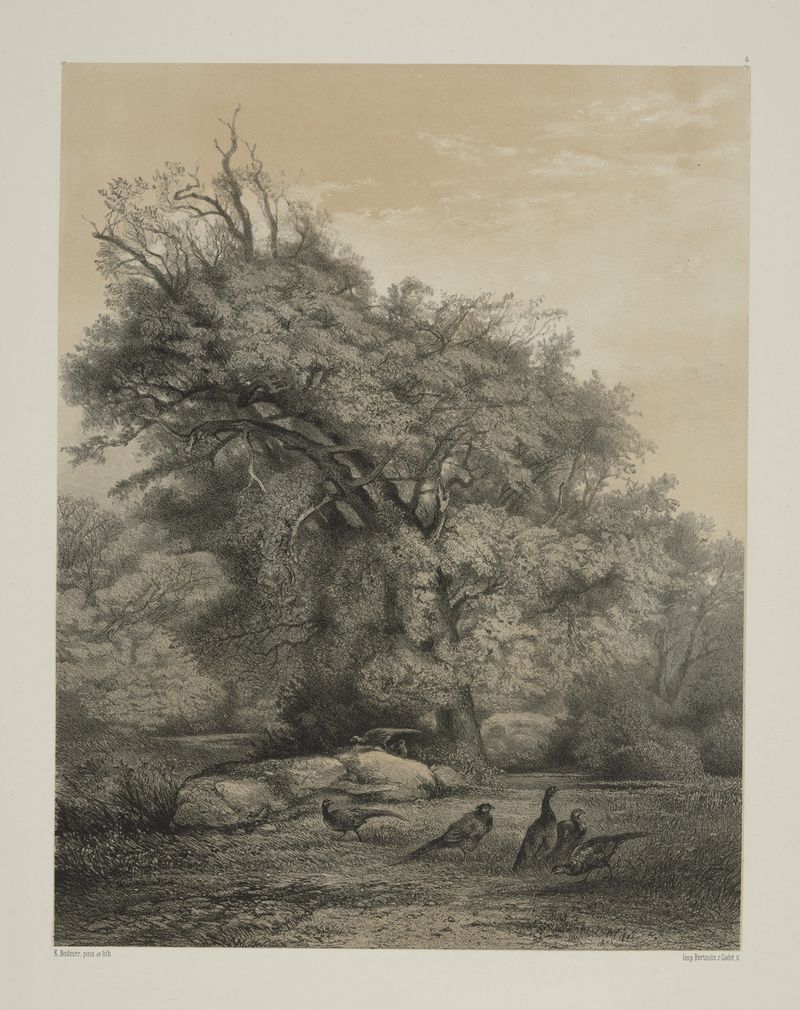
Pheasants
Karl Bodmer

Sheltered from the frost
Karl Bodmer





