Au Bord de la Bÿrse près de Pierre-pertuis — History & Facts
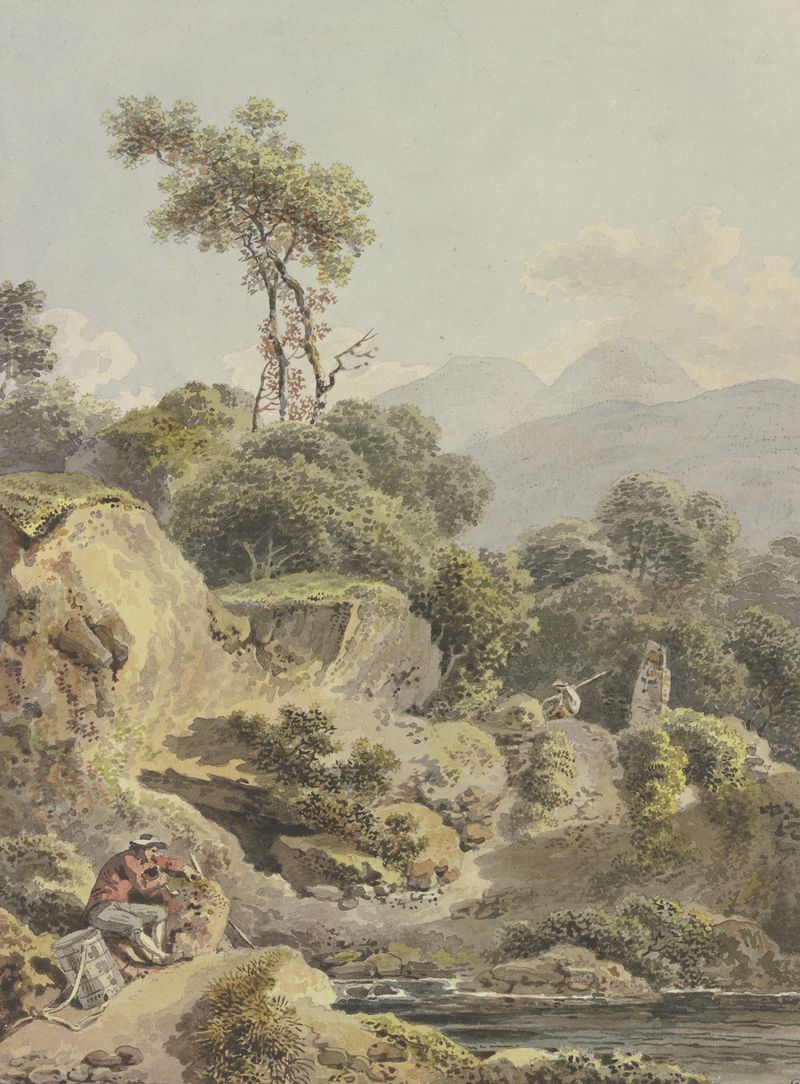
Can beauty exist without sorrow? In the stillness that envelops the scene, one can almost hear the echoes of solitude mingling with the soft rustle of the trees. Look to the foreground where a solitary figure stands, gazing pensively at the water's edge. The muted palette of greens and browns creates a serene yet melancholic atmosphere, while the subtle play of light reflects the inner turmoil of the subject. Focus on the delicate brushstrokes that form the ripples of the water, mirroring the quiet undulation of thoughts that reside within the mind of the lone observer. As you delve deeper into the composition, notice how the positioning of the figure against the expansive landscape amplifies feelings of isolation.
The distant horizon seems both inviting and unattainable, symbolizing the constant tension between yearning and reality. The soft, almost ethereal light bathes the scene, evoking a bittersweet longing, as if to remind us that beauty often carries the weight of loneliness. Created during a period in which Dunker was exploring themes of solitude and nature, Au Bord de la Bÿrse près de Pierre-pertuis reflects the artist's resonance with the human experience. Though the exact date remains uncertain, it is believed to stem from the late 18th century, a time when the romantic ideals began to shape the art world, focusing on emotion and individual experience against the backdrop of nature.