Auf dem Feld — History & Facts
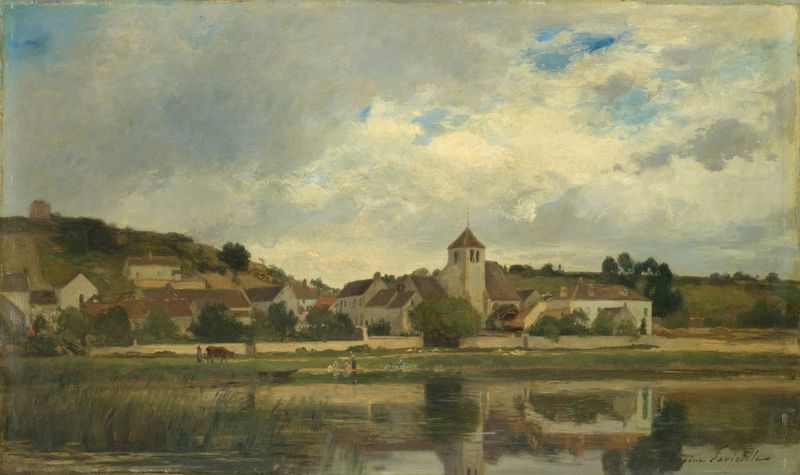
Can paint confess what words never could? In Auf dem Feld, the stillness of the landscape invites contemplation on the passage of time, as vibrant colors weave a narrative of seasons intertwined. Look to the foreground, where lush greens dot the field, encircling a horizon kissed by soft, golden hues. The brushstrokes are deliberate yet fluid, creating a sense of motion in the grasses swaying gently in an unseen breeze. Notice how the light filters through the clouds, illuminating patches of earth, guiding your gaze deeper into the scene.
This interplay of light and shadow reveals not just depth but also the fleeting nature of each moment captured. Delve into the subtle contrasts within the painting—between light and dark, vibrancy and shadow. The spectrum of colors hints at a narrative of change, evoking nostalgia and the passage of time. The tranquil sky above, with its hints of impending dusk, foreshadows the inevitability of nightfall, a reminder of life’s cyclical rhythm.
Each element, from the distant trees to the textured field, enriches the emotional landscape, whispering secrets of solitude and serenity. Eugène Lavieille created this work during a period of artistic exploration in France, possibly around the late 19th century. He was influenced by the Impressionist movement, which emphasized the effects of light and color in nature. At this time, Lavieille was immersed in capturing rural scenes, reflecting the world around him in a moment of transition, both personally and culturally, as artists sought to break traditional boundaries and embrace new expressions of beauty.