Autumn Days — History & Facts
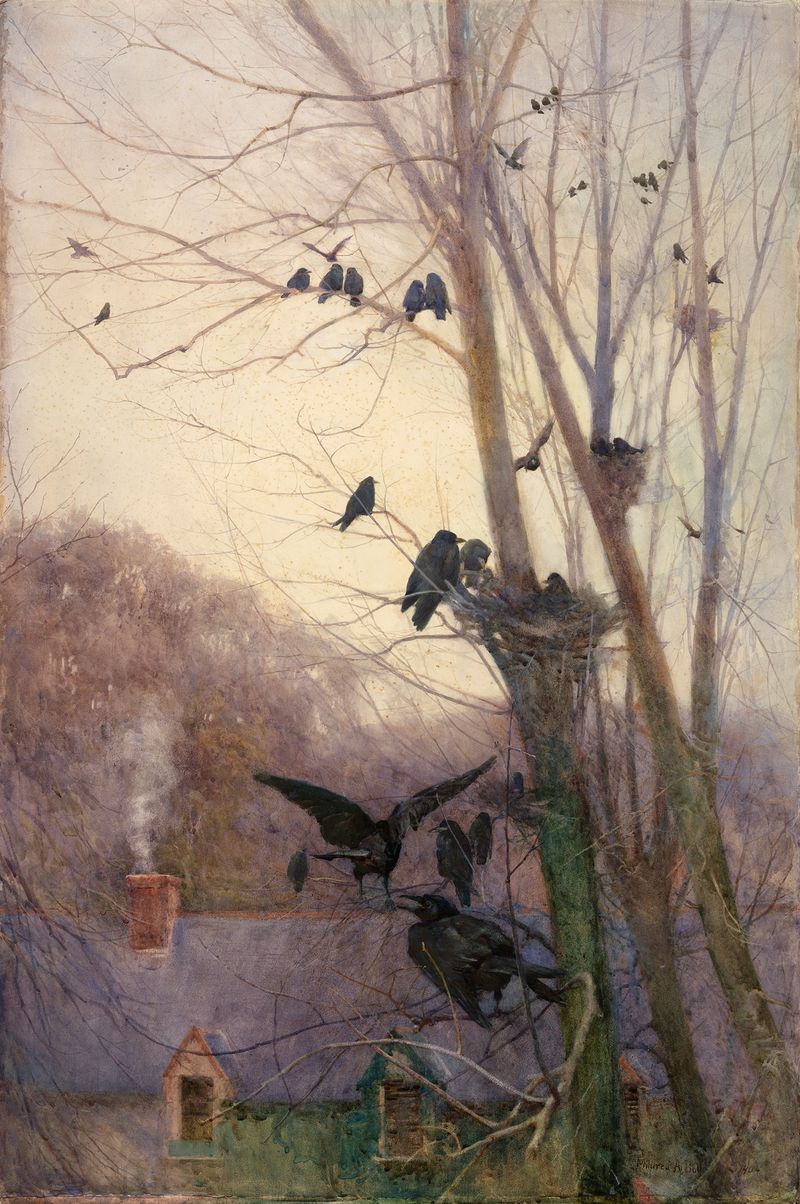
Can paint confess what words never could? In the embrace of Autumn Days, tranquility unfurls like a soft whisper, inviting the viewer into a serene moment suspended in time. Look closely at the lower left corner, where the earth meets the vibrant dance of foliage. The strokes blend warm ochres and golds with soft, muted greens, as leaves gently cascade to the ground. This grounded palette captures the essence of a quiet afternoon, where nature’s palette engages with the viewer's sense of peace.
Notice how the diffused light filters through the trees, softening the landscape and creating a dreamlike atmosphere. As your gaze wanders, you may find hidden contrasts woven into the fabric of the scene. The stillness of the trees stands in stark relief against the dynamic movement of falling leaves, suggesting both permanence and change—a reminder of life's cycles. The subtle interplay of light and shadow evokes a sense of nostalgia, while the delicate brushwork embodies the fleeting nature of autumn.
Each detail invites introspection, urging us to consider our own moments of serenity and transformation. In 1928, a time of artistic innovation and societal change, Autumn Days emerged from the hands of Mildred Anne Butler. Living in Ireland, Butler painted during a period where the Impressionist influence was giving way to more personal expressions of landscape. As a female artist navigating a male-dominated field, her work reflects both her keen observation of nature and her desire to capture the emotional resonance of each moment.