Autumn Hillside — History & Facts
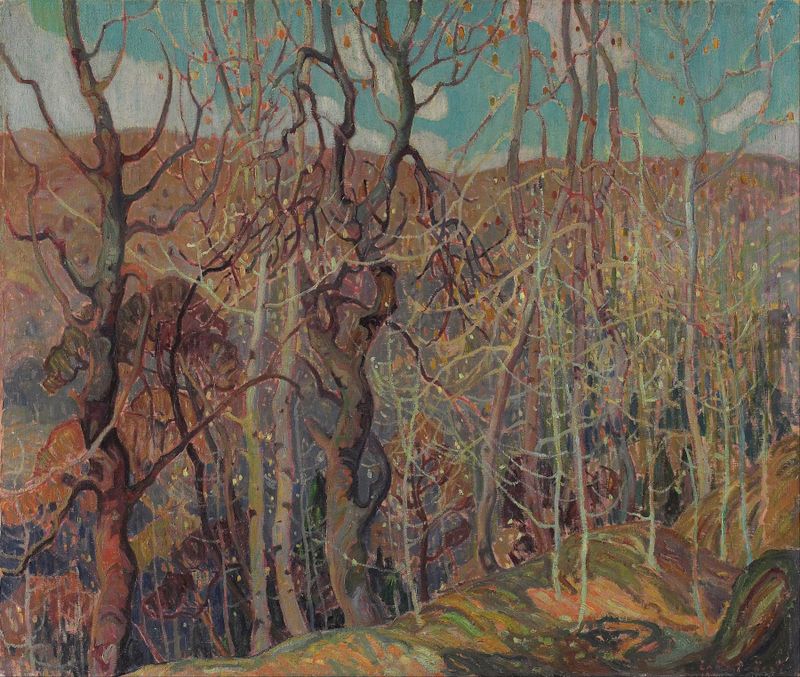
Where does light end, and longing begin? In Autumn Hillside, the transformation of nature reflects the complexities of emotion, inviting the viewer to contemplate both change and continuity. Focus your gaze on the vibrant foliage that spills across the canvas, where fiery oranges and deep reds mingle seamlessly with soft yellows. The way the light dances on the leaves creates a beautiful interplay of shadow and warmth, drawing your eye to the rolling hills that seem to undulate like waves frozen in time. Notice how the brushstrokes vary from smooth to textured, each stroke revealing a heartbeat of the landscape, echoing the ephemeral nature of autumn itself. Delve deeper into the scene, and you will uncover the juxtaposition of serenity and transition.
The stillness of the hillside contrasts starkly with the vibrant colors, suggesting the bittersweet acceptance of change. In the distance, the horizon blurs, hinting at a world beyond that remains unseen—perhaps a metaphor for the uncertainty of what lies ahead. The composition invites introspection, urging viewers to reflect on their own transformations amidst a backdrop of nature’s cyclical beauty. In 1920, Franklin Carmichael painted this work while immersed in the Group of Seven, a movement that sought to capture the essence of Canadian landscapes.
During this time, Canada was experiencing a growing sense of national identity, and Carmichael's exploration of natural beauty served as both a personal and collective expression of the emerging spirit of his country. His work exemplified a commitment to depicting the Canadian wilderness, transforming it into a source of pride and inspiration.