Autumn Landscape — History & Facts
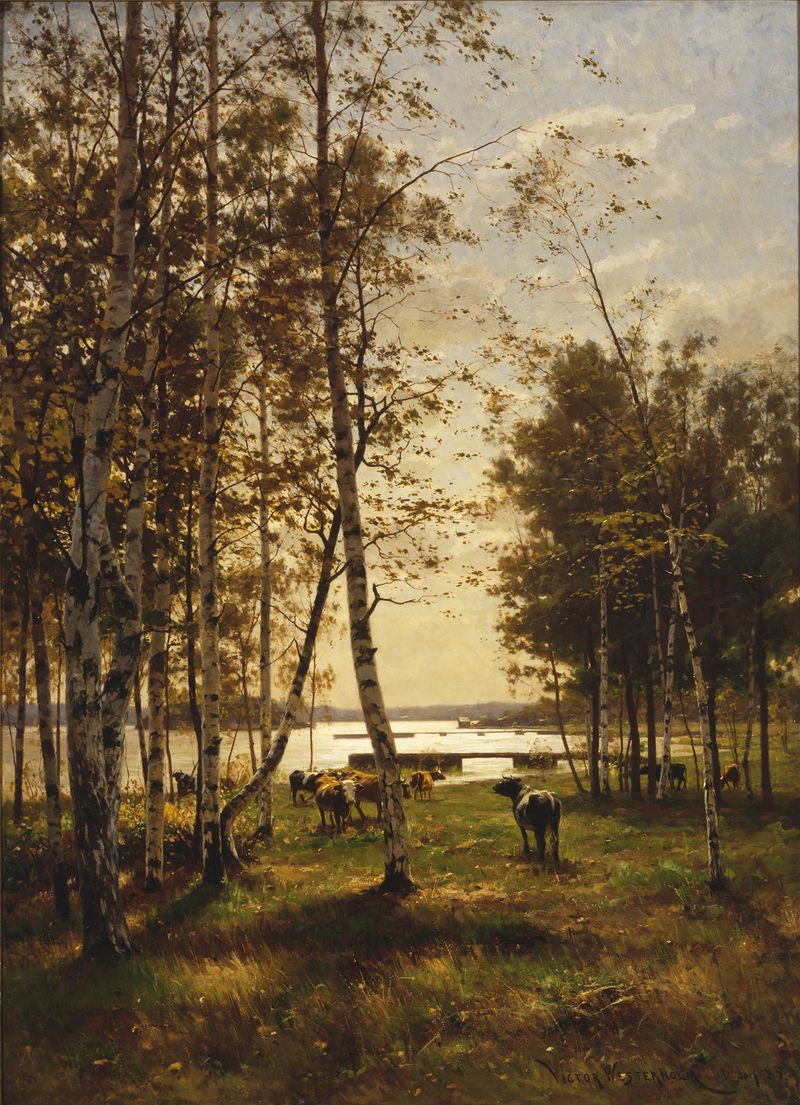
What if beauty was never meant to be finished? In the brushstrokes of a landscape, there lies an echo of loss, a reminder of what once was and can never be again. Focus on the horizon, where the muted orange and gold tones blend seamlessly into the sky, suggesting a fleeting moment of twilight. The trees stand tall and stoic in the foreground, their leaves caught mid-fall, whispering stories of change and impermanence. Notice how the soft, textured strokes breathe life into the scene, creating a sense of movement that invites your eyes to wander through the tranquil but poignant vista.
Each hue feels deliberate, drawing from nature’s palette to evoke nostalgia and longing. Yet, beneath the tranquil surface, a tension brews. The gentle descent of the leaves speaks of decay, while the vibrant colors hint at vitality. This contrast captures the essence of grief, as beauty transforms into melancholy; each leaf lost echoes deeper emotional currents.
The harmonious balance of these elements evokes a bittersweet sense of acceptance, reminding us that even beauty must yield to time’s relentless march. Victor Westerholm painted Autumn Landscape in 1883 during a period when the Impressionist movement was gaining traction across Europe. Living in Finland, he drew inspiration from his surroundings, reflecting the natural beauty of his homeland. At this time, he was exploring the emotional depths of landscapes, transitioning from academic forms to a more personal, impressionistic approach, which would characterize much of his later work.