
Autumn Landscape — History & Facts
Where does light end, and longing begin? In the delicate hues of an autumn landscape, one might find the answer hidden in the interplay of golden foliage and soft, muted skies. Look to the left at the swirling leaves, their vibrant oranges and yellows radiating warmth against the cool, silvery backdrop. Notice how the light dapples through the trees, creating a dance of shadow and illumination that invites the viewer to step into the scene. The brushwork is tender, with sweeping strokes that evoke a sense of movement, as if the landscape itself is alive and breathing, caught in a moment of nostalgia. Hidden within the canvas lies a poignant contrast between the vivid autumn colors and the encroaching stillness of winter.
The gentle undulation of the hills speaks to the cyclical nature of time, while the fading light hints at an impending loss, infusing the scene with depth and emotion. Each element, from the solitary tree to the horizon’s soft curve, whispers of memories past—of seasons gone and the bittersweet passage of time. Eilshemius painted Autumn Landscape in 1919, a period marked by personal introspection and a shift in artistic expression. Settling in New Jersey after serving in World War I, he navigated the complex emotions of returning to civilian life.
It was a time when many artists were exploring themes of memory, nature, and the human condition, and Eilshemius’s work emerged as a quiet reflection of that broader cultural dialogue.
More Artworks by Louis Michel Eilshemius
Browse all →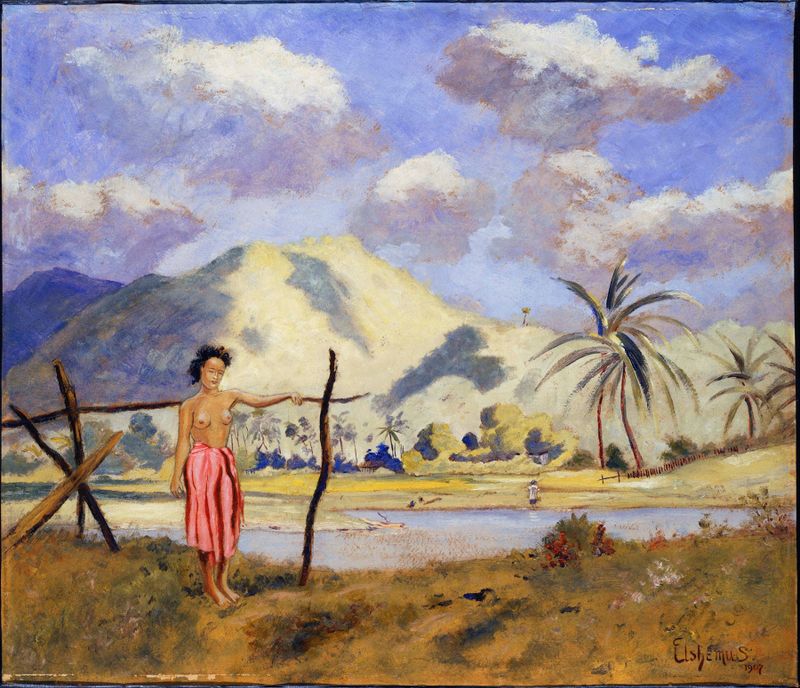
Samoa
Louis Michel Eilshemius
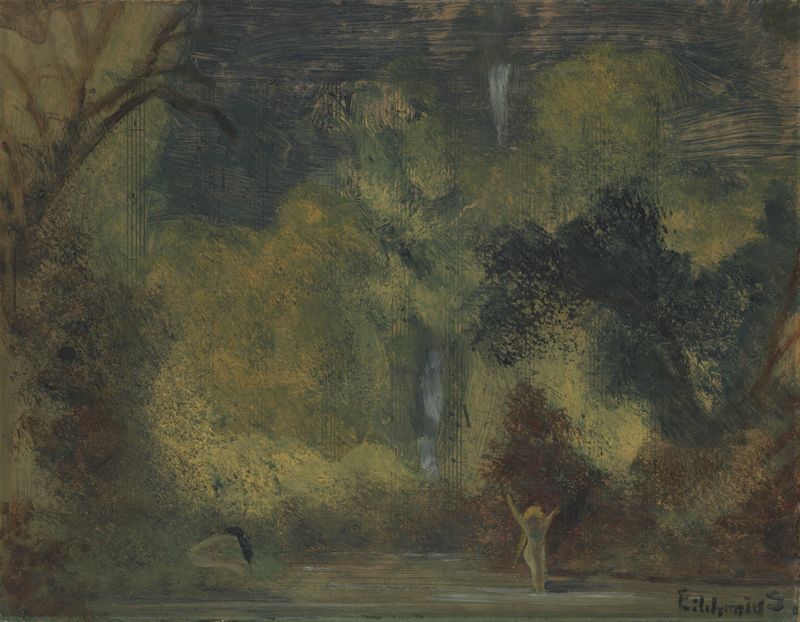
The Pool
Louis Michel Eilshemius

Overhanging Branches
Louis Michel Eilshemius

Fifty-Seventh Street
Louis Michel Eilshemius

Approaching Storm
Louis Michel Eilshemius
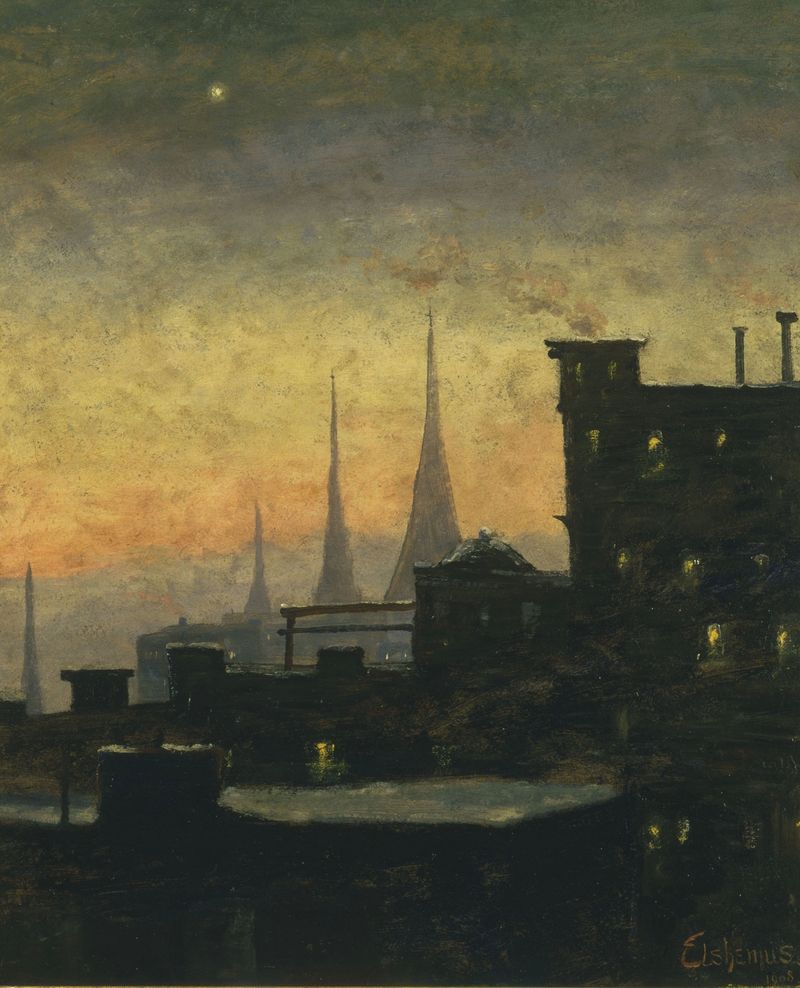
New York Roof Tops
Louis Michel Eilshemius

Sunset with Man Standing on Shore
Louis Michel Eilshemius

New York at Night
Louis Michel Eilshemius

Delaware Water Gap Village
Louis Michel Eilshemius
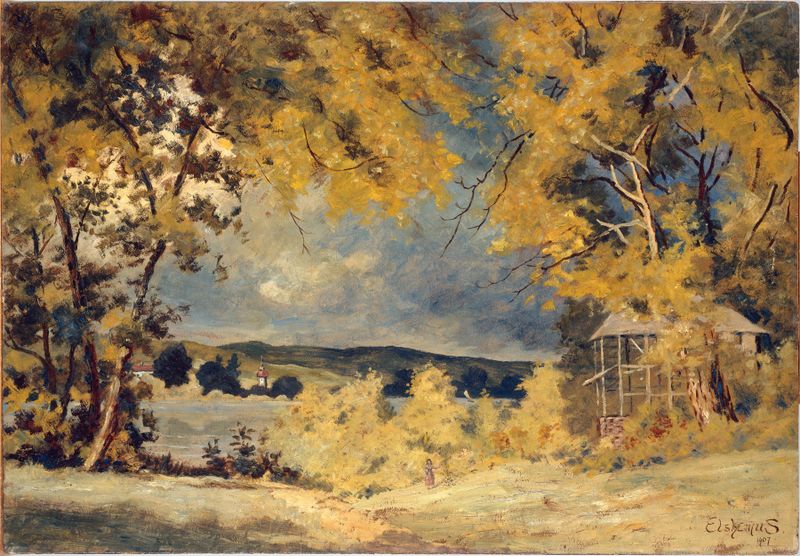
Landscape, Binghamton, New York
Louis Michel Eilshemius





