Autumn Landscape near Schleissheim — History & Facts
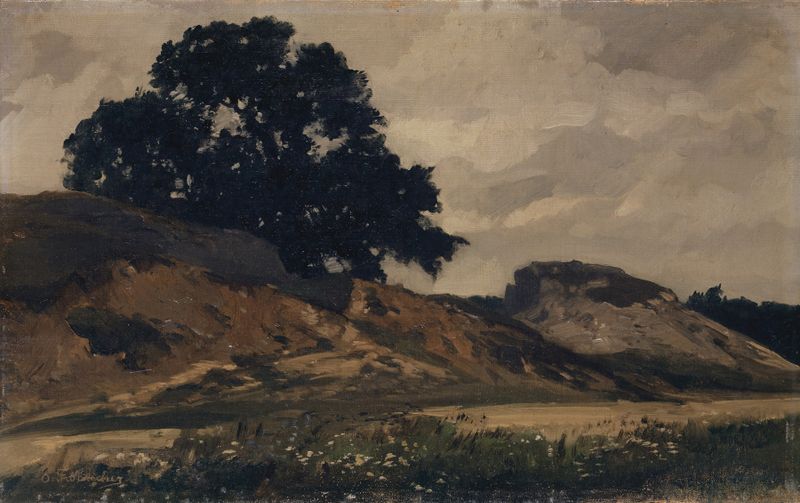
In the delicate interplay of hues, one can sense the fragility of a moment captured forever. Look to the left at the gentle silhouettes of trees, their leaves a tapestry of warm oranges and earthy browns that seem to whisper secrets of the season. Notice how the painter’s brushwork creates a soft texture on the water’s surface, echoing the fading light of a day transitioning into twilight. The horizon, painted with muted colors, invites the viewer to explore the depths of the landscape while the sky radiates a calming glow, contrasting with the darker ground beneath. Beneath this tranquil scene lies a tension between the vividness of nature’s palette and the encroaching stillness of autumn.
Each stroke evokes a sense of impermanence, reminiscent of the fleeting beauty of life. The winding path draws the eye deeper into the composition, suggesting both discovery and the inevitable passage of time, as if inviting one to ponder the fragility of existence in the face of nature’s relentless cycles. In 1888, Otto Frölicher created this work while living in Germany, amidst a burgeoning movement of landscape painting that sought to capture the essence of the natural world. As an artist who embraced the Impressionist style, he was influenced by the changes in light and color that characterized this era.
The landscapes he depicted often reflect a profound connection to the environment, as he sought to encapsulate not just the visual beauty, but the emotional resonance embedded within every scene.