Avenue at Strömsholm — History & Facts
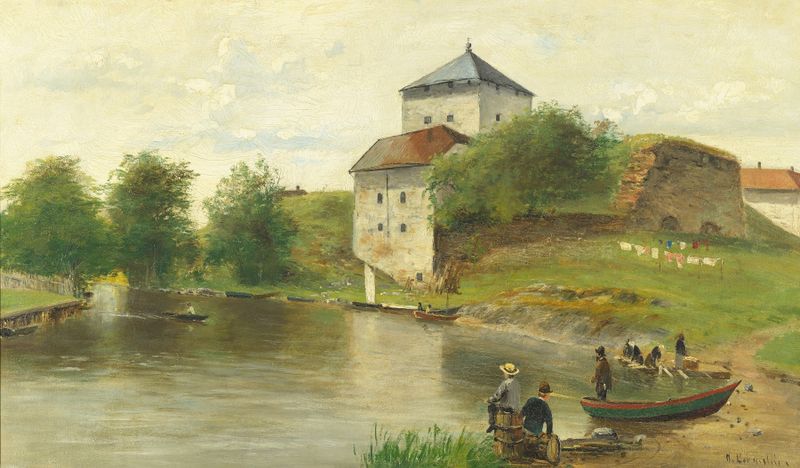
It holds the innocence of a moment frozen in time, capturing the delicate balance of nature and humanity’s passage through it. Look to the left, where a pathway emerges, inviting the viewer down a tree-lined avenue. The gentle play of light against the leafy canopies creates a dappled effect, drawing the eye along the inviting trail. Soft greens and earth tones interweave, revealing both the lushness of the foliage and a sense of serene solitude, as if the trees themselves are guardians whispering secrets of the past. As you move along the path, notice the figures in the distance, their subtle gestures hinting at a shared experience — perhaps a conversation or a moment of reflection.
The contrast between the vibrant life of the trees and the stillness of the human figures evokes a profound sense of peace, yet carries an undercurrent of fleeting time, as every season must ultimately change. This duality speaks to the innocence of life, the awareness of its transience woven into the fabric of nature's beauty. Olof Hermelin painted Avenue at Strömsholm in 1885 while residing in Sweden, a time when the art world was experiencing a shift towards Impressionism. With the growing influence of naturalism, Hermelin found inspiration in the landscapes around him, capturing the essence of everyday beauty.
His work reflects a personal exploration of harmony between human presence and the environment, forging a connection that transcends mere observation.