Barnyard In Winter — History & Facts
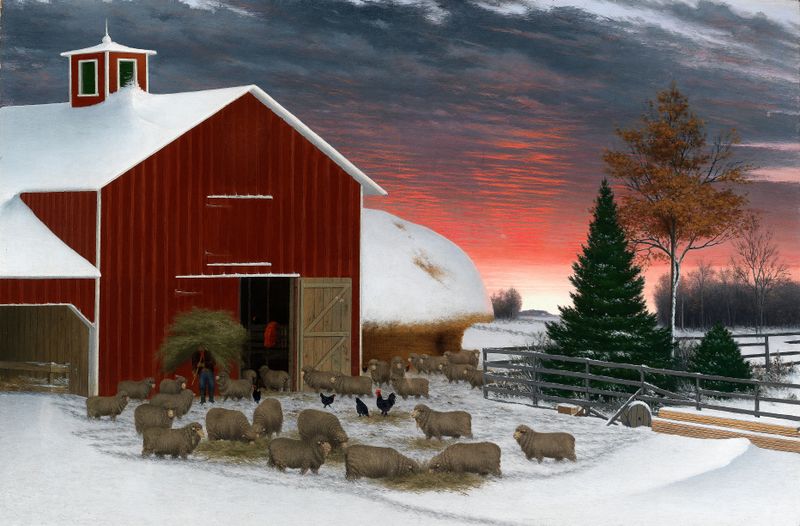
In the quiet realm of dreams, nature whispers its secrets, urging us to look beyond the surface of life. Focus first on the tranquil barn, nestled within a blanket of soft, white snow. Notice how the gentle curves of the roof meld seamlessly with the undulating drifts, creating a harmony that invites you in. The muted palette of blues and grays contrasts with the warm browns of the barn’s structure, drawing your eye to the solitary figure tending to the animals, their gesture a poignant reminder of human resilience against winter's chill. Yet, a deeper narrative unfolds, hidden within the brushstrokes.
The starkness of the season plays against the warmth of the barn, symbolizing the delicate balance between hardship and comfort. A hint of sunlight breaks through the clouds, illuminating the scene and suggesting that even in the coldest moments, hope and sustenance bloom. This interplay of light and shadow speaks to the enduring cycles of life, reminding us that dreams of warmer days persist, no matter how frigid the reality. In the late 1880s, Shaw created this piece during a time when the American art scene was shifting, embracing both realism and elements of impressionism.
Living in an era marked by industrial change and rural life, he sought to capture the essence of farm life, blending affection with realism. His works reflect a deep appreciation for the pastoral landscape, offering viewers a serene escape from the growing mechanization of society.