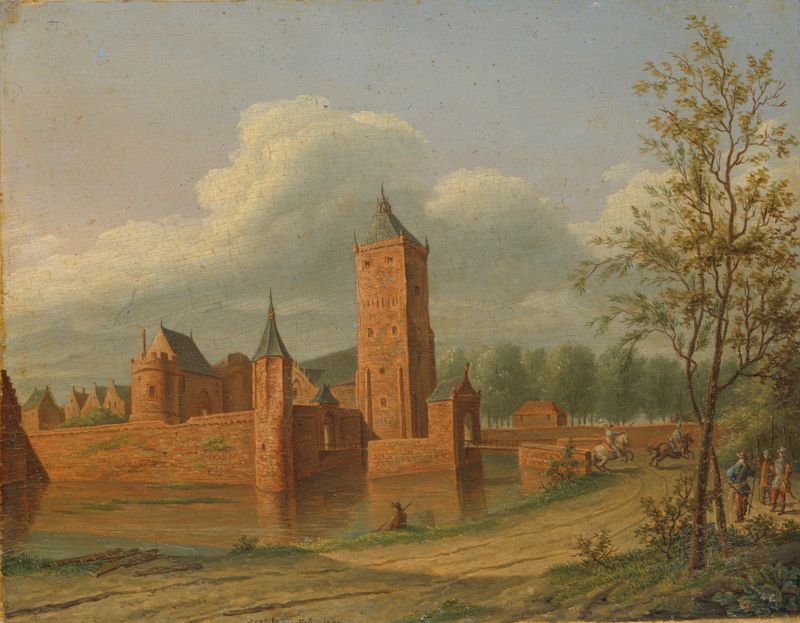
Batestein Castle near Vianen — History & Facts
In the stillness of a moment captured, we find ourselves confronted by the passage of time, as if the universe had paused to reflect on its own existence. Look to the center of the canvas, where the stately silhouette of Batestein Castle rises against the backdrop of an expansive sky. The artist’s careful brushstrokes breathe life into the tranquil water surrounding the fortress, mirroring the structure’s grandeur while deftly manipulating the nuances of light. Notice how the soft blues and greens harmonize with hints of golden sunlight, creating a delicate balance between nature and architecture.
Each element feels intentional, inviting viewers to dive deeper into the narrative woven through color and composition. As you delve into the details, consider the contrast between the stability of the castle and the fluidity of the water below. The castle, with its solid stones, stands as a testament to human endeavor against the backdrop of an ever-shifting landscape. The gentle ripples hint at the relentless march of time, while the clouds above, both fleeting and eternal, suggest a broader existential reflection.
This duality—of permanence and ephemerality—imbues the work with a profound emotional resonance. In 1840, the artist created this piece in the midst of a burgeoning European art scene, where Romanticism was giving way to new movements. At that time, he was likely grappling with the implications of industrial progress and its impact on landscapes and heritage. Teyler van Hall’s dedication to capturing the essence of his surroundings reflected a wider desire among artists of the era to immortalize beauty in a world that was rapidly changing.