Bauerngehöft — History & Facts
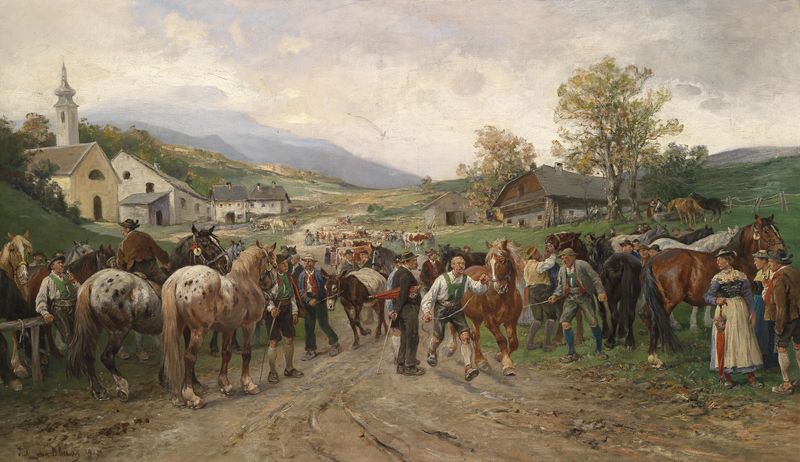
Can beauty exist without sorrow? Light dances across the rustic landscape, infusing every corner with a warmth that belies the quiet weight of life’s burdens. Look to the center, where the weathered farmhouse stands, steadfast amidst a backdrop of lush greenery and gentle hills. Notice how the golden rays illuminate the textured surfaces of the building, enhancing its earthy tones while casting soft shadows that suggest a story untold. The serene sky overhead transitions from a soft blue to warm pastels, evoking a sense of tranquility that invites the viewer to linger a moment longer. Yet, beneath the calm facade lies an undercurrent of tension.
The dilapidation of the farmhouse speaks of history and hardship, while the vibrant flora surrounding it hints at resilience and renewal. The juxtaposition of light and shadow reflects the duality of existence, reminding us that joy often intertwines with an awareness of loss. Each blade of grass and flicker of light captures fleeting moments, suggesting that beauty flourishes alongside the inevitability of change. Julius von Blaas painted this work during a time when he was deeply engaged with the themes of rural life and the passage of time.
The exact date is unknown, but his focus on pastoral scenes resonated with the growing appreciation for nature in the 19th century. Amidst the shifting tides of the art world, he championed a narrative that celebrated both the simplicity and complexity of human experience, grounding his artistic vision in the landscapes that surrounded him.