
Bayeux – House in the Rue des Cuisiniers — History & Facts
Is this a mirror — or a memory? The question echoes through the layers of nostalgia encapsulated in this delicate piece, evoking an emotional pull that compels the viewer to linger. Focus on the homes nestled against one another, their facades worn yet vibrant. The muted tones of pastel yellows and blues blend seamlessly, exuding a sense of warmth and familiarity. Notice how the light dances across the textured surfaces, creating shadows that whisper stories of lives once lived within those walls.
The painter’s meticulous brushwork breathes life into each detail, inviting you to explore every crevice of this quaint neighborhood. The juxtaposition of light and shadow reveals a deeper emotional tension, suggesting both the passage of time and the weight of memory. Each window holds a silent narrative, hinting at the lives behind them — moments of joy, sorrow, and the mundane. The cozy, tight-knit architecture evokes a sense of community, while the fading colors speak to the inevitable decay of memory itself, a bittersweet reminder of what was and what remains. Émile Leroy painted this work during a period marked by both personal and societal changes.
While the exact date remains uncertain, the artist was active in the late 19th to early 20th century, a time when the Impressionist movement was redefining artistic expression. This was a time of transition for Leroy, as he experimented with capturing the fleeting qualities of light and emotion, reflecting a world that was rapidly modernizing yet yearning for the simplicity of the past.
More Artworks by Émile Leroy
Browse all →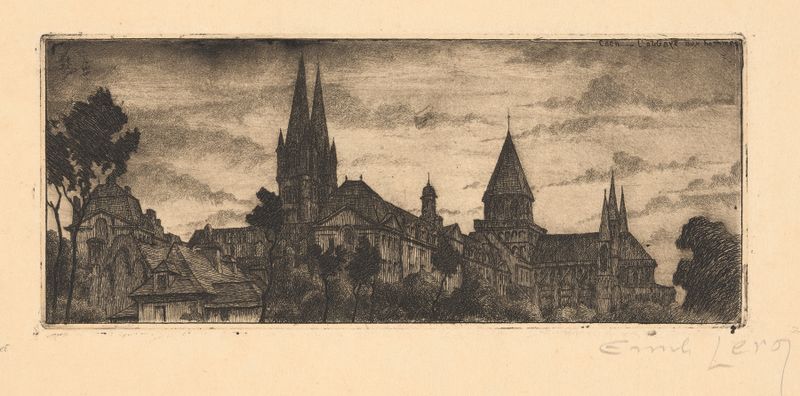
More Architecture Art
Browse all →
The statue of Liberty
Frédéric Auguste Bartholdi

View of Houses in Delft, Known as ‘The Little Street’
Johannes Vermeer

View of Houses in Delft, Known as ‘The Little Street’
Johannes Vermeer

The Cathedral in Rouen. The portal, Grey Weather
Claude Monet

The yellow house
Vincent van Gogh

The Church in Auvers-sur-Oise, View from the Chevet
Vincent van Gogh