Beeldhouwwerk getiteld Sarah met wit marmeren sokkel — History & Facts
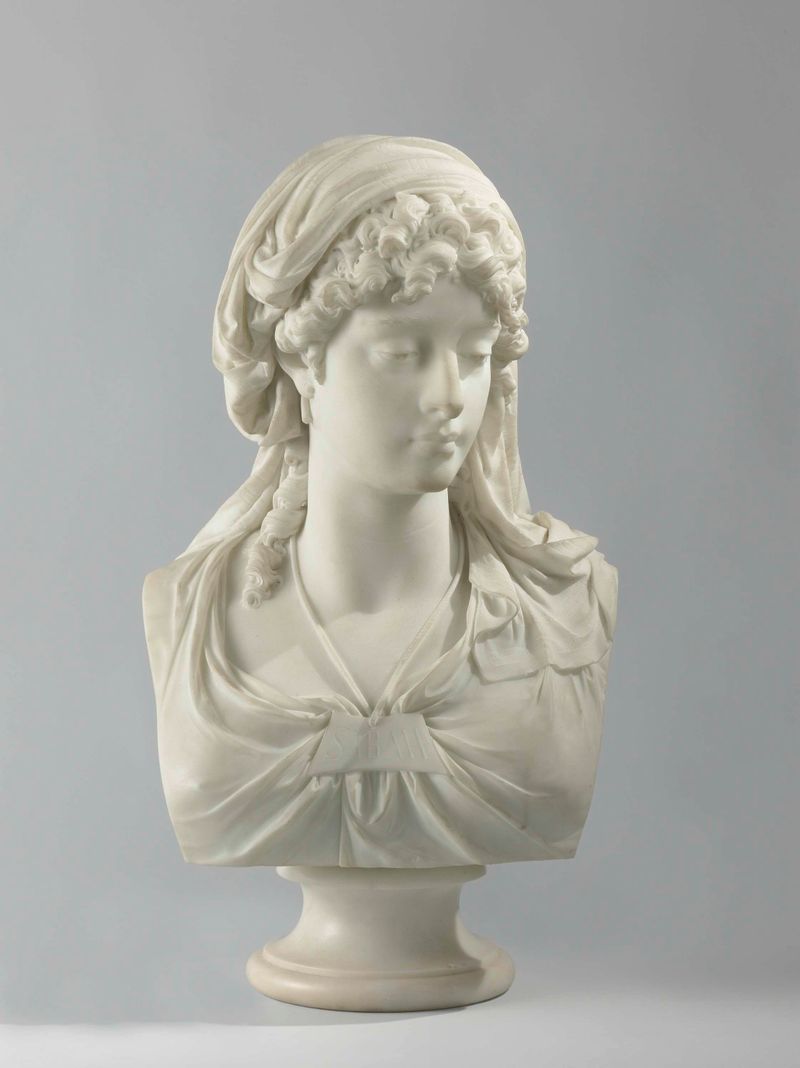
When did color learn to lie? In a world where hues whisper truths and secrets, the essence of revolution lies in the stark contrasts of a marble figure, unyielding and pure. Focus on the exquisite craftsmanship of the figure, standing elegantly upon a pristine white base. The smooth texture of the marble captures a delicate play of light, highlighting the graceful contours and intricate details. Notice how the artist has rendered the folds of fabric with such realism that they seem to breathe, inviting the viewer to reach out and touch a tangible moment frozen in time. Yet, beneath the surface beauty lies an emotional tension—a juxtaposition of fragility and strength.
The figure embodies a quiet defiance, an assertion of individuality in an era rife with societal constraints. This silent revolution is echoed in the gaze, where both vulnerability and resolve converge, challenging the viewer to confront the complexities of identity and presence. Frans Stracké created this work around 1877, during a period of intense artistic exploration and social change. Working in the Netherlands, he was influenced by the burgeoning Romantic movement, which sought to express deeper emotional truths.
As Europe navigated the aftermath of industrialization and the rise of modernity, Stracké’s dedication to capturing the human spirit reflected broader themes of liberation and self-definition in the art community.