Bei Anticoli — History & Facts
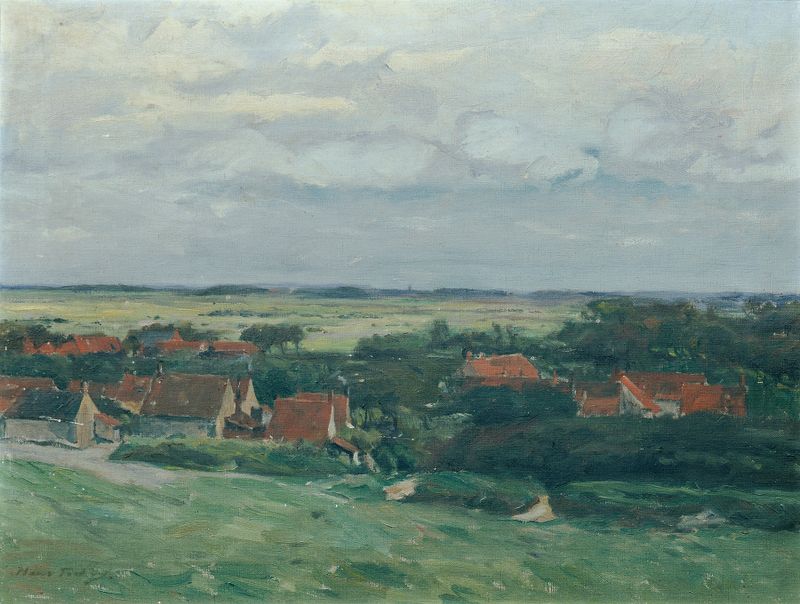
What if beauty was never meant to be finished? In Bei Anticoli, the transient nature of existence meets the permanence of art, inviting us to reflect on faith and the search for meaning. Look to the center of the canvas, where a grand vista unfurls beneath a sky streaked with soft pastels. The horizon dances between gentle hills and the azure of distant peaks, a delicate interplay of light and shadow. The interplay of colors—rich greens, warm ochres, and muted blues—draws you into a world that feels both idyllic and ephemeral.
Notice how Tichy uses soft brushstrokes to create a sense of movement in the clouds, evoking a fleeting moment captured in time. Beneath the surface beauty lies an emotional tension, a longing that resonates through the serene landscape. The winding path leads the viewer’s gaze into the distance, perhaps symbolizing a journey of faith or the pursuit of the unattainable. The juxtaposition of the lush foreground against the ethereal sky emphasizes a contrast between the tangible and the sublime—a reminder of the beauty found in both the seen and the unseen. Painted in 1890 while living in Italy, this work reflects Tichy's fascination with the interplay of light and landscape, characteristic of the late 19th-century artists exploring realism.
During this time, he was seeking to carve out his own identity amidst the burgeoning art movements that surrounded him. The serenity of Bei Anticoli stands as a testament to his belief in the power of nature to evoke deeper spiritual reflections, a sentiment that resonated during his era.