Bellowing Stag in a Winter Landscape — History & Facts
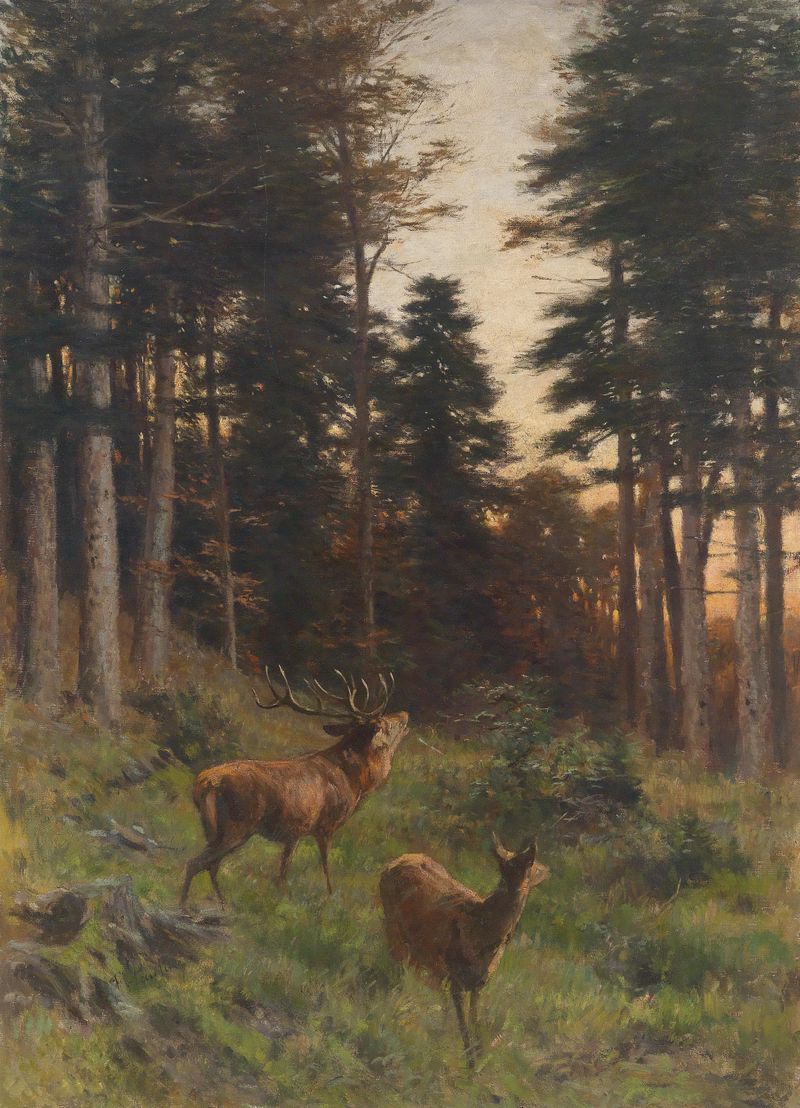
Where does light end, and longing begin? In the stillness of winter, beauty takes on a poignant form, inviting us to explore its depths. Focus on the majestic stag, poised against a backdrop of delicate, frosted trees and a pale sky. Its rich, warm fur contrasts sharply with the cool tones of the landscape, drawing your gaze first to its powerful body. Notice how every stroke captures the shimmer of the snow, transforming the mundane into something almost ethereal.
The artist's careful attention to light creates a sense of movement, as if the stag is poised to leap into an unseen world beyond the canvas. A palpable tension arises between the strength of the stag and the vulnerability of its environment. This creature, a symbol of vitality, stands alone in a frozen wilderness, evoking a sense of isolation. The interplay of light and shadow suggests a fleeting moment — perhaps a hint of warmth amidst the chill, or the longing for connection in solitude.
Each detail, from the fine lines of the icy branches to the gentle curve of the stag's antlers, reveals a narrative of resilience and beauty in the face of nature's harshness. Painted during a time when romanticism was flourishing in the art world, the artist created this piece to embrace the sublime qualities of nature. Operating primarily in Vienna during the late 19th century, he sought to capture the emotional resonance found in the landscape, reflecting both personal sentiment and the broader cultural fascination with the natural world. In this evolving scene, the stag stands as a testament to beauty and the human spirit's ability to transcend even the coldest of winters.