
Bern, von Norden — History & Facts
When did color learn to lie? In a world where hues flutter like confetti in the breeze, the shadows cast by fleeting moments remind us of our own mortality. Look to the panoramic view that unfolds before you; it stretches expansively across the canvas. The vibrant greens of the fields pulse with life, while the soft pastels of distant rooftops beckon invitation. Notice how the warm light bathes the scene, illuminating the play between nature and civilization, creating a harmonious yet poignant dialogue.
The gentle strokes convey both the solidity of the buildings and the ephemeral delight of the surrounding landscape, drawing you deeper into the artist's vision. Yet within this idyllic landscape lies a tension, a whisper of what lies beneath the surface. The contrast of the lively foreground against the stillness of the distant mountains suggests the inevitable passage of time—a reminder that beauty is transient. Small details, like the flicker of life in a lone figure or a passing cloud, evoke a sense of fleeting existence, hinting at the fragility of our own narratives intertwined with the world around us. Creating this piece in the late 18th century, Biedermann found himself amidst the Enlightenment, where the appreciation for nature and landscape painting flourished.
Living in Bern, he sought to capture the harmonious relationship between the natural environment and human settlement, reflecting the era's philosophical inquiries into existence and perception. In this work, he stands at the crossroads of realism and idealism, painting a vision that resonates with the temporality of life itself.
More Artworks by Johann Jakob Biedermann
Browse all →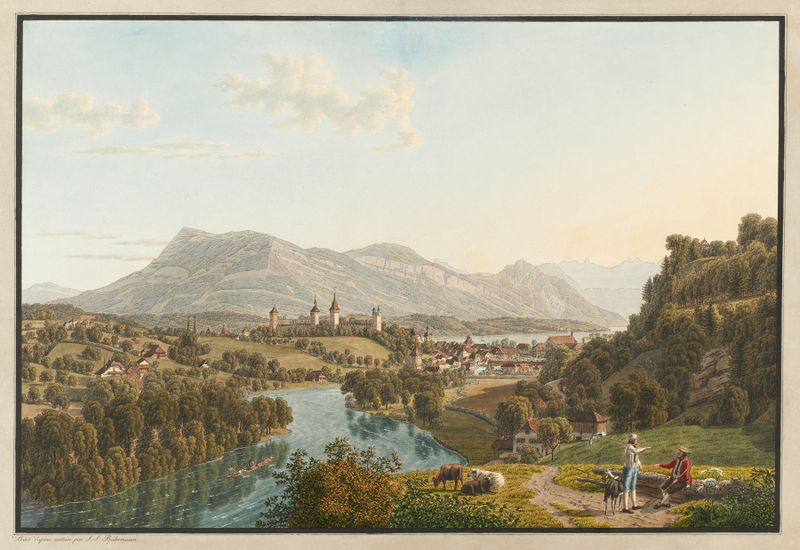
Luzern, von Nordwesten
Johann Jakob Biedermann

Sankt Gallen, von Norden
Johann Jakob Biedermann

Le Glacier nommé Rosenlaui, à côté du Wetterhorn
Johann Jakob Biedermann

Gottstatt, Kloster, von Nordwesten
Johann Jakob Biedermann
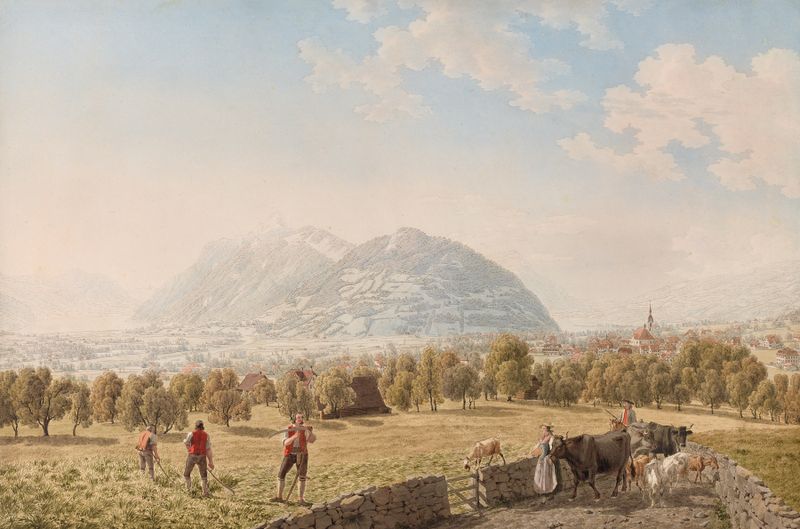
Schwyz, von Osten
Johann Jakob Biedermann

Twann und Bielersee von Nordosten
Johann Jakob Biedermann

Luzern, von Nordwesten
Johann Jakob Biedermann

Luzern, von Südwesten
Johann Jakob Biedermann
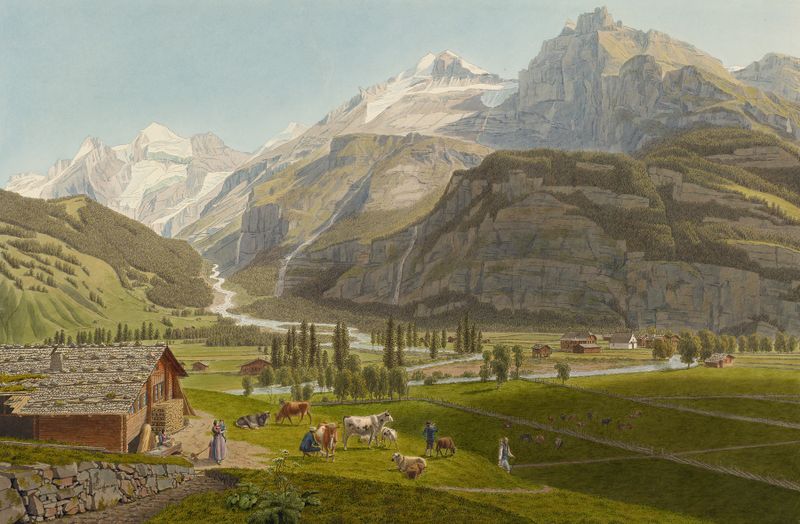
Kandersteg und das Kandertal, von Norden
Johann Jakob Biedermann

Schaffhausen, von Westen
Johann Jakob Biedermann





