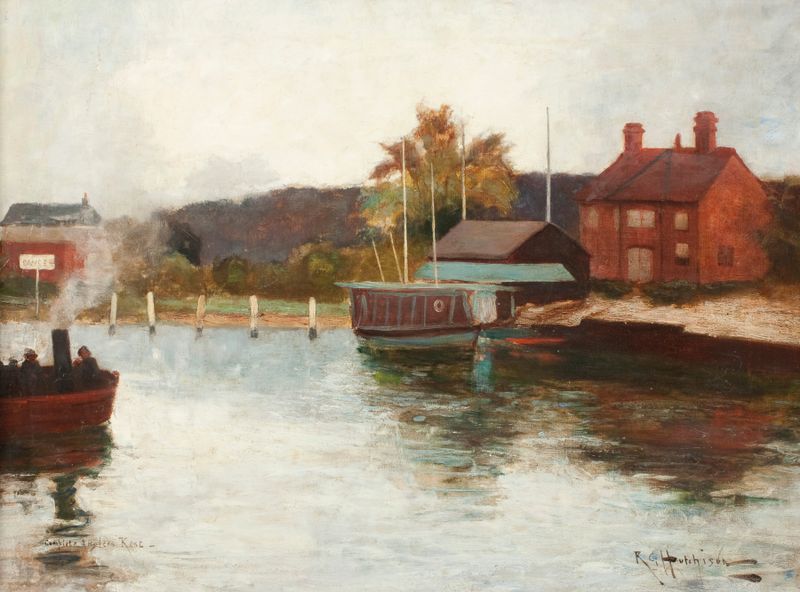
Biggar Burn — History & Facts
In this evocative exploration of madness, we are drawn into a world where every stroke of paint murmurs secrets of the mind. The vivid hues dance with a frenetic energy, hinting at the chaos beneath the surface. Focus on the interplay of vibrant greens and swirling blues, where the river bends and twists through the canvas. Notice how the light dapples the water, reflecting the wildness of nature as it collides with the artist's emotions.
The trees, alive with movement, seem to pulse with a rhythm of their own, capturing the essence of a moment caught between tranquility and turmoil. There is a tension between the serene landscape and the tumultuous emotions it evokes. The rushing waters represent an uncontrollable force, mirroring the artist’s inner whirlwind of thoughts and feelings. Each brushstroke is a testament to the struggle between calmness and chaos, revealing a deeper narrative that questions the boundaries of sanity and perception. During the time this piece was created, the artist was deeply immersed in the Scottish landscape, likely grappling with the complexities of his own life and the broader art movements of his time.
The late 19th to early 20th century was a period rich with experimentation and emotional expression, laying the groundwork for the modernist shifts that would follow. This painting emerges as a quiet yet powerful reflection of both personal and artistic upheaval, encapsulating a moment in time where nature and madness intertwine.