
Blae Tarn — History & Facts
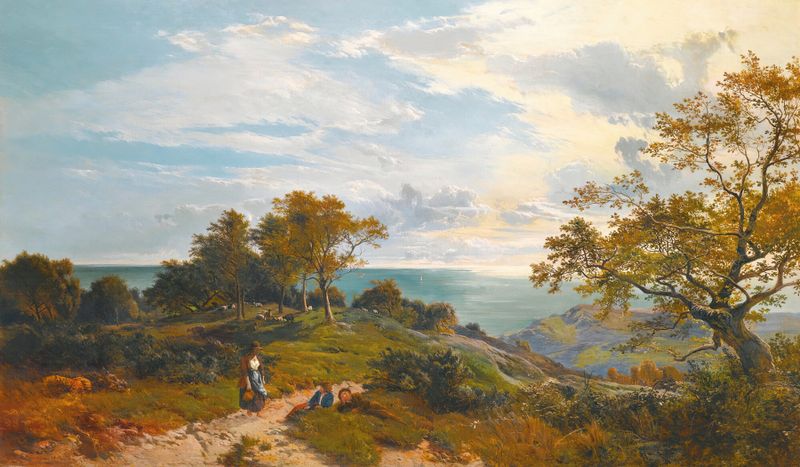
In the serene embrace of nature, beneath the tranquil surface of the lake, a tumultuous history lies hidden. The calm setting may suggest peace, yet the undercurrents speak of a violence that shapes landscapes and hearts alike. Look to the foreground where the still waters of Blae Tarn reflect the surrounding peaks, their rugged outlines softened by mist. The deep greens and blues of the landscape contrast poignantly with the bright light illuminating the clouds overhead.
Notice how the brushwork captures the texture of the trees, each leaf trembling with an invisible breeze, while the mountains loom ominously against the horizon, hinting at forces both beautiful and destructive. The painting invites contemplation of duality: tranquility versus violence, stillness versus turmoil. The pristine lake, often a symbol of serenity, instead becomes a mirror for the tumult of nature's forces. The light, though warm, casts shadows that suggest an impending storm, revealing a tension between the idyllic and the threatening.
Here, the artist encapsulates the complexity of existence—the beauty of a moment juxtaposed with the chaos of the world just beyond the canvas. In 1870, while working in the English Lake District, the artist was experimenting with capturing the raw essence of nature amid a time when romantic idealism in art was evolving. As the art community grappled with the implications of the Industrial Revolution, Percy's focus on the sublime power of the natural world would resonate with contemporary audiences, making his landscapes both timely and timeless.
More Artworks by Sidney Richard Percy
Browse all →
Sunset over the estuary
Sidney Richard Percy

Glencoe From Loch Leven, Scotland
Sidney Richard Percy

Kilchurn Castle, Loch Awe
Sidney Richard Percy

Rydal Water
Sidney Richard Percy

Angera, Maggiore
Sidney Richard Percy

Loch Katrine
Sidney Richard Percy

Spring, An Approaching Shower
Sidney Richard Percy

Cattle watering by a loch
Sidney Richard Percy
A Peep At The Sea, Fairlight Glen
Sidney Richard Percy

Stickledale Tarn Westmorland
Sidney Richard Percy





