Blick auf das Felsenufer des Comer Sees — History & Facts
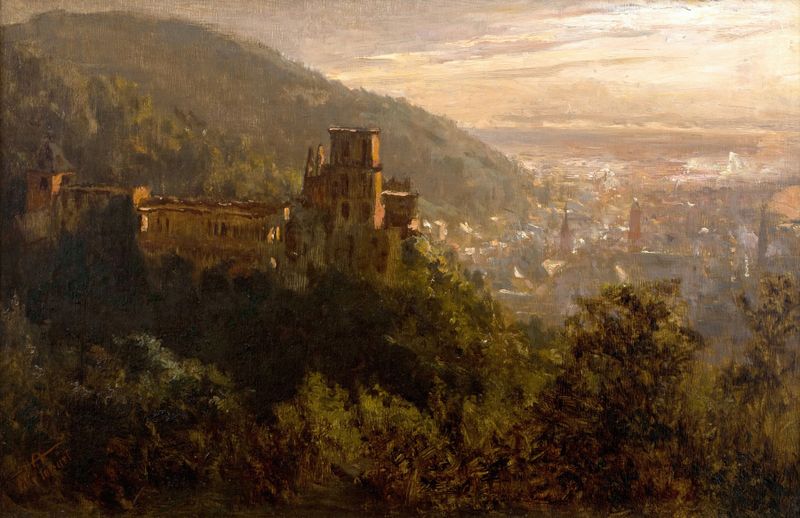
Can paint confess what words never could? In Blick auf das Felsenufer des Comer Sees, the essence of obsession is captured in the interplay of colors and textures, inviting the viewer to explore the depths of emotional longing and nature's relentless beauty. Look to the left at the jagged shoreline, where the dark, rocky forms rise dramatically from the tranquil waters. The artist employs a blend of deep blues, greens, and earthy browns, masterfully contrasting the rugged cliffs with the shimmering surface of the lake, lit by the soft embrace of sunlight. Notice how the brushstrokes vary in intensity — bold and expressive on the rocks, gentle and flowing in the water — creating a sense of movement that draws your eye toward the horizon. Within this scene lies an intricate tension between nature and human emotion.
Each rock can be seen as a testimony to time and endurance, while the calm water reflects the fleeting nature of life, a juxtaposition that speaks to the idea of obsession — the desire to possess beauty that is always just beyond reach. The stillness of the lake mirrors the stillness of longing, both serene and haunting, evoking a bittersweet sense of yearning. In 1907, Felix Possart painted this work during a period of personal exploration and artistic growth. He was deeply immersed in the landscapes of Europe, striving to capture the sublime and the picturesque as they reflected human emotion.
This era witnessed a shift in art towards expressing the inner world, aligning with broader movements that sought to convey the nuances of human experience, making this piece a poignant representation of that transformative time.