Blick auf den Vesuv — History & Facts
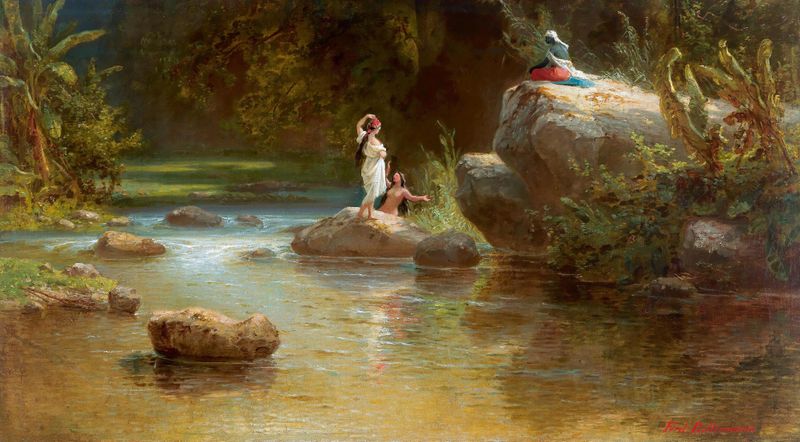
What if silence could speak through light? In that gentle hush, one might hear the whisper of longing, a yearning captured in the stillness of a moment. Focus first on the vibrant hues that envelop the scene, where the molten yellows and golds of dawn bleed into the soft blues of the sky. The eye is drawn to the grand silhouette of the Vesuvius, rising majestically against the horizon, its slopes cloaked in the rich greens of the surrounding landscape. Notice how the light dances upon the leaves, casting intricate shadows that playfully echo the volcano’s looming presence, creating a dialogue between nature’s beauty and its latent power. Delve deeper into the juxtaposition of tranquility and tension; the idyllic pastoral scene belies the historical tumult of Vesuvius, a reminder of nature's unpredictable temperament.
The air is thick with an unspoken anticipation, as if the volcano itself holds its breath, waiting for the next eruption. This contrast between serene beauty and hidden danger evokes an emotional landscape of desire—a yearning for peace in the face of power. Ferdinand Bellermann painted this work in 1857 while residing in Italy, a period marked by a fascination with the natural world and its sublime forces. As a German painter, he was deeply influenced by the Romantic movement, which sought to explore the emotional depths of humanity’s relationship with nature.
The volcanic backdrop not only reflects the artist’s personal exploration of beauty and catastrophe but also resonates with the broader artistic currents of his time, where the sublime was both revered and feared.