Blick auf Rom — History & Facts
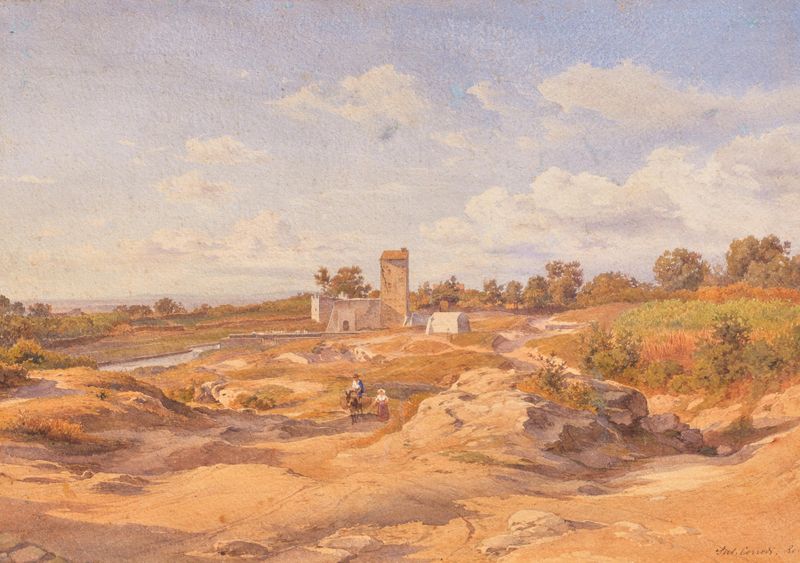
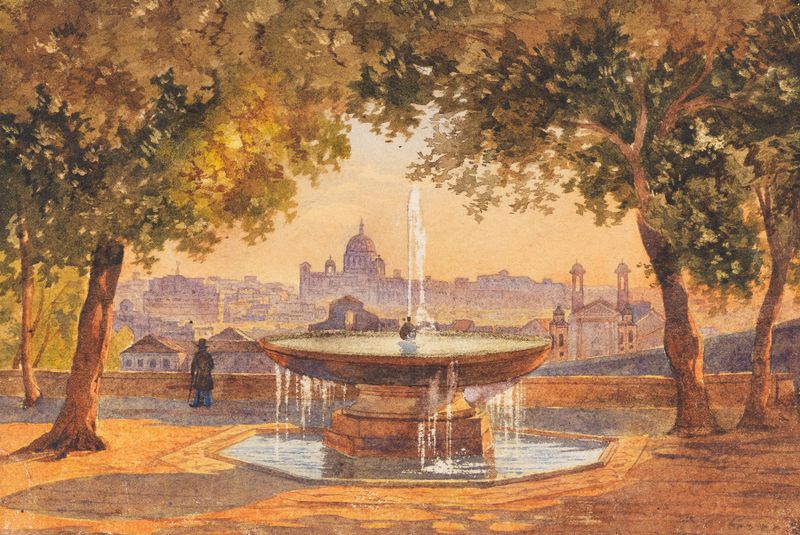
It is a delicate balance that reveals the fragility of beauty within chaos itself. In Blick auf Rom, the serene depiction of a cityscape invites us to contemplate the transience of life and the enduring nature of art. Look to the left at the soft, pastel hues that blend seamlessly into one another, creating a sky that whispers of dawn. The gentle strokes define the horizon, where the skyline of Rome rises, bathed in an ethereal light.
Focus on the intricate details of the architecture, each building imbued with a sense of history and permanence, yet contrasted by the ephemeral quality of the surrounding landscape, suggesting both stability and fragility. Amidst the inviting warmth of the sunlit scene, a tension emerges: the vibrant greens of the foreground juxtaposed with the stone structures symbolize the clash between nature and human creation. Notice how the delicate ripples of the water reflect the architecture above, emphasizing the connection and fragility between the two worlds. Each element holds significance, reminding us of the fleeting nature of beauty and the permanence that can still arise from it. In 1834, Salomon Corrodi painted Blick auf Rom during a time when Romanticism was flourishing, and artists sought to capture the sublime interplay of nature and civilization.
Living in Italy, Corrodi was influenced by the picturesque landscapes and historical richness of the region, as he explored themes of nostalgia and memory in his work. This painting reflects not only his personal journey but also the broader artistic evolution occurring in Europe, where the embrace of light and atmosphere began to redefine the portrayal of landscapes.