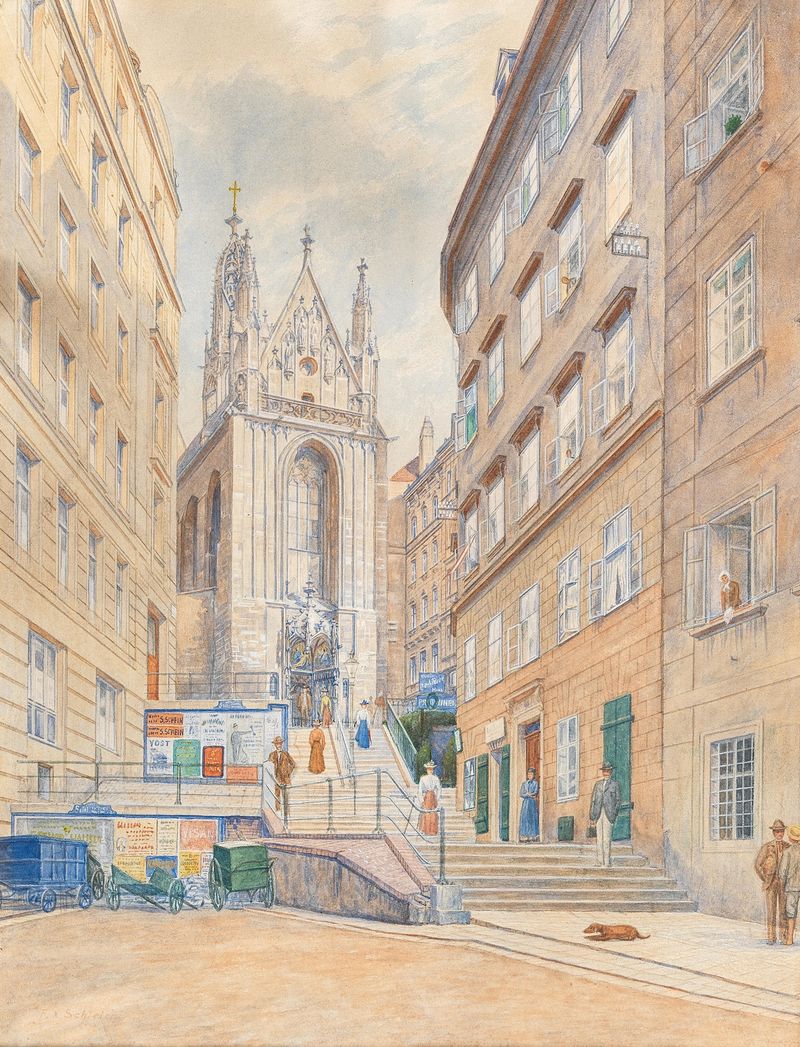
Blick in die Schwarzspanierstraße mit dem Sterbehaus Beethovens — History & Facts
What secret hides in the quiet of the canvas? In the delicate interplay of light and shadow, innocence is preserved, waiting to be discovered. Focus on the center where the street quietly unfolds, flanked by buildings that seem to lean in, eavesdropping on the whispers of passersby. The palette is muted yet warm, suggesting a time long gone, evoking nostalgia with every brushstroke. Notice how the golden hues of sunlight filter softly through the alleys, casting elongated shadows that weave a tale of both presence and absence in this intimate urban scene. Hidden within the ordinary is a poignant reminder of mortality—the presence of Beethoven’s death house invites contemplation.
The surrounding architecture stands sturdy yet personal, reflecting the lives entwined within its walls. The contrast between the serene street and the history it shelters reminds us that every corner holds stories, echoes of laughter and sorrow, innocence and loss. Created in a period marked by shifting artistic movements in Europe, the artist found himself exploring themes that resonated with the cultural milieu of his time. Nestled in the heart of Vienna, Blick in die Schwarzspanierstraße mit dem Sterbehaus Beethovens embodies a moment where architecture and history converge, allowing the viewer to pause and reflect on the fragility of life amidst the mundane.
The stillness captured is not just of place but a whisper of what once was, revealing the artist's sensitivity to the deeper currents of existence.