Blick von der Elisabethenschanze auf die Rundbastion, zum Steinentor und zur Steinenschanze in Basel — History & Facts
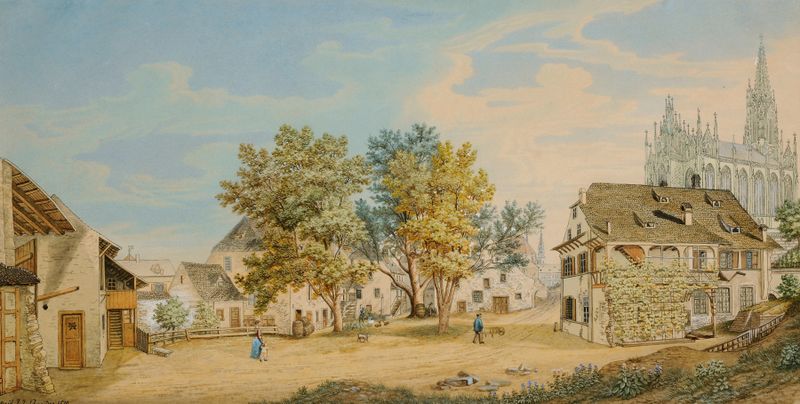
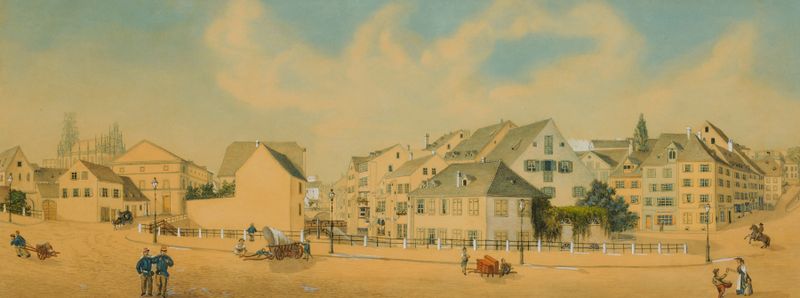
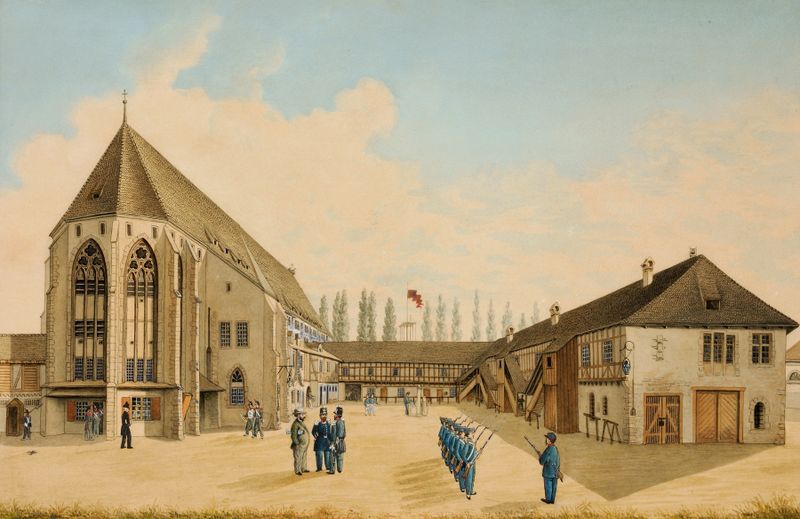
Who listens when art speaks of silence? In Blick von der Elisabethenschanze auf die Rundbastion, zum Steinentor und zur Steinenschanze in Basel, the landscape whispers of past conflicts, a battleground where echoes of violence linger in stillness. Look to the left at the rugged contours of the stone bastions, their formidable presence dominating the scene. Notice how the muted palette of earthy browns and greens sets a somber tone, contrasting sharply with the bright azure sky above. The precision of the brushwork reveals each detail—sharp edges of the fortifications and the soft textures of distant trees—creating a sense of depth that pulls you into the landscape’s narrative.
The architecture stands resilient against an expanse of tranquility, inviting the viewer to ponder what lies beneath the calm. Within this composition lies a duality—strength and vulnerability. The bastions, symbols of defense and conflict, anchor the piece, while the serene sky suggests a peaceful moment just before a storm. This juxtaposition evokes a tension between the power of architectural fortitude and the fragility of human existence, hinting at the violence that has shaped the very ground we stand upon.
The viewer is left to contemplate the stories hidden in the stone, each fortress a witness to the strife that has unfolded over centuries. Created in 1866, this work captures a moment of transition for Johann Jakob Schneider, who painted it in Basel during a time of growing national consciousness amid the backdrop of the Franco-Prussian War. As the artist grappled with the changing tides of European politics, he sought to convey the weight of history through his landscapes, reflecting both the beauty and brutality inherent in the spaces we inhabit.