Blow Blow Thou Winter Wind — History & Facts
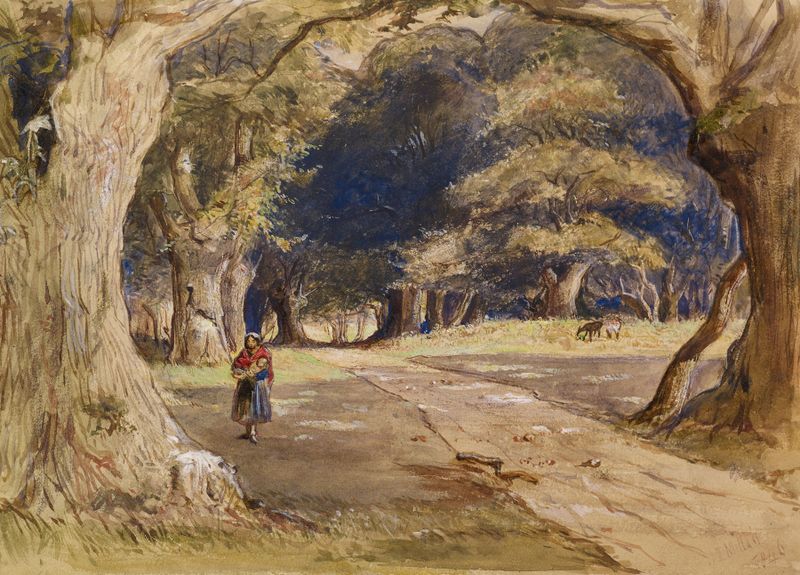
Can paint confess what words never could? In Blow Blow Thou Winter Wind, Sir John Everett Millais transcends the boundaries of language, inviting the viewer into a realm where emotion unfolds on canvas, unencumbered by syllables. Focus first on the somber figure cloaked in a heavy garment, standing resolutely against the harsh backdrop of a wintry landscape. Notice how the muted palette of icy blues and grays envelops her, contrasting with the warmth of her skin, revealing both vulnerability and strength. The gentle bend of her posture, coupled with the delicate play of light across her face, draws you into her solitude, inviting you to linger on her unspoken thoughts and feelings. Within this melancholic scene resides a dialogue of contrasts.
The chilling winds are palpable, yet there is an undeniable warmth emanating from the subject’s expression, perhaps a hint of defiance against the cold reality surrounding her. The title echoes the bittersweet nature of existence, suggesting that even in adversity, there can be an inner resilience that shines through—the quiet strength of a soulful heart amidst the winter winds of life. In 1892, Millais created this poignant work during a transformative period in his career. The British art scene was evolving, moving towards more modern expressions, yet he held fast to the Romantic ideals that characterized his earlier works.
At this time, a personal loss weighed heavily on him, and this painting captures the intersection of his emotional landscape with the broader shifts occurring in art, marking it as a quiet testament to both his personal and professional journey.