Bog Scene — History & Facts
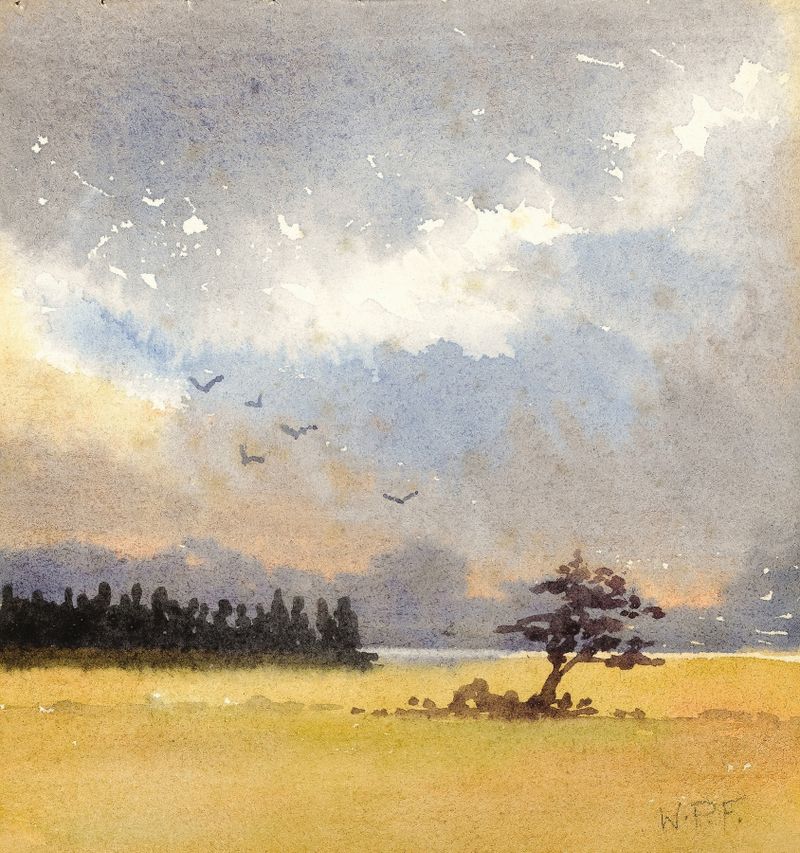
What if beauty was never meant to be finished? In the quiet embrace of nature, an unfinished story unfolds, hinting at the tranquil void that whispers between life and stillness. Look to the center of the canvas, where a serene bog mirrors the softness of the surrounding foliage. The palette, imbued with muted greens and browns, evokes a sense of tranquility, while flecks of sunlight dance across the water's surface. Observe how the artist's brushwork captures both the stillness of the water and the delicate rustling of the reeds, creating a symphony of texture that draws your eye deeper into this tranquil world. Yet, among the serenity lies an underlying tension.
The shadowy borders of the painting suggest an invitation into the unknown—an exploration of nature's mysteries, with the bog representing both beauty and an unsettling void. The juxtaposition of lush life against the eerie stillness evokes questions about the relationship between creation and dissolution, suggesting that even in the most peaceful moments, something lies just beneath the surface, waiting to be uncovered. William Percy French painted this evocative landscape amid his exploration of the Irish countryside during the late 19th century. At this time, the artist was deeply influenced by the Impressionist movement, which urged him to capture the fleeting interplay of light and nature.
French’s work reflects a growing fascination with the natural world, mirroring the broader cultural shift towards valuing the sublime and the authentic experience of beauty in art.