
Boogsteen van een venster van de Église Saint-Sauveur te Caen — History & Facts
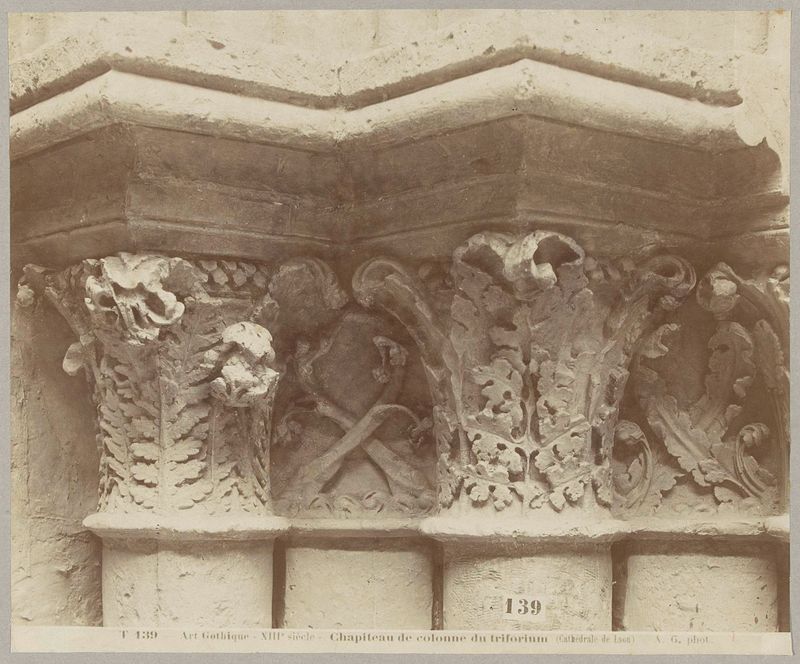
In the quiet aftermath of life, reflections paint our memories, shaping how we perceive the world around us. To truly appreciate this work, begin by looking at the intricate archway that dominates the composition. The soft interplay of light and shadow creates a dance across the stone, revealing subtle textures that suggest the passage of time. Notice how the delicate hues of blue and gray evoke a melancholic atmosphere, pulling you into the depths of the architecture.
The gentle curve of the arch leads your eye upward, inviting contemplation of what lies beyond the frame. As you explore the details, consider the contrast between the strength of the stone and the fragility of light filtering through. This tension speaks to the duality of existence—the monumental against the ephemeral. The reflections captured in the window panes hint at a world beyond, perhaps an invitation to connect with the past while acknowledging the present.
Each element, from the weathered stones to the shimmering glass, tells a story of resilience and memory. Adolphe Giraudon created this piece between 1860 and 1900, a time when he was deeply engaged with exploring architectural subjects. Working in France during a period marked by a shift towards Impressionism, Giraudon sought to preserve the beauty of historical sites, highlighting their significance amidst the rapidly changing landscape of modernity. The painting reflects not only a moment in architectural history but also the artist's desire to capture the essence of what remains in a world of constant transformation.
More Artworks by Adolphe Giraudon
Browse all →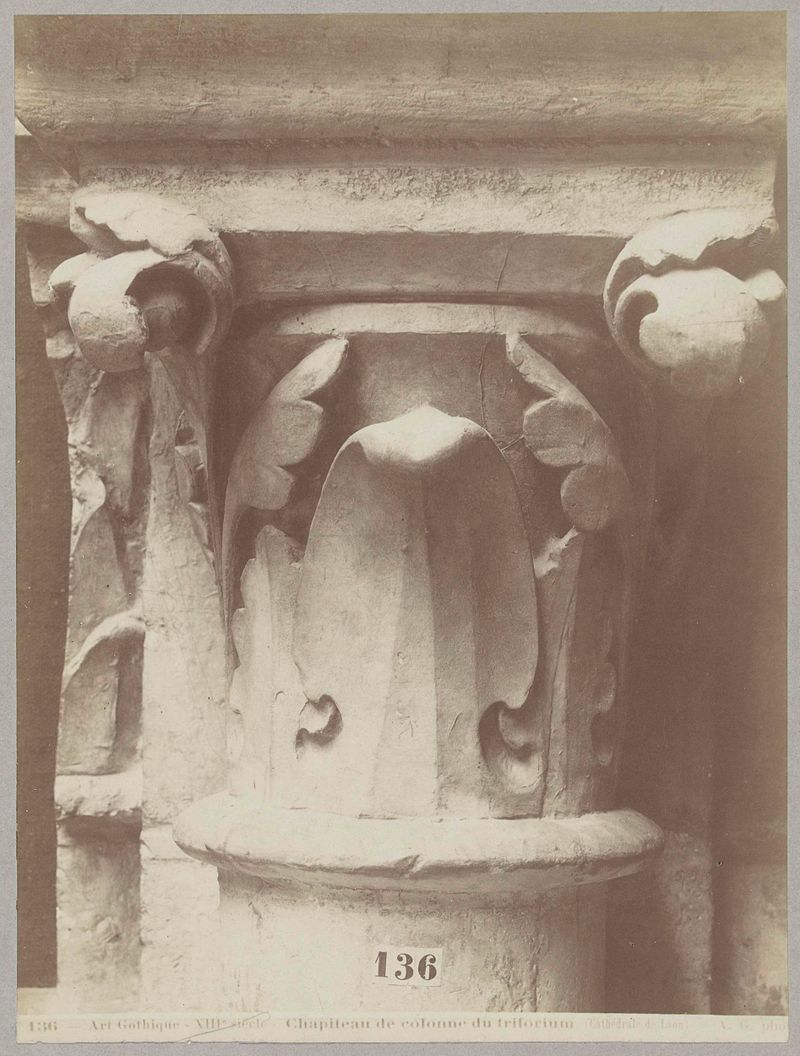
More Architecture Art
Browse all →
The statue of Liberty
Frédéric Auguste Bartholdi

View of Houses in Delft, Known as ‘The Little Street’
Johannes Vermeer

View of Houses in Delft, Known as ‘The Little Street’
Johannes Vermeer

The Cathedral in Rouen. The portal, Grey Weather
Claude Monet

The yellow house
Vincent van Gogh

The Church in Auvers-sur-Oise, View from the Chevet
Vincent van Gogh