Bougival — History & Facts
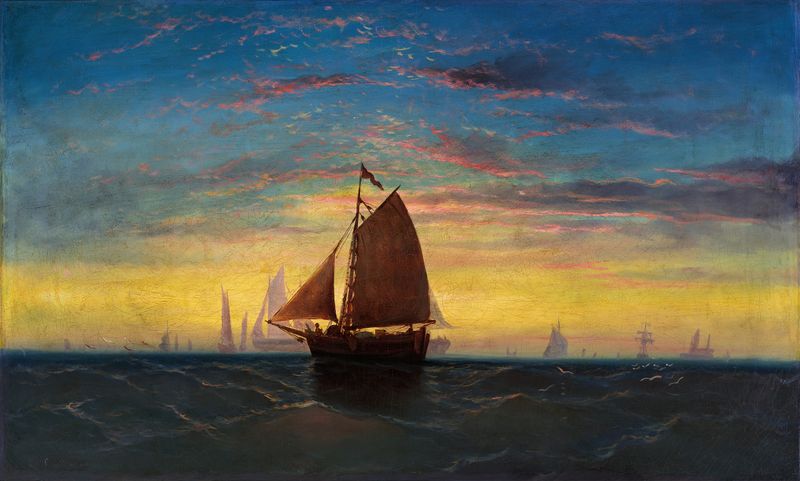
Did the painter know this moment would outlive them? In a world where fleeting emotions intertwine with the permanence of art, Bougival captures the essence of melancholy in a tranquil yet poignant landscape. Focus on the center of the canvas, where a placid river reflects the gentle hues of twilight. Notice how the soft brushstrokes create a sense of movement in the water, contrasting with the stillness of the figures on the bank. The muted palette of earthy greens and blues evokes a sense of nostalgia, drawing the viewer into a realm suspended between time and memory. As you explore the details, seek the delicate tension between the figures and their surroundings.
The solitary boat gliding across the water seems both inviting and isolating, mirroring the emotions of those watching from the shore. Each element conveys a longing for connection, underscored by the shadows that hint at impending nightfall — an emblem of fleeting moments and lost opportunities. Around the time he painted Bougival, Charles Manger was immersed in the burgeoning plein air movement of the early 20th century, which emphasized capturing outdoor scenes with natural light. Working in France, he sought to express the beauty of everyday life amidst a rapidly changing world, reflecting the societal shifts and personal introspections that defined his era.