Boulevard Berthier, le soir — History & Facts
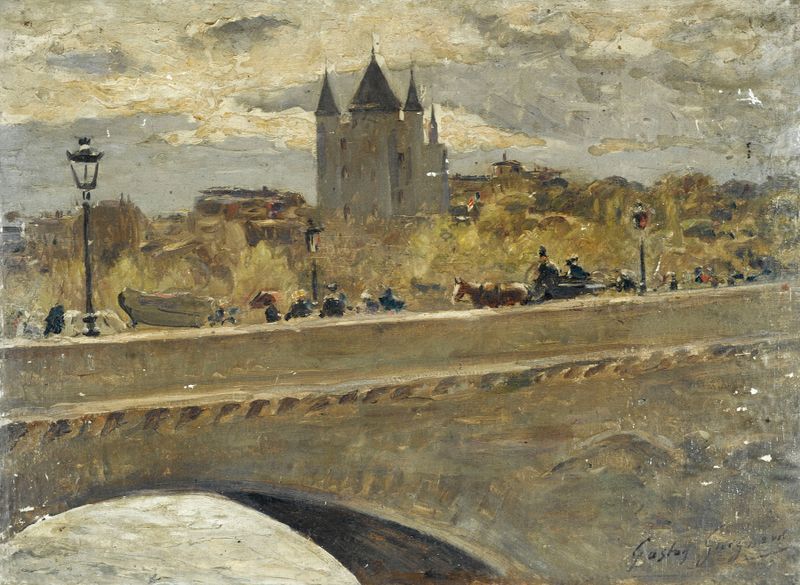
Can beauty exist without sorrow? In Boulevard Berthier, le soir, the intricate play of shadow and light whispers an answer, revealing the depth of emotion nestled within its scene. The twilight ambiance invites viewers to pause, to reflect on the delicate balance between joy and melancholy that defines human experience. Look to the left, where the deep, rich hues of the sky bleed into the horizon, a gradient of purples and blues that beckons the viewer's gaze. Notice how the street, illuminated by the soft glow of gas lamps, contrasts sharply with the encroaching shadows that threaten to engulf the world.
The artist employs a masterful technique, using dabs of vibrant color to suggest the warmth of life amidst the encroaching dusk, where figures roam the boulevard, their forms softened by the growing darkness. As you explore further, consider the figures in the painting: they stroll leisurely, seemingly unaware of the somber shadows that loom around them. This contrast evokes an emotional tension—life continues amidst the creeping twilight, capturing the bittersweet nature of existence. The juxtaposition of light and dark serves as a poignant reminder of life's duality, where beauty often coexists alongside sorrow, both essential to the human narrative. Created in 1890, this work came during a period of transformation for the artist.
While living in Paris, Guignard was influenced by the burgeoning Impressionist movement, which sought to capture the fleeting effects of light and color in everyday scenes. At this juncture in art history, he was exploring his unique style while reflecting on the changing urban landscape and its impact on individual experience, a theme echoed in this evocative painting.