Bridge at Blenheim Palace — History & Facts
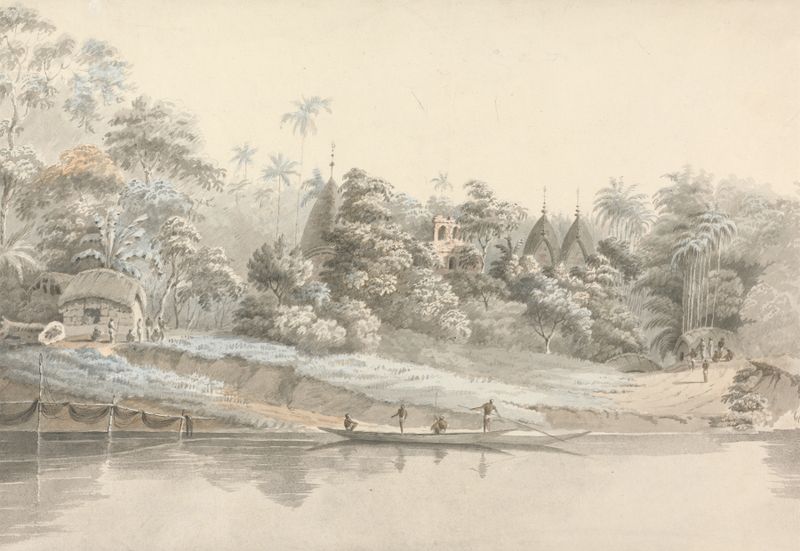
In Bridge at Blenheim Palace, decay whispers through the lush landscape, inviting us to ponder the passage of time and the beauty found within it. To appreciate the painting fully, look to the arching bridge that dominates the canvas, serving as a bridge not just between land and water, but between past and present. The rich greens of the foliage contrast sharply with the muted browns and grays of the crumbling stone, imbuing the scene with a sense of nostalgia and loss. Notice how the soft light filters through the trees, casting dappled shadows that dance across the water’s surface, enhancing the serene yet melancholic atmosphere of this idyllic yet decaying world. Delve deeper into the small details: the way the leaves sag under their own weight, suggesting the inevitability of decay, while vibrant flowers bloom defiantly at the bank.
This juxtaposition of vibrancy and withering speaks to the transient nature of beauty. The bridge, sturdy yet worn, symbolizes the connection between centuries of human endeavor and the relentless march of nature reclaiming its space, urging us to reflect on the impermanence of our own lives. During the years 1780 to 1832, Hubert Cornish created this artwork amidst a burgeoning interest in Romanticism, where artists began to emphasize emotion and the sublime aspects of nature over the neoclassical ideals that preceded them. Living in England during a time of great social and political change, Cornish's work reflects both the beauty and decay of his era, illustrating the complex relationship between humanity and the passage of time.