
Broadway, East Side. 40th to 43rd St. — History & Facts
This thought echoes through the bustling streets of a bygone era, where hope and desperation coexist in the shadows of towering buildings. Look to the center, where a sunlit avenue stretches, vibrant and alive. The rhythmic composition of the buildings flanking Broadway creates a sense of verticality, drawing the viewer's eye upwards, while the mixed palette of soft yellows and muted browns evokes the daily grind of the city. Notice the small figures, mere silhouettes against the grandeur, who navigate the bustling thoroughfare.
The light filters through a haze of nostalgia, illuminating a moment in time that captures both the charm and chaos of urban life. Yet, beneath the surface, there are tensions at play. The contrast between the lively street and the oppressive architecture hints at the emotional void that city life often conceals. The intricate details of the storefronts and the expressions of the pedestrians speak to a longing for connection amid the noise, hinting at the loneliness that can thrive in crowded spaces.
Each brushstroke invites contemplation of the dreams and disappointments that echo in the concrete jungle. In 1899, the artist created this work during a vibrant yet tumultuous period in New York City’s history. As urbanization surged, the world of art was undergoing significant changes with movements such as Impressionism gaining momentum. The artist was deeply influenced by the juxtaposition of modernity and tradition, capturing the essence of a city on the brink of transformation while grappling with the complexities of human experience.
More Artworks by Mail & Express
Browse all →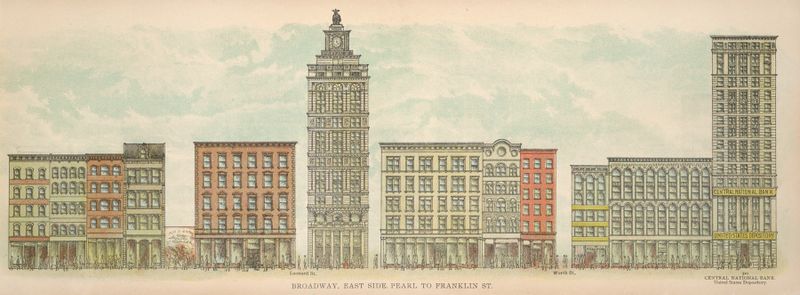
Broadway, East Side. Pearl to Franklin St.
Mail & Express

Broadway, East Side. 20th to 23rd St.
Mail & Express
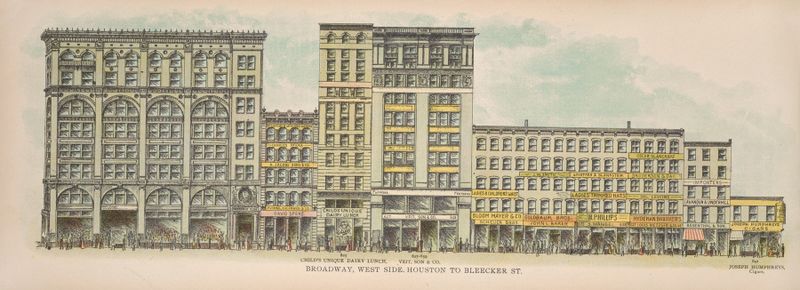
Broadway, West Side. Houston to Bleecker St.
Mail & Express

Broadway, East Side. Bowling Green to Hudson Bldg.
Mail & Express
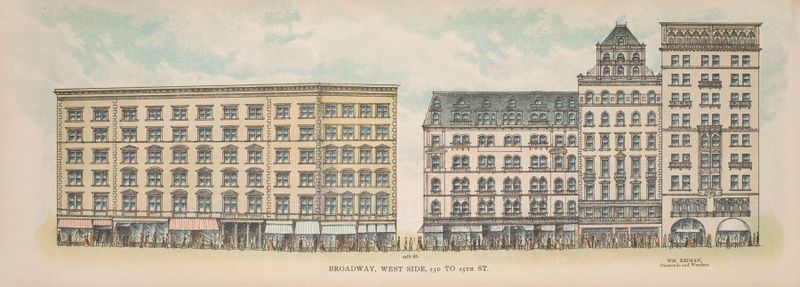
Broadway, West Side. 23rd to 25th St.
Mail & Express

Broadway, West Side. Trinity Church to Liberty St.
Mail & Express
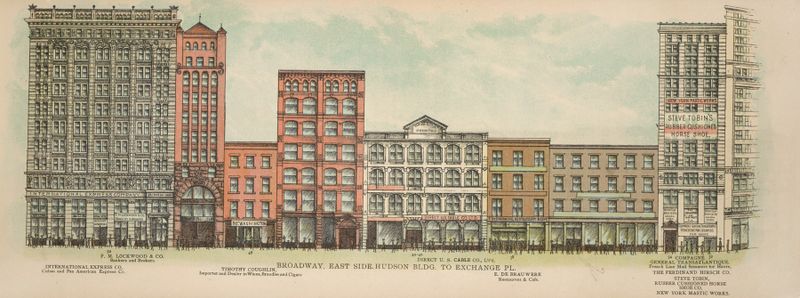
Broadway, East Side. Hudson Bldg. to Exchange Pl.
Mail & Express
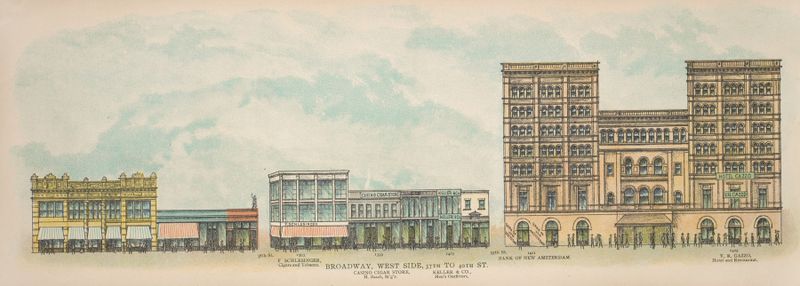
Broadway, West Side. 37th to 40th St.
Mail & Express
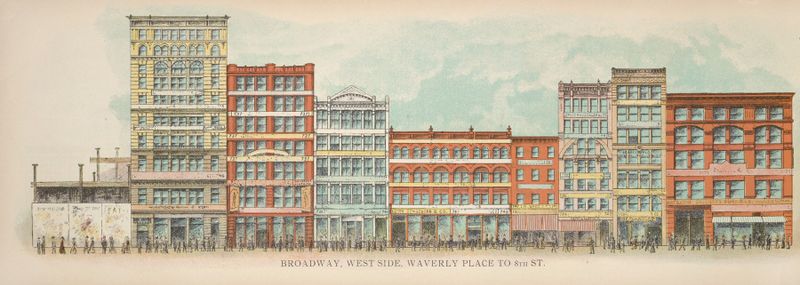
Broadway, West Side. Waverly Place to 8th St.
Mail & Express

Broadway, West Side. Bowling Green to Morris St.
Mail & Express
More Architecture Art
Browse all →
The statue of Liberty
Frédéric Auguste Bartholdi

View of Houses in Delft, Known as ‘The Little Street’
Johannes Vermeer

View of Houses in Delft, Known as ‘The Little Street’
Johannes Vermeer

The Cathedral in Rouen. The portal, Grey Weather
Claude Monet

The yellow house
Vincent van Gogh

The Church in Auvers-sur-Oise, View from the Chevet
Vincent van Gogh