Broek in Waterland — History & Facts
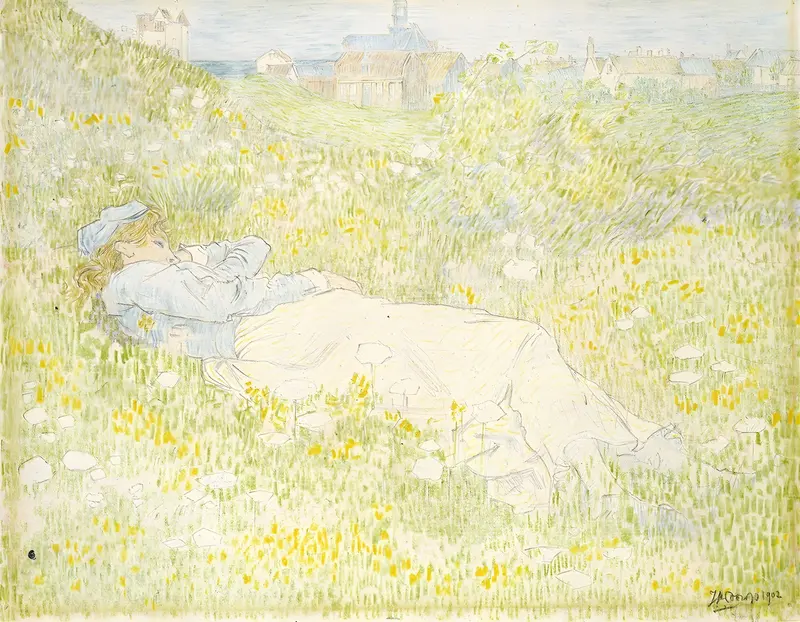
Did the painter know this moment would outlive them? Amid the serene stillness of water, life holds its breath, poised between beauty and the undercurrents of violence. Look to the left at the delicate figures, their silhouettes etched against the vibrant hues of a vast sky—Toorop’s mastery of light invites you in. Notice the subtle layers of blue and green that swirl in the water, reflecting the tranquility yet hinting at the chaos beneath. The brushwork, a fusion of pointillism and flowing lines, captures the fleeting essence of nature and humanity, creating an almost rhythmic dance upon the canvas. Beneath the placid surface lies an unsettling tension—contrast between the calm of the landscape and the potential fury of the elements.
The figures’ serene faces betray no hint of the tumult that might rise, drawing parallels to the unpredictable nature of life itself. Each stroke whispers of a fragile balance, where the tranquility of the moment is both a refuge and a façade, hinting at violence lurking below the surface. Jan Toorop painted Broek in Waterland in 1899 while living in the Netherlands, amid a flourishing of artistic movements that embraced symbolism and impressionism. This period marked a transition in his life, as he sought to define his unique voice in a rapidly evolving art world, embracing the interplay between nature and the human experience.
More Artworks by Jan Toorop

Poster for Delft Salad Oil
Jan Toorop
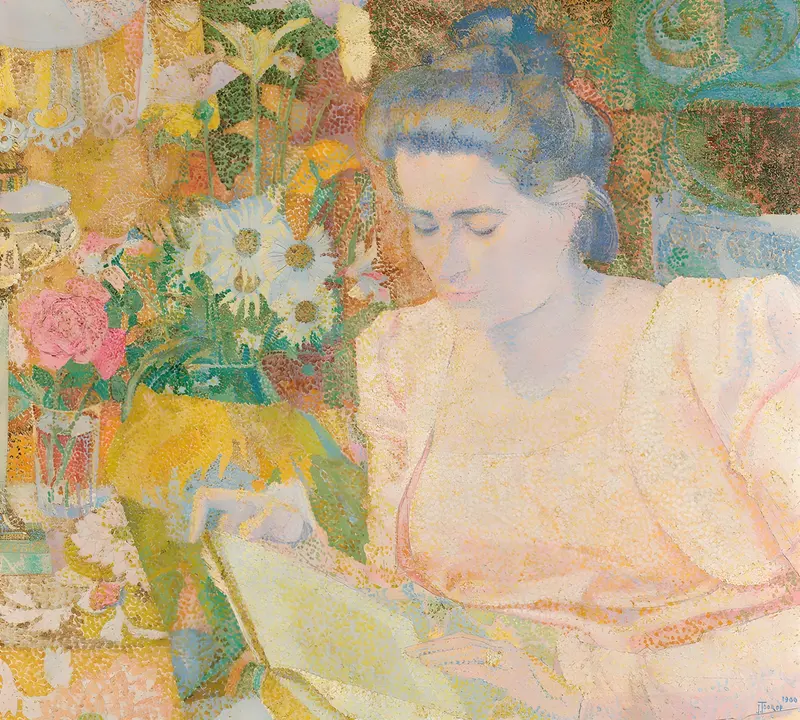
Portrait of Mrs Marie Jeannette de Lange
Jan Toorop
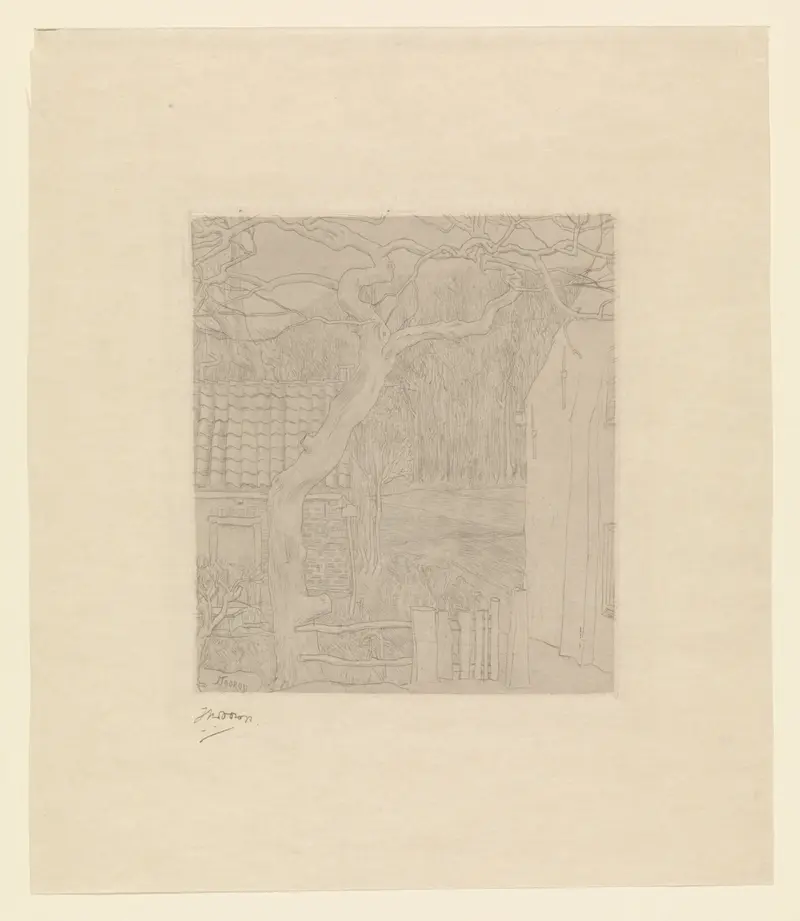
Boom bij twee huizen aan een bosrand
Jan Toorop
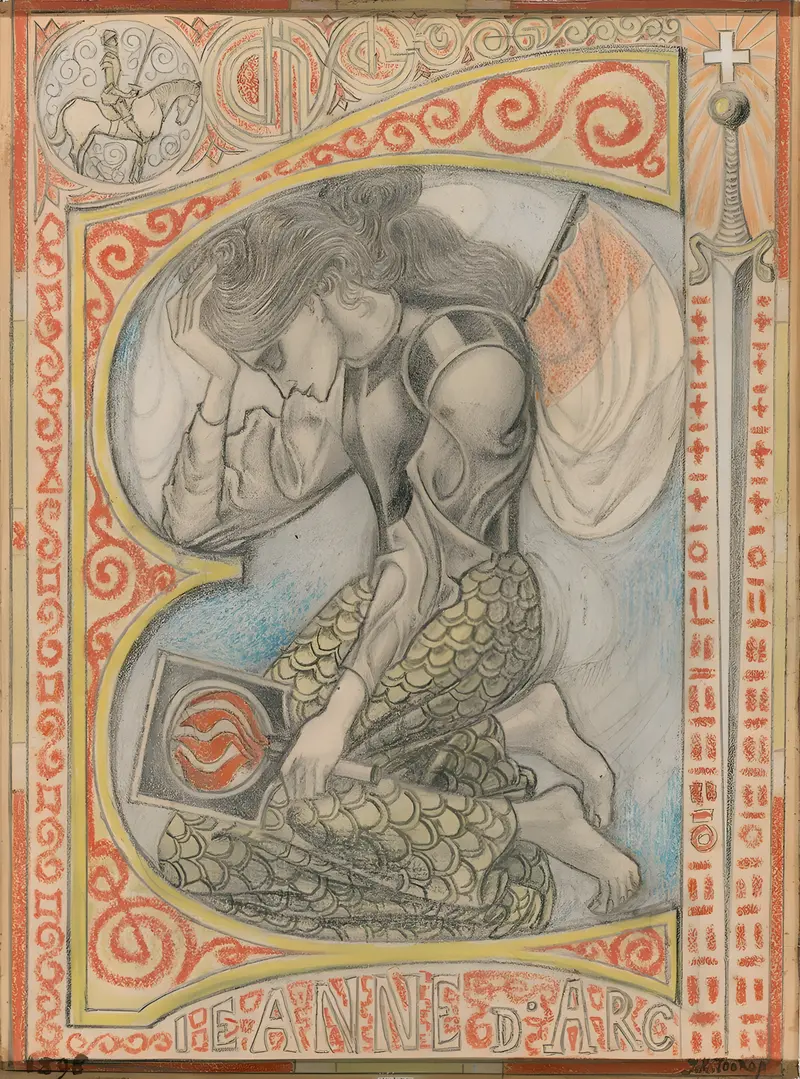
Joan of Arc
Jan Toorop
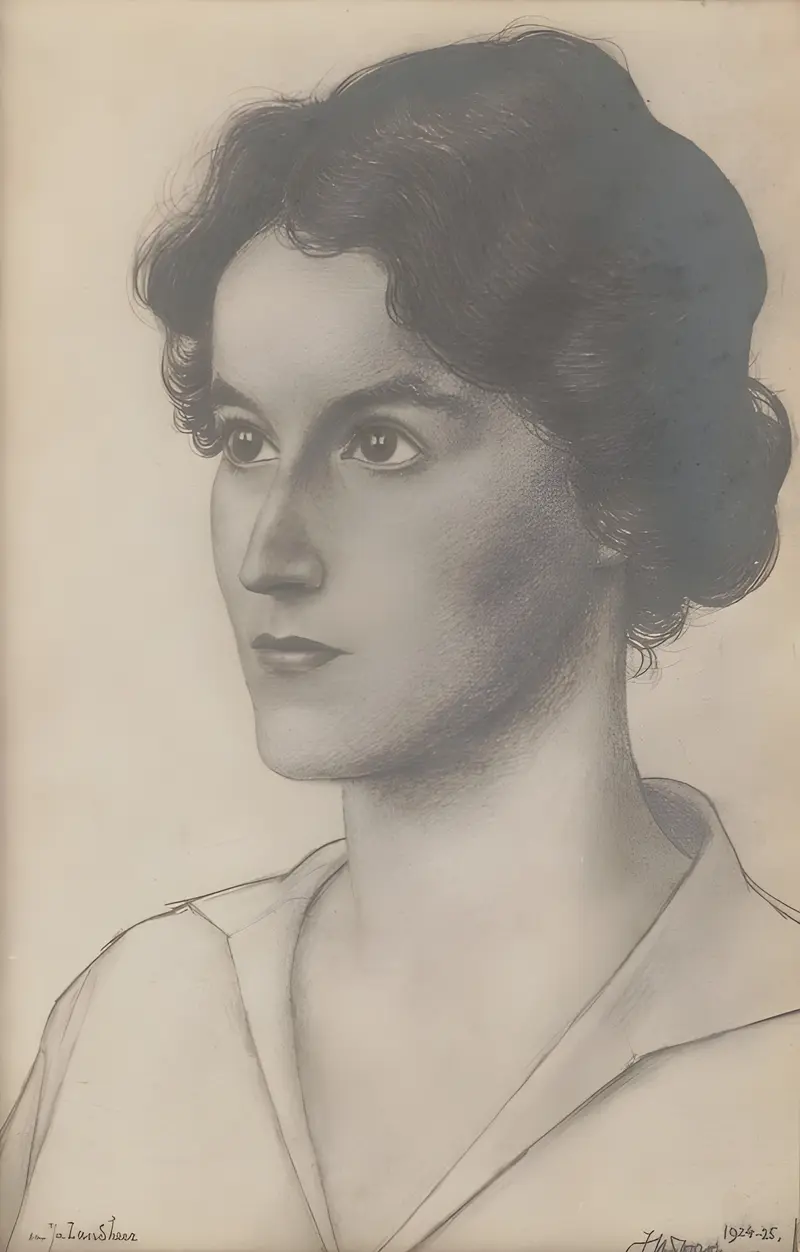
Fotoreproductie aan Jenny Kraft
Jan Toorop
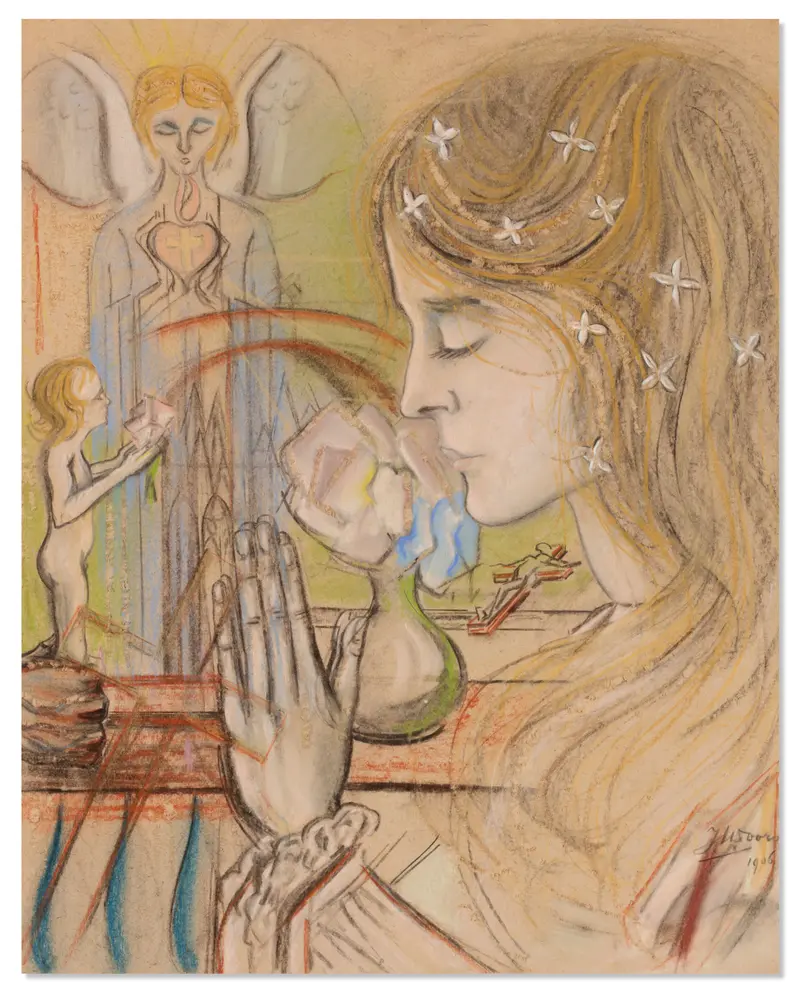
Het Gebed
Jan Toorop
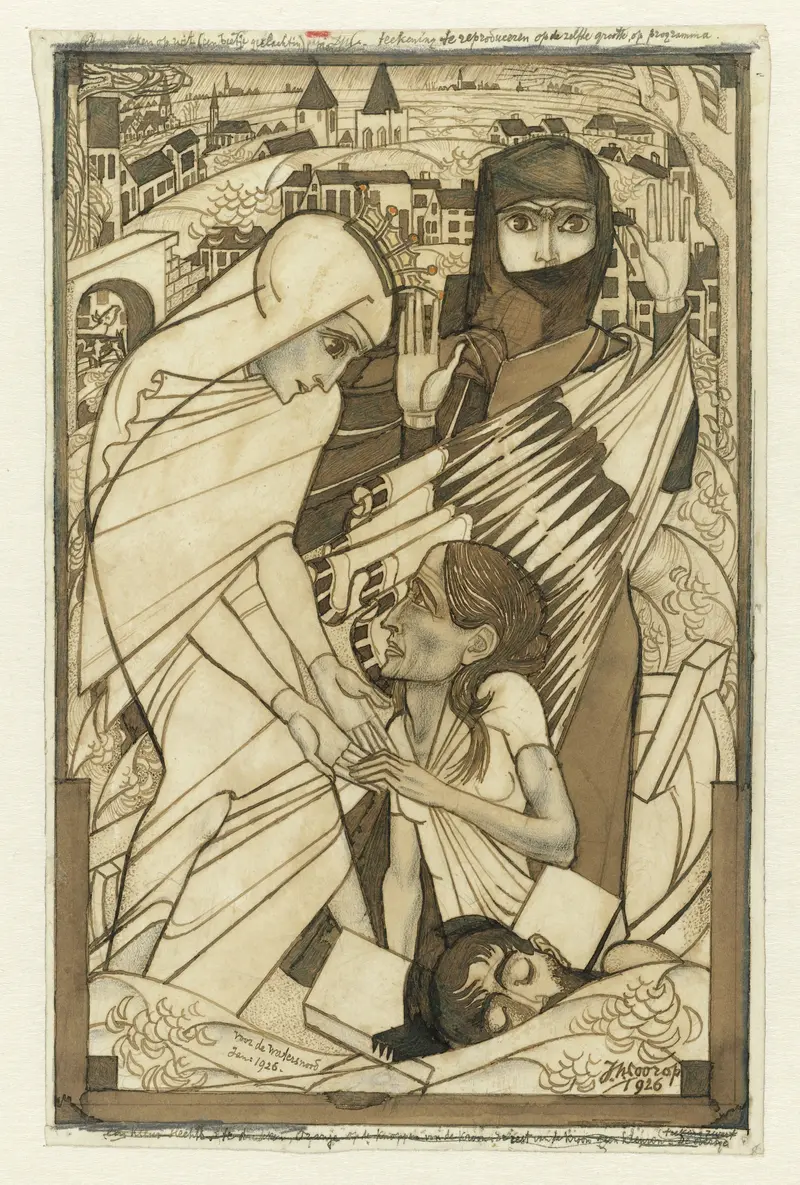
De hulpverlening tijdens de watersnood van 1926, symbolisch voorgesteld
Jan Toorop
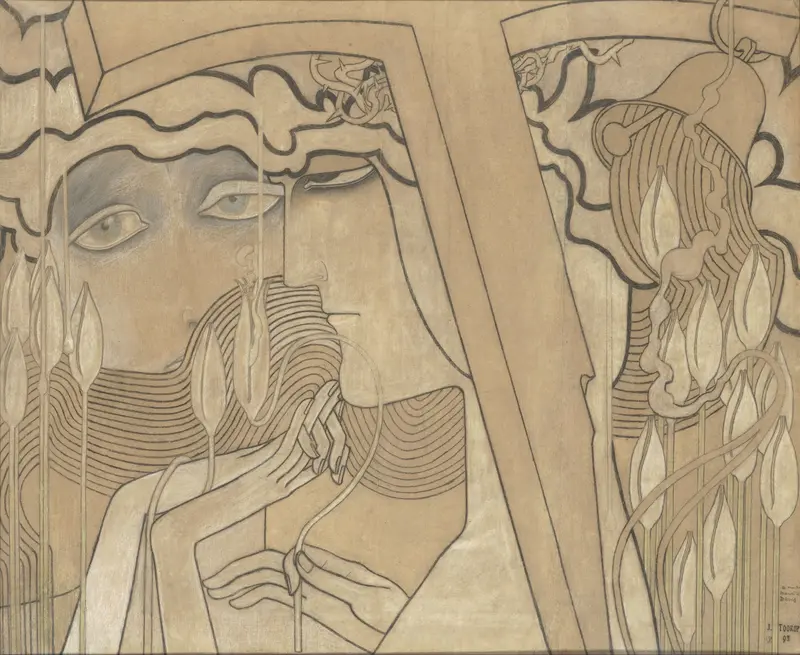
Desire and Satisfaction
Jan Toorop
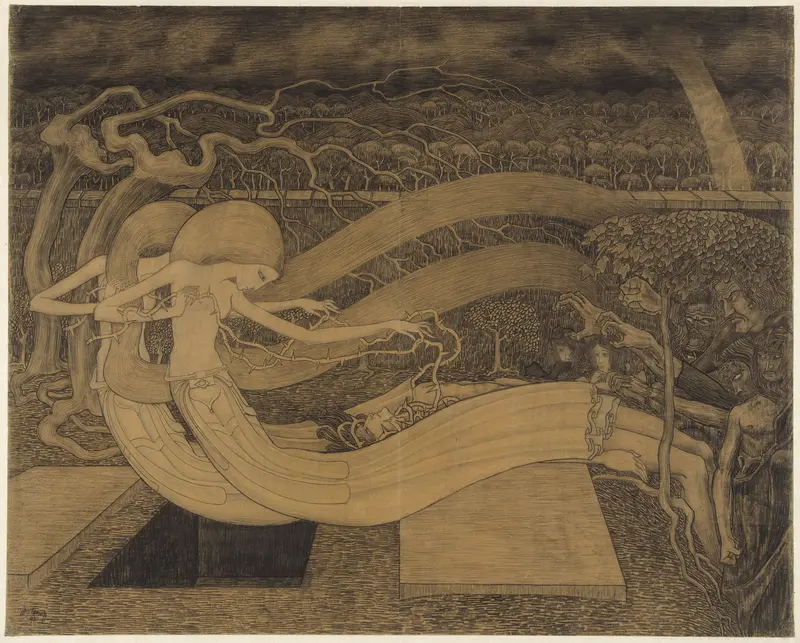
O Grave, where is thy Victory
Jan Toorop
Woman Lying in the Dunes near Noordwijk
Jan Toorop