Brooklyn — History & Facts
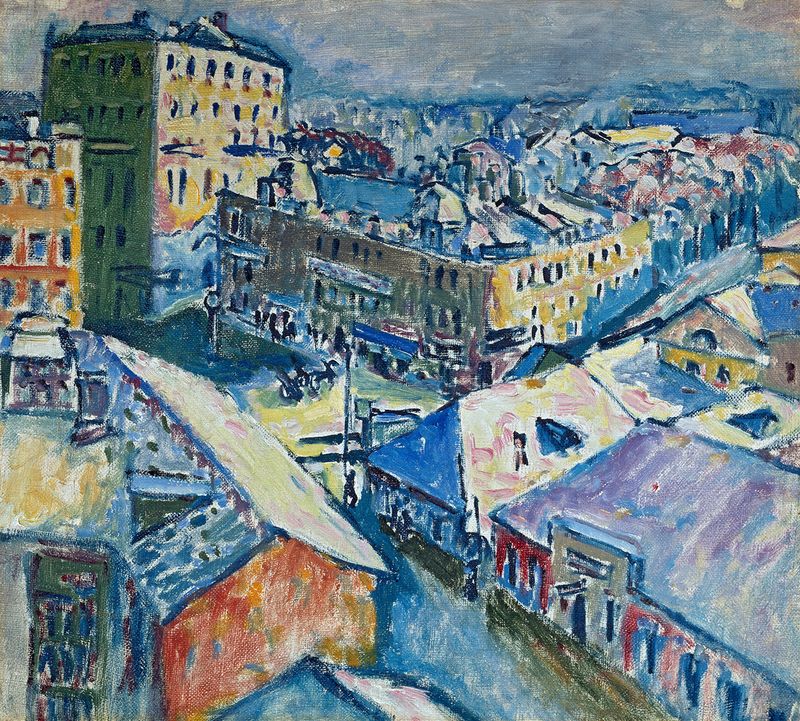
When did color learn to lie? The vibrant hues and chaotic strokes in Brooklyn evoke a sense of madness that dances in the viewer's mind, raising questions about perception and reality. Look to the left at the swirling blues and greens, where the sky melds with the rooftops, blurring the lines between land and air. The brushwork is frenetic, capturing the pulse of the city in a cacophony of color. Notice how the light flickers across the buildings, illuminating their forms while casting shadows that seem to stretch and twist unnaturally, hinting at a deeper turbulence beneath the surface. Delve deeper into the composition, and you’ll discover a tension between order and chaos.
The rigid lines of the urban landscape are juxtaposed with the wild brushstrokes, evoking a sense of unease amid the familiar. The scattered spots of color, splashed with abandon, suggest fleeting thoughts or fragmented memories, weaving a narrative of mental unrest that reflects the tumultuous spirit of the early 20th century in America. In 1903, Hamilton Easter Field was establishing himself in the art world, grappling with the emerging modernist movements that sought to challenge traditional aesthetics. Living in Brooklyn during a time of rapid urban change, he was influenced by both the vibrant life around him and his personal experiences, which often teetered on the edge of chaos.
This backdrop serves as a fertile ground for the exploration of perception and madness, themes that echo through Brooklyn.