Buckenham Ferry, on the River Yare, Norfolk — History & Facts
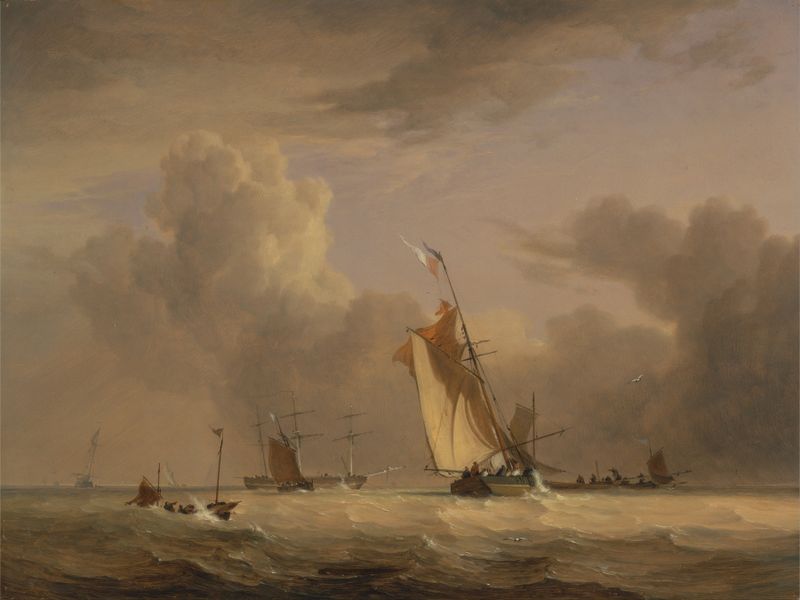
Is this a mirror — or a memory? The surface of the River Yare glistens, suffused with the ethereal glow of twilight, blurring the lines between reality and dreams. Each ripple serves as a reminder that what we see can often be a reflection of our innermost thoughts and feelings, inviting us to ponder the stories hidden beneath the water’s serene facade. Look to the left at the soft hues of the sky, where warm oranges and gentle blues blend seamlessly into one another. This delicate interplay of color draws your eye toward the horizon, while the calm water beneath mirrors the colors above with a haunting fidelity.
Notice how the brushwork captures the essence of the landscape—the fluid strokes create a sense of movement that contrasts with the stillness of the moment, evoking a feeling of tranquility tinged with longing. Delve deeper into the painting, and you will find subtle contrasts that speak volumes. The vibrant, lively sky juxtaposes the quiet, reflective waters, hinting at the duality of nature—the joy of daybreak and the stillness of dusk. The presence of the ferry, almost ghostly in its state of repose, embodies a pause in time, offering a sanctuary for the viewer’s memories.
It is a reminder that every journey, whether physical or emotional, carries with it traces of our past. During the early 19th century, as Joseph Stannard crafted this piece, he resided in a rapidly changing England, marked by industrial progress and a burgeoning appreciation for landscape painting. The Romantic movement was thriving, and artists were increasingly drawn to the natural world, emphasizing its beauty and emotional resonance. Stannard, capturing the essence of his beloved Norfolk, painted not just a scene, but a reflection of a world in transition.